
ROMA (ITALPRESS) – In the short period “it is difficult to expect a rapid de-escalation of the conflict” that opposes Iran to the United States, Israel and has expanded also to the Gulf countries, while on the Iranian political level there is “a phase of instability, but not necessarily of immediate collapse of the system”. Ambassador Giovanni Castellaneta said this in an interview with Italpress. The conflict “is already extending beyond the Iranian and Israeli theatre and is involving the entire Gulf region. Tehran has in fact modified its military strategy regarding the 12-day war (13-24 June 2025), passing from attacks mainly focused on Israel to a logic of asymmetric offensive and regional saturation,” said the diplomat. On the strategic level, “the massive use of drones and missiles, combined with the threat to energy and commercial routes, aims to raise the cost of the conflict for an increasing number of countries” and “in this sense the Iranian strategy aims to regionalize the crisis”, explained Castellaneta, pointing out that “to strike or threaten infrastructure and energy traffic in the Gulf, up to the Strait of Hormuz, means indirectly involve many other actors who depend on those routes”. On the internal political level, “we are in a phase of great instability but not necessarily of immediate collapse of the system”, said Ambassador Castellaneta.
The elimination of the Supreme Guide, the Ayatollah Ali Khamenei, on the first day of the attack of Israel and the United States against Iran “has struck the most visible summit of the regime, but Iranian institutional architecture remains complex and pervasive and the lines of succession had long been prepared,” added the diplomat. In recent days, the indiscretion emerged on the appointment of the son of Khamenei, Mojtaba, as successor of his father. “If the appointment of Mojtaba Khamenei was confirmed, it would be at the same time an element of continuity and a possible political change. Continuity because Mojtaba is inserted in the deep state of the Islamic Republic and has consolidated ties with the Pasdaran and the main power centers of the country – he highlighted the diplomat -. At the same time, these close relationships with security apparatuses and the role it has played for years within the Guide Office as a link between political leadership and securitarian system could mark a new phase, in which the weight of the Watches of the Revolution would become even more central in the management of power.”.
In the interview, Ambassador Castellaneta explained the objectives of the Israel-American attack and the perspectives on the field. “The United States and Israel clearly aim to weaken the regime and influence the transition phase. However, thinking about a transformation of the fast and heterodirect Iranian system would be a mistake of evaluation, because the structure of power to Tehran is very articulate and resilient,” he said. For Castellaneta, “the space for a return to negotiation is not entirely excluded, but at the moment it appears subordinate both to military dynamics and to the internal stability of the system”. “Only the emergence of a pragmatic and sufficiently solid leadership”, in fact, “it could open the way to a dialogue with the West, possibly even on the nuclear dossier; in the short period, however, it is more likely to be a phase of internal tension and settlement”, he said. Escalation has already provoked direct and tangible impacts on various sectors of the economy, in particular energy, and finance. “The crisis has global consequences because it touches one of the most sensitive energy knots in the world: the Strait of Hormuz. From there it passes about one fifth of the world demand for oil and a significant share of the liquefied natural gas exported from Qatar. The Iranian strategy of threatening or slowing traffic in the Strait therefore has immediate effects on energy markets and all countries that depend on imports from the Gulf,” said Ambassador Castellaneta. The tension phase exposes some countries more to the impact of the crisis.
“The most exposed are especially Asian countries: China and India in particular, but also South Korea and Japan, because a significant part of their energy needs passes from that corridor. The United States and Europe are less vulnerable in direct terms, but they remain exposed to global price shock,” he said. But not for all effects they are negative. “For Russia, the effect is ambivalent: energy instability can support higher prices, but above all the crisis is likely to put pressure on European gas choices and, in the medium term, to make Russian gas more ‘competitive’ while the EU is aiming to zero its imports. And on the geopolitical plane, Moscow – along with Beijing – has an obvious interest in not seeing Tehran weakened in such a way as to further strengthen Western influence in the region,” the ambassador concluded.
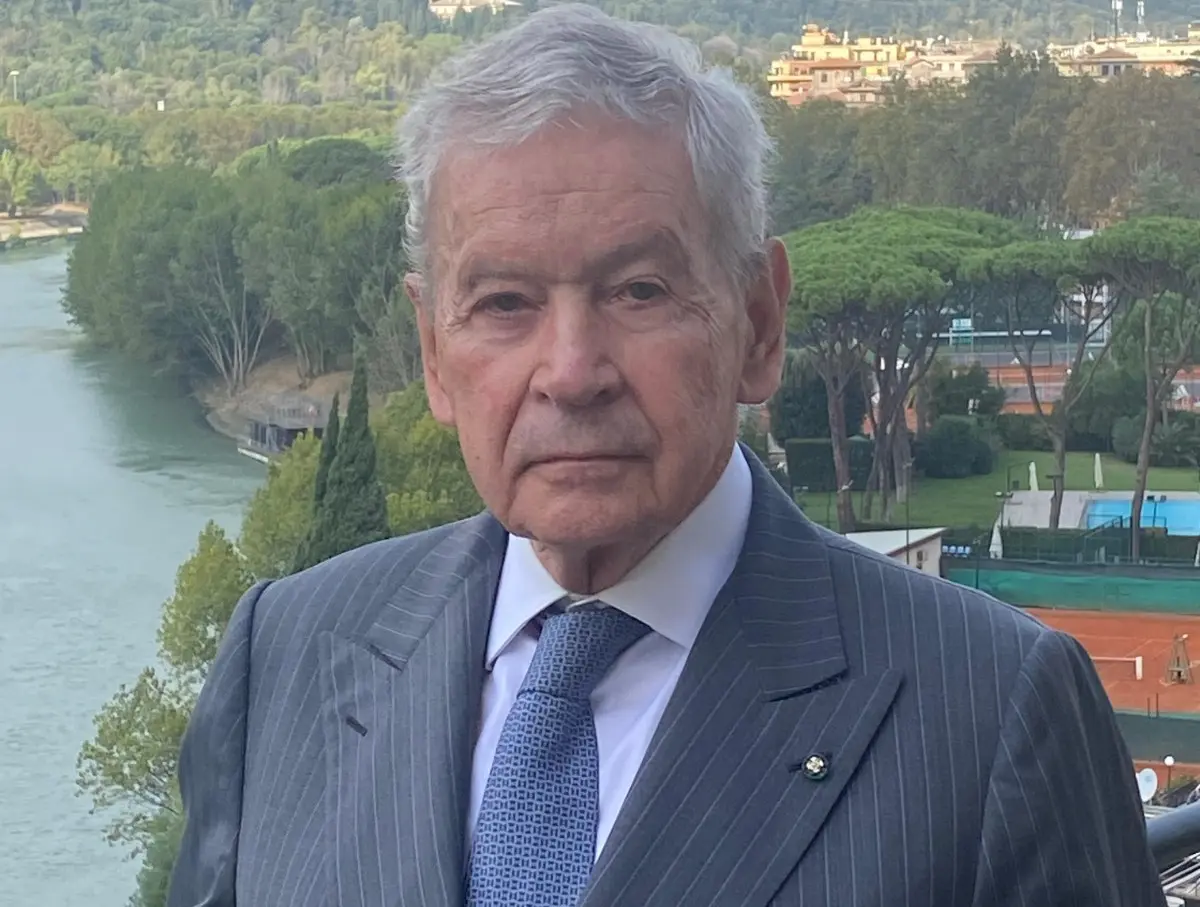
– photo Ambassador Giovanni Castellaneta –
(ITALPRESS).
