
by Vincenzo Petrone (*)
ROMA (ITALPRESS) – “No deal” is better than a “bad deal”, as what can come out of the negotiations that will begin in Islamabad in the coming hours. The outcome can be very bad for America and the rest of the world if it did not include at least two concrete results. The first is the full reaffirmation or imposition of the right to free navigation in the Strait of Hormuz.
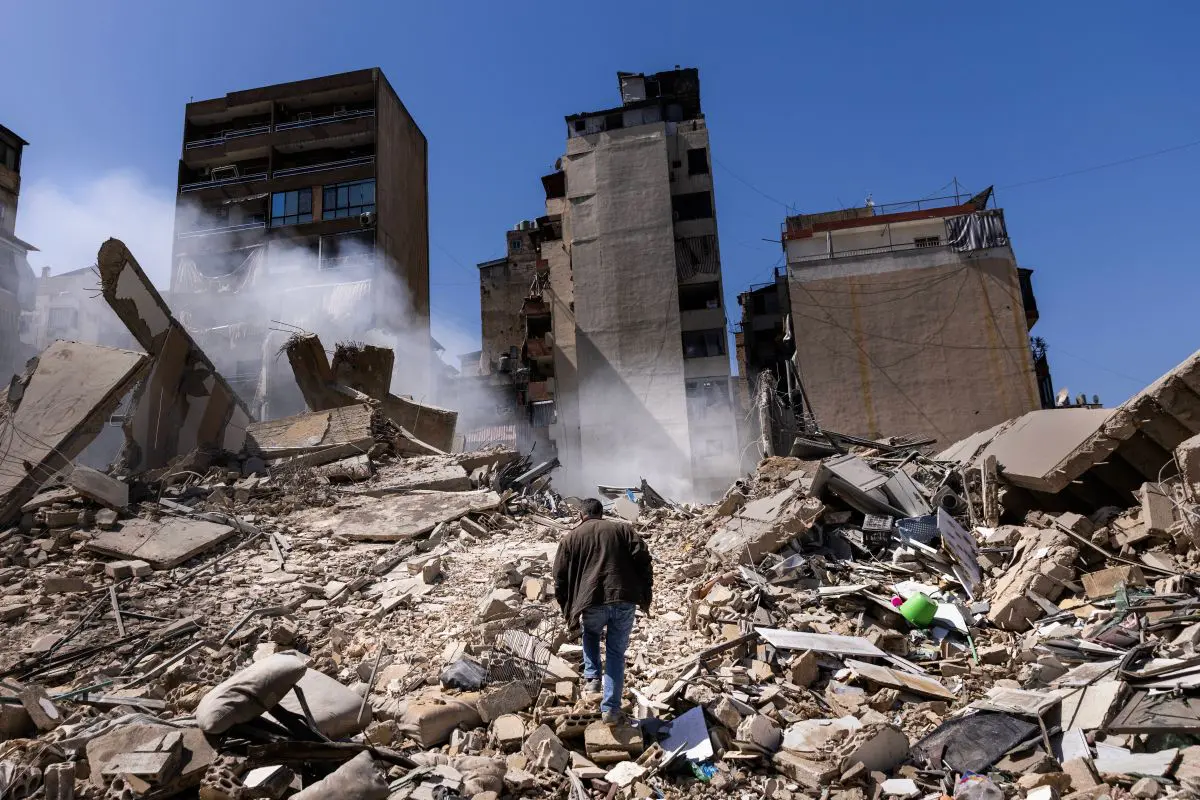
The second is the seizure of the hundreds of kilos of enriched uranium that Tehran still holds. Without these two elements the ongoing war may be lost, for the simple reason that Iran, which the United States and Israel have bombed for five weeks without a truce, would come out of the much more powerful and threatening conflict than it was before. It would further jeopardize the stability of the Middle East and the economy and security of the United States, Europe and Israel.
In June of last year, after the 12-day war with Israel and after the American stronghold bombs on the Fordor nuclear site, Iran was a militaryly humiliated country, in fact deprived of the nuclear threat at least for a few years and especially almost without anti-aircraft defenses.
Which meant that, if necessary, the Israelis could return to hitting the uranium enrichment sites and ballistic missile production sites without having to fear significant losses. After weeks of war and final statements by the President of the United States, Tehran obtained important and unexpected results. As if the war had won it.
The ayatollah regime has renewed its leadership and above all it has demonstrated fervent determination to replace in a few days the religious and military leaders that Israel and the United States have gone by eliminating one after another in an impressive sequence. The power structure of the revolutionary Guards and that of the Basijs was not even hurled by the war.
The militiamen have implacably tamed the riots that in the streets and universities seemed to be able to threaten the existence of the Islamist regime. They hacked 150 to 20,000 opponents and the Western world looked the other way. Russia and China seem to be as supportive with theocracy, but no one can have surprised, being two dictatorships rash to strong methods.
The approximately 400 kg of uranium enriched to 60%, easily transformable into material usable to build a dozen nuclear warheads, remained under the rubble of Fordor and Natanz, but are recoverable in a few months. And already the work was underway by the geniuses of the revolutionary Guards. After that, if ever there was a need to confirm to the ayatollahs that the nuclear bomb is necessary to ensure against new American or Israeli attacks, these five weeks of war have shown it as a trigonometry theorem.
The Iranian missile arsenal, according to General John Daniel Caine, chief of state of the U.S. Defense yesterday, was eliminated to 80%. But this fact says little, if it is true that after the war of June 2025 Iran has proven to be able to rebuild its military infrastructure with a really extraordinary speed. So Tehran’s missile arsenals would fill in within a few months.
But, above all, Iran has proven to know and be able to activate in a few hours a lethal weapon never used before: the Strait of Hormuz. For the regime it was sufficient to decree its closure to the ships of the “Enemy countries” to provoke a deep crisis throughout the industrialized world, the United States in the head. There was no need to shoot a single torpedo against an oil tanker or a portacontainer.
The insurance companies have rushed to withdraw the cover on the ships. And the shipowners, therefore, have immediately stopped them, perhaps also because their cargo of crude oil is valued every day that passes, because of the price increases on the oil markets.
President Trump, despite the violence of his statements, has been more desperate than threatening for days. And the Iranians also for this reason have publicly pranked him. At this point of the war, Trump explained that without a substantial operation with “boots on the ground”, America will not take possession of Iranian uranium and above all will not be able to reopen the Strait of Hormuz.
And land operations involve important losses in terms of human lives among the military who carry out them. The Iranians know better than anyone who in this conflict the United States cannot demonstrate the political resilience necessary to face these losses, more than Congress has ever authorized the war on Iran and public opinion is deeply tired of American military involvement in the Middle East.
The conclusion, unfortunately, is that in all evidence Trump did not expect Iran to fight so tenaciously and be determined to involve the Gulf monarchies in the conflict.
And above all, Trump did not understand that the Strait of Hormuz could easily be transformed into a second “nuclear” weapon for Tehran. More effective and usable than the nuclear bomb, because it can be modulated in intensity, orientable against this or that enemy country and extremely profitable in perspective, thanks to the tolls in cryptocurrency imposed on the ships authorized to pass.
The Trump Administration seems to have entered an anxious search for an exit. And the improbable negotiation that is about to open itself in Islamabad, with the high improbable mediation of a Pakistan known more for supporting Islamic extremism than diplomatic negotiation, could be the fig leaf that allows Trump to return home to devote himself to the November elections. If so, the war with Iran would only be postponed a few months or a few years and the next time it would directly involve us Europeans, also because more than anyone else we need the oil of Saudi Arabia and Emirates and Qatar gas.
The alternative to the scenario outlined above is that the negotiation serves the United States to gain the time necessary to organize a land operation to free Hormuz. In this case, like it or not, Trump may end up countervoking with making a service to the international community and to us Europeans first. I can’t predict what will happen.
What can be said is that the threat of Iranian theocracy and its proxies has not been eliminated. Everything else. If this war ended with a purely cosmetic result, that threat would reappear on a larger scale in very short times.
(*) Ambassador a.r.
-Photo IPA Agency-
(ITALPRESS).
