
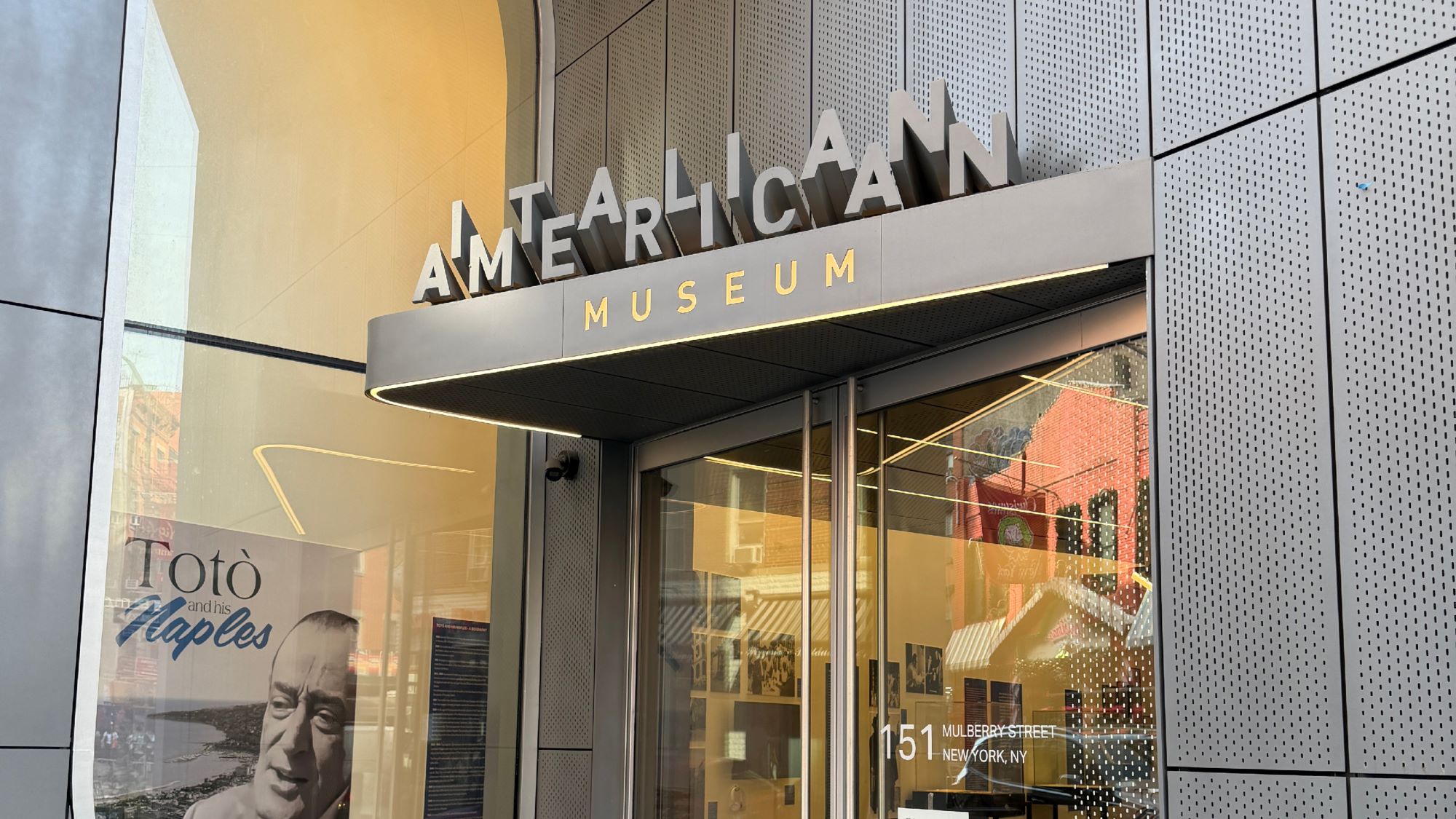
In Little Italy, in the heart of New York, there is a museum that tells a story that for a long time had no place of its own. The Italian American Museum reopened in October 2024 in its new home on Mulberry Street, at the center of a neighborhood that was once one of the main points of arrival for Italian immigration to the United States.
It is not just a museum in the traditional sense: it is also an attempt to reconstruct a collective memory “in its own voice,” through objects, photographs, and personal stories. A project that has deep roots and that, as its founder Joseph Scelsa explains, remained for years in a kind of continuous state of construction.
“The museum has always been, in a way, evolving,” he says. “It really began in 1999, after I promoted an exhibition at the New York Historical Society on Italians in New York.” That exhibition, which was very successful with the public, became the starting point. “I realized that in New York there was no museum dedicated to Italian Americans. And considering how large a part of the population we are, it seemed natural that there should be one.”
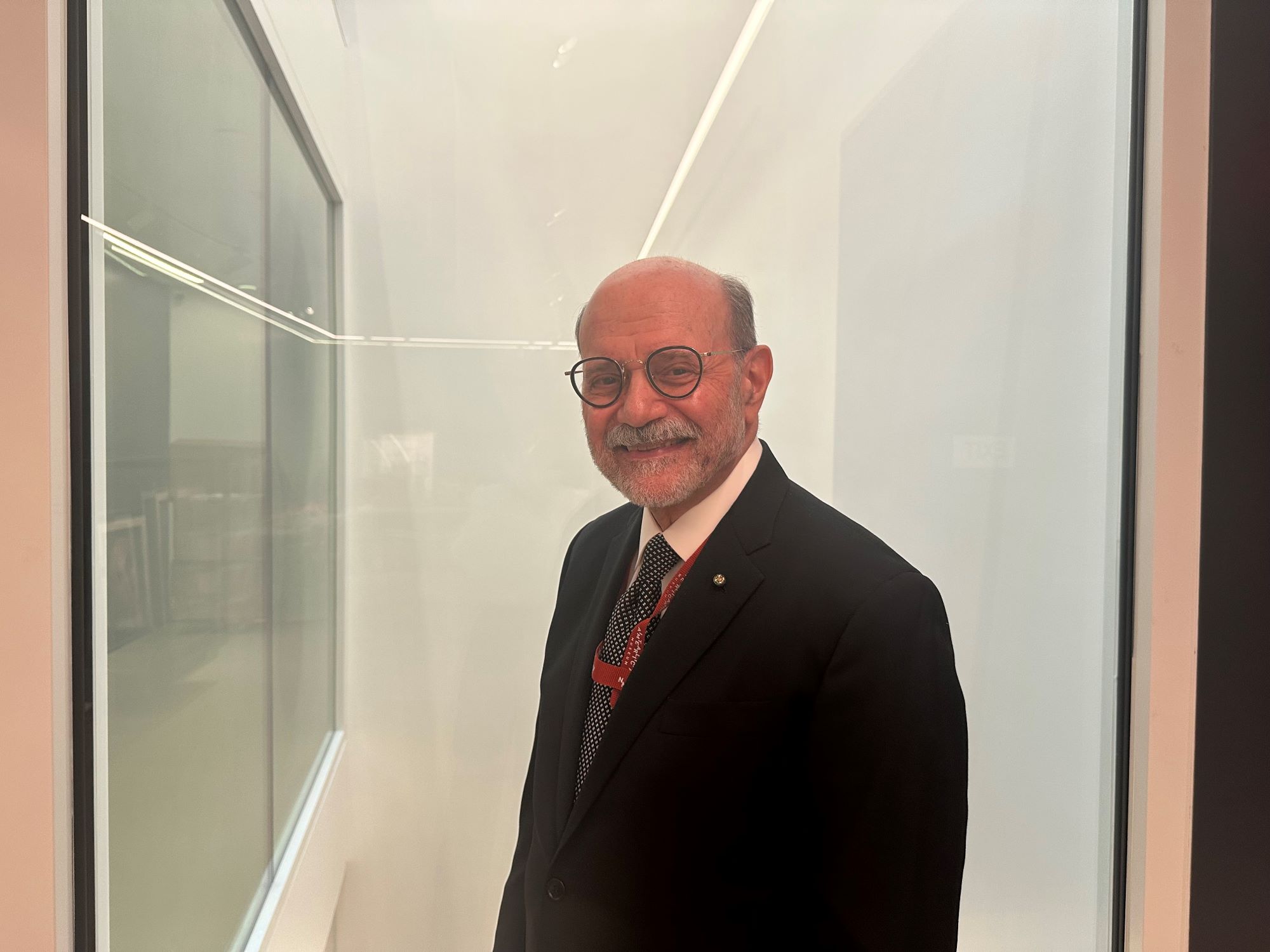
From there, a process that lasted more than twenty years made up of temporary spaces, attempts, and difficult funding eventually led to its opening: “For a while we had a space on 43rd Street, but it was temporary. Then we were able to purchase property here and, in the end, build the museum.”
The choice of Little Italy is not only symbolic. Mulberry Street was for decades the heart of the Italian community in New York, when the neighborhood extended across dozens of blocks and was filled with different dialects, stories, and trades. “This is the place where most Italians arrived during the great wave of migration,” Scelsa says. “Millions of people came to America, and many settled right here.”
Today Little Italy is much smaller and deeply transformed, but precisely for this reason the museum also takes on the role of a cultural outpost. “At one time this neighborhood covered about twenty blocks; today it’s two or three. But you could hear all the Italian dialects here.” The choice is also personal: “My grandparents came here, lived just off Elizabeth Street, were married in the old cathedral, and my father was baptized there. For me, this was the natural place.”
The museum aims to tell the Italian American experience in its entirety: from the earliest Italian presence in the 17th century to the major migrations between the late 19th and early 20th centuries, and then the post–World War II period. “We tell the story of the great wave of migration up to the 1920s,” Scelsa explains. “Then there’s a pause, and after World War II a new wave of immigration arrives, made up of people looking for opportunities.”
The story does not stop there: “The final chapter is about the children and grandchildren of those immigrants, and their success in American society. Italian Americans today are no longer the poor immigrants of the past.” It is a narrative that brings together history and identity, but also social transformation. Not surprisingly, the museum is working on a permanent collection that will trace these trajectories over time, from the difficulties of integration to cultural and economic success.
Alongside the historical narrative, the museum hosts temporary exhibitions that combine research and popular culture. Among the most notable is Puppet Homecoming, dedicated to Sicilian marionettes, a tradition that accompanied early Italian immigrants in New York.
From April 16 to August 29, 2026, the museum will present Totò and his Naples, an exhibition dedicated to Totò, a central figure in 20th-century Italian comedy. The choice is not accidental: a significant portion of Italian immigrants to the United States came from southern Italy, particularly Naples.
The museum does not speak only to Italian Americans. In fact, a significant part of its audience is made up of young people and children of immigrants from other countries. “We have many Italians, and that’s wonderful,” says Scelsa. “But also many young people, children of immigrants from Bangladesh, Greece, Turkey. They look at this story and understand that, over time, they too can get to where we are today.”
In this sense, the museum becomes a tool for reading immigration in broader terms: not as something confined to the past, but as an ongoing process. “It’s not just an Italian story,” he emphasizes. “It’s a universal story. It helps people understand how communities move from where they come from to where they are going.”
Behind the museum there is also a personal motivation. “This has been a labor of love the work of a lifetime,” Scelsa says. The idea began with a gap: “I realized I didn’t know enough about my own background. My grandparents had already passed away, and I only had fragments of family history.” From there came a research journey that took him back centuries: “I was able to trace my family back to the 14th century. And I realized that many other people want to do the same, but don’t know where to start.”
In a neighborhood now largely shaped by tourism, the museum seeks to restore depth to a place that risks becoming just a backdrop. “Many people come to Little Italy, look around, but don’t really know what they’re seeing,” Scelsa says. “The museum is there to provide that context.” And he adds: “It’s not entertainment, it’s not a theme park. It’s something serious. If you take the time to engage with it, you understand why this story matters.”
More than a traditional museum, the Italian American Museum works in this way: as a space where memory becomes a shared narrative, and where a local story, the story of Italians in New York, ends up speaking to many others.