
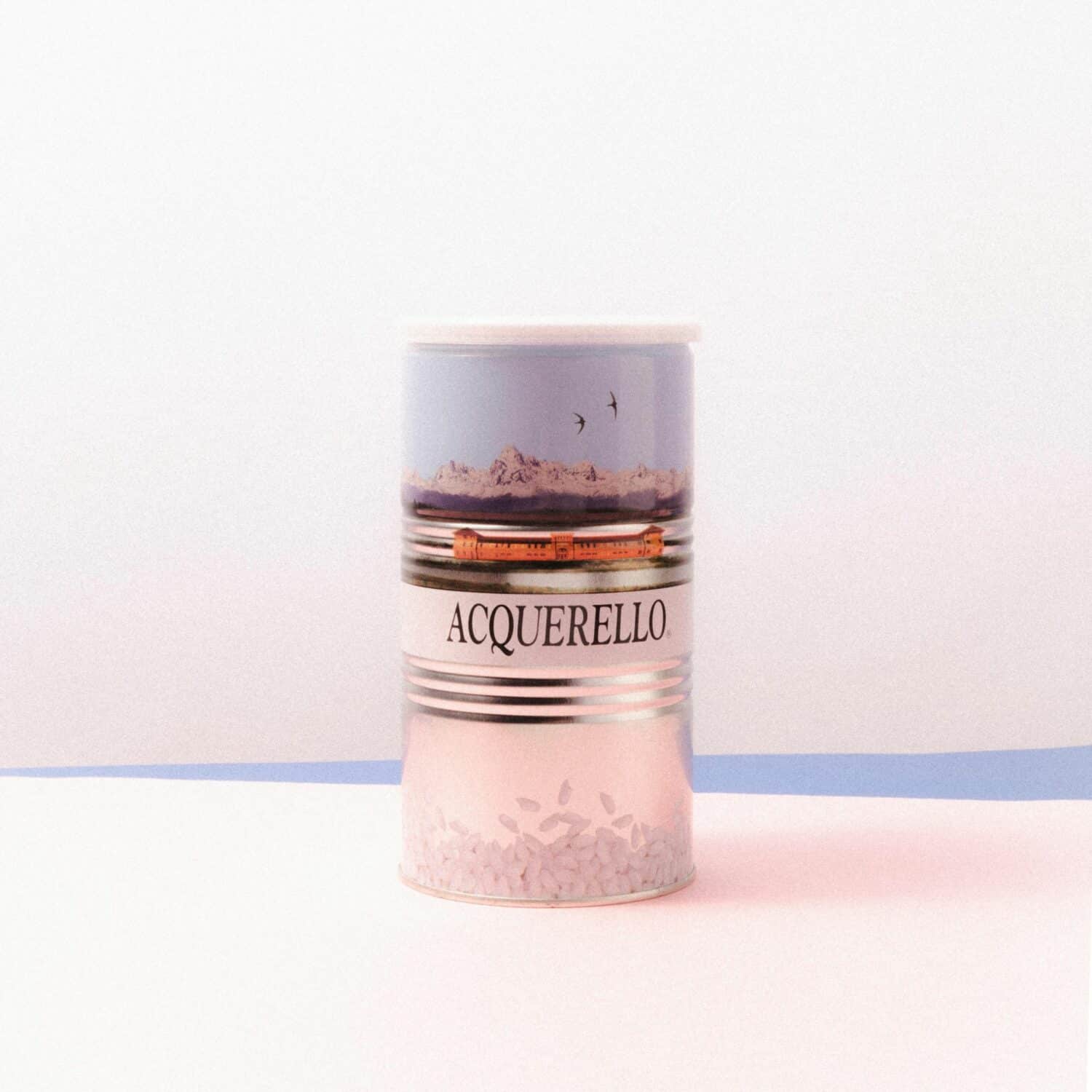
In the heart of Piedmont, rice germinates. And so far there would be nothing to tell, were it not that the most widely used cereal in the world for human nutrition, here takes on the connotations of gastronomic excellence of which only Made in Italy is capable. The reference is to the delicious Acquerello rice, as beloved by starred chefs as it is increasingly coveted by the discerning forks of palates everywhere. We talk about it with Anna Rondolino, daughter of Piero Rondolino, founder of the brand.
What are the faces of the “Watercolor family” today?
I am the youngest of the children and carry out my duties on the communication, press office and social marketing side; then my brother Rinaldo, the eldest, takes care of the agricultural side, while Umberto takes care of the research and development side. After studying marketing and communication in Milan at the Accademia di Comunicazione Grafica Pubblicitaria and staying there to work for three years, I returned to Turin to carry on the family business, which continues to grow rapidly. So I finally inserted myself in the country setting, going back and forth every day to Livorno Ferraris, where we have the famous Colombara Estate around which the whole process of processing our rice takes place. For now there are five of us in the communication team.
Acquerello Rice is a brand that lives mainly on social advertising. How come you have never pushed mass advertising?
We believe that going out with print or TV ads is far from our target audience, as that type of customer is looking for a national-popular product; different from what Acquerello rice offers. Although we grow 2 percent every year, we feel that we are not adequate for a context such as gdo, preferring to remain niche realities. For this reason, at the level of communication, in addition to being committed to packaging, I approached social media such as Facebook and Instagram from the beginning in an unconventional way, setting up Instagram from the beginning as an entity aimed at reposting rather than content creation. In this way, people who were fond of our product began to post dishes and considerations that we would divulge to our followers, who now number 54 thousand. This was the key that allowed us to give more visibility to the brand for the end consumer, as well as to grow in visibility with reposts and shares from social users. For this, we also came out with the book “All the Colors of Watercolor,” in order to thank our followers.
In how long did all this happen?
Such a sense of community came to be over the course of seven years. In the end, it was not difficult: we avoided behaving like the classic self-celebrating company, preferring to share in others’ celebration without placing demands or pressure.
Acquerello Rice is born in a dream place. But what is Tenuta Colombara?
An old farmhouse in the town of Livorno Ferraris, in the province of Vercelli, that was self-sufficient until the 1970s. It was an enclosed courtyard where thirty-three families lived, complete with a school, saddlery, blacksmith, seamstress and dormitory for the mondine. The people of Colombara lived on what they produced, in fact there were hundreds of cattle such as cows and horses. Now, of course, no one lives there, but the estate is populated from the early hours of the morning during planting and harvesting periods, and we also have offices on site in addition to the rice mill and the fields: 130 hectares of our own property where rice is sown, cultivated, harvested, dried and aged. We are 22 employees, yet the tractor driver has remained just one for years and manages everything himself.
Does no one live at the estate at all?
Actually, for more than 30 years German sculptor Claudia Haberkern has resided there, having moved there out of love for her boyfriend who had stayed there one summer. Then the romance ended but she decided to stay here, continuing to work on her sculptures. Although our facility is not open to the public we organize tours, and she follows the Swiss and German ones.
But is Colombara still telling a story today?
We reconstructed the spaces as if the families had recently left: it is a kind of museum-not-museum that, in fact, we call the Conservatory. The feeling is that of entering an abandoned farmstead, where everything is still from the 1970s, but it all happened with the utmost spontaneity, as so many people from Livorno Ferraris who are descended from former inhabitants of the estate or from the mondine, slowly began to bring us objects such as photographs, suitcases, hats and much more. All artifacts found in grandmothers’ cellars that were donated to us and that we did not want to close in a warehouse. These people helped us rearrange everything so as to make the Colombara scenery as close to authentic as possible.
Why is your rice protected by international patent?
My father devised Watercolor rice because upon tasting the rice bud, which is the most important part of the grain from which new plants regerminate, he realized that it had a nutty aftertaste. After careful analysis, he discovered that most of the rice’s nutrients are concentrated in the bud. And to think that it was once used as animal feed! At that time my father exhumed some old rice-growing machines, mixing by rubbing white rice with a certain amount of bud, which during processing disperses a somewhat oily part, dissolving rapidly to the benefit of the grain, which absorbs it. Acquerello rice is the only white rice with better nutritional values than brown rice (except for fiber) but, unlike the latter, it can be used to make risotto given its resistance to cooking. This process and related discovery has, therefore, been patented.
What is your market positioning?
Until ten years ago we were selling 70 percent abroad and 30 percent in Italy, but today we are around 50/50. It must be said that other countries 20 years ago were the first to welcome our product. For example, we have always sold a lot in Spain; a difficult market because it produces bomba rice for paella, but where those who work in the sector have found that carnaroli absorbs more. Abroad, in fact, 90 percent of our customers pertain to the restaurant industry, and in Chicago, USA, we have one of our biggest importers. Unlike in Italy, where there are many specialized stores, in the U.S. we have a hard time getting directly to the consumer because there are mostly large supermarkets that, as a business strategy, we do not consider.
You’re in the packaging business, but why isn’t Watercolor vacuum-packed in a carton like its peers?
The choice of tin stemmed from a study by my father, not only a lover of art history but also an architecture graduate. He had read that in the days of imperial China, rice was preserved in tin so that the emperors would never suffer its absence. My father understood that at the level of food preservation, this would be the best choice. Today, in fact, we have switched to controlled-atmosphere storage under nitrogen to maximally protect the bud, which may tend to go rancid. The imprinted image depicts the place of production, surrounded by rice fields and mountains, and it remains the same as it always has: it is a photograph of my father on which we make imperceptible changes from time to time.
The article Italian know-how in a grain of rice comes from TheNewyorker.
