
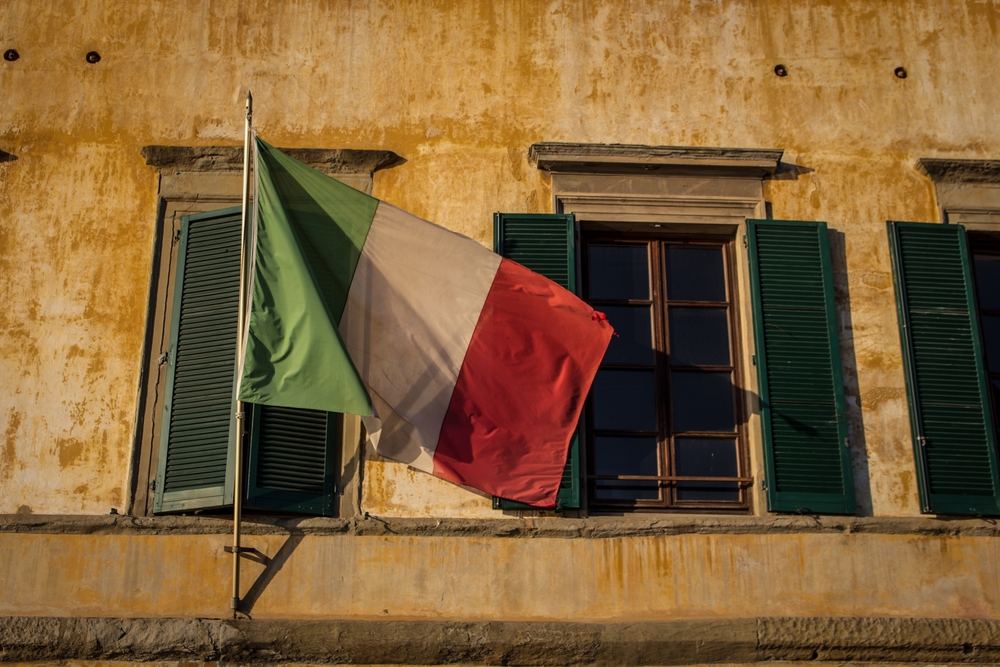
There is a very solid link between Italy and the U.S., which has its roots and finds its motivation in the migratory flows of the late 1800s, early 1900s. Among the Italians seeking fortune and freedom in the New Continent were also my great-grandparents, Vincenzo and Tommasina. After a few years, having achieved economic stability, they returned to their homeland, so their daughters and sons were born in both America and Italy, all in the twentieth century; for more than a century, my family’s lives and relationships have been intertwined on both sides of the ocean, existences that owe everything to the courage of Vincenzo and Tommasina.
Today Italy is witnessing an inverse phenomenon, at least in large numbers. More than 5.3 million foreigners live in the Belpaese, nearly 10 percent of the population. In 2024 alone, more than 217,000 obtained citizenship. But the path to becoming Italian is still a long one for non-EU citizens: ten years of residence, a stable income, knowledge of the Italian language and a clean criminal record.
On the issue, however, there are two recent developments: an upcoming Referendum, which calls us to vote to make it easier for foreigners living in our country to acquire citizenship; and a passed reform, which is profoundly reshaping access to citizenship for those of Italian descent living outside our borders.
In fact, the new citizenship law, L. No. 74 of May 23, 2025, went into effect last Saturday, introducing more streamlined procedures and certain timeframes to reduce long waits, but at the same time strengthening checks on applicants’ requirements through greater use of databases. The reform covers both naturalization and acquisition by marriage and ensures greater efficiency, security, and national uniformity in processes. The changes apply to new applications and, in part, to those already pending, with further operational details to be defined by forthcoming ministerial decrees. Citizenship by descent (ius sanguinis) will be recognized automatically for two generations only: only those who have at least one parent or grandparent born in Italy will be able to obtain it. Added to this, children of Italian citizens will automatically obtain citizenship if they are born in Italy or if, prior to their birth, one of their “citizen” parents resided at least two continuous years in Italy. Among the main goals is to reduce the long waits at consulates where today applications number in the hundreds of thousands and times can exceed ten years, but no less important is the ultimate goal of combating abuse and the “commercialization” of Italian passports.
For those who maintain cultural and family ties to Italy, the new law aims to offer a more streamlined and clear procedure. Those with more distant ancestry, however, may be left out, and because of this, much discussion and controversy has arisen, including in Parliament.
This restrictive reform on ius sanguinis comes at a particular time, since, on June 8 and 9, Italians will be called to vote, among other questions, on a proposed historic change: to reduce from 10 to 5 years the period of residence required for foreigners coming from non-EU countries to obtain citizenship. A measure that could immediately affect more than 2 million people who have resided in Italy for at least five years and are already integrated into the social, economic and cultural life of the country.
The change would have concrete effects right away: nearly 915,000 foreign students attend Italian schools today, and 65 percent were born in Italy. Many of them have always lived in Italy but are not yet citizens. The result? Bureaucratic barriers, fewer educational opportunities, and a dropout rate twice that of their Italian peers.
It is difficult to find a balance of times and requirements when playing with the existences of millions of human beings, today as it was two centuries ago. Every Italian, with the upcoming Referendum, is called to contribute to these important choices for our country: even you living overseas, like Vincenzo and Tommasina more than a hundred years ago.
The article It’s an important (and difficult) year for Italian citizenship comes from TheNewyorker.
