
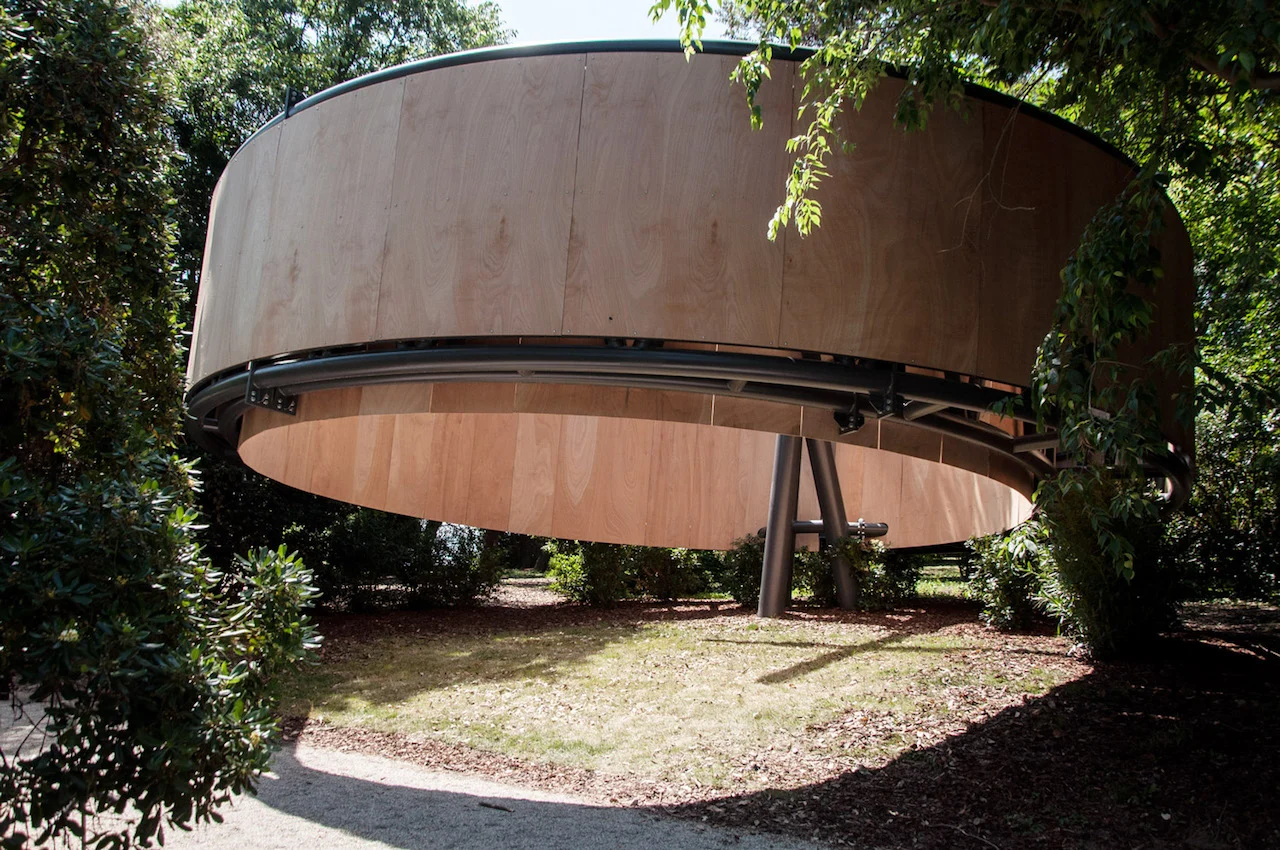
The 61st International Art Exhibition of the Venice Biennale runs from May 9th to November 22nd, and the Holy See Pavilion is one of the most anticipated and unique installations this year. The project is coordinated by Hans Ulrich Obrist and Ben Vickers in partnership with the Soundwalk Collective under the title “The Ear is the Eye of the Soul”. The basic concept is as simple as it is counterintuitive: in an age characterized by immediacy and background noise, the pavilion opts to slow down and rely on listening as a form of knowledge. The initiative is inspired by Hildegard of Bingen, a 12th-century Benedictine mystic and abbess, composer, healer, and thinker who was named Doctor of the Church in 2012. A medieval character, yes, but with a decidedly contemporary voice capable of highlighting current issues, as Cardinal José Tolentino de Mendonça, the pavilion’s commissioner, highlighted. The pavilion spans two Venetian venues: the Mystical Garden of the Discalced Carmelites in Cannaregio, a green space buried within a 17th-century monastery, and the Santa Maria Ausiliatrice complex in Castello, which has been turned into a modern scriptorium. Visitors to the Mystical Garden can use headphones to listen to 20 modern artists’ compositions in dialogue with Hildegard’s songs and visions. The list of names is impressive: Brian Eno, Patti Smith, Jim Jarmusch, Terry Riley, Meredith Monk, FKA Twigs, and many more. The Santa Maria Ausiliatrice complex houses a multilingual library of Hildegard’s books, the liturgical voices of the Bingen nuns, and the final major work of filmmaker Alexander Kluge, who died on March 25 at the age of 94, which unfolds in 12 parts as a strong creative testament. Pope Leo XIV’s words—”to return to serving the rhythm of life, the harmony of creation, and to heal its wounds”—serve as the project’s spiritual compass. A pavilion to be experienced rather than looked at.
News Source: 9Colonne