
by Stefano Vaccara
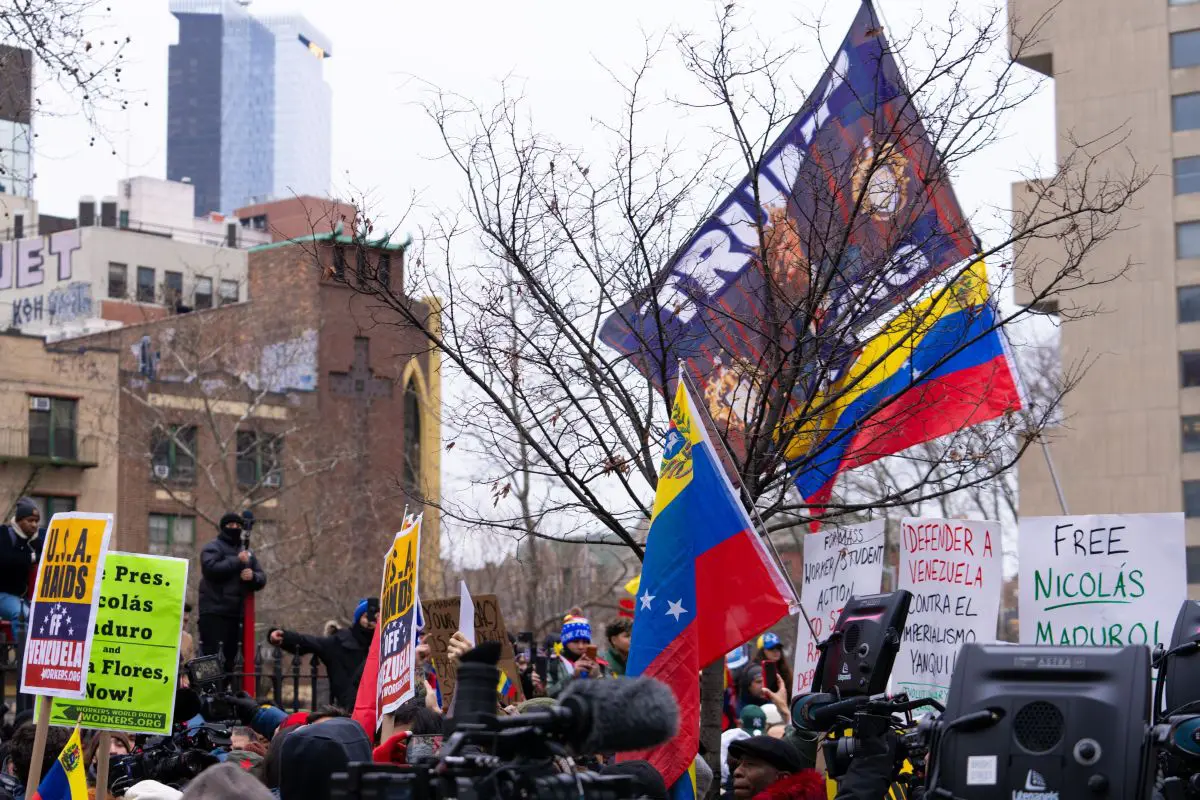
NEW YORK (USA) (ITALPRESS) – Nicolás Maduro appeared on Monday in front of a federal court in Manhattan to face US federal accusations of narcoterrorism, international drug trafficking and possession of weapons. The formal brevity of the hearing – just over thirty minutes before Judge Alvin K. Hellerstein – has contradicted his enormous political and diplomatic significance, while outside the courthouse two opposing factions of protesters have clashed. In front of the court, groups with flags of Venezuela have raised slogans against what they call a “rapture” and an act of imperialism, accusing the United States of wanting to punish a sovereign leader and want to control Venezuelan resources. In parallel, hundreds of opponents, even with Venezuelan flags. they greeted his appearance in chains as a moment of responsibility, invoking justice for years of abuse of power and alleged connivances with drug cartels. The tensions between the two factions were contained by strong security measures: metal barriers, a large array of separate agents and paths to avoid physical clashes. The New York scene, with ambassadors and international observer activists among the barricades, has transformed Lower Manhattan into a symbolic theatre of a crisis that goes far beyond the simple judicial process.
Within the court, Maduro pleaded not guilty of federal charges and insisted that he be “president of my country”, claiming that he was “rapid” of his country and forced before American justice in conditions that he himself described as unjust. The wife, Cilia Flores, arrested in the same blitz that led to the capture of spouses, expressed similar declarations of innocence and reported injuries suffered during the capture. The process is only at the beginning, and hardly a final judgment will come shortly: According to legal experts, the preliminary phase could last months, between defence motions, procedural issues and disputes about the very nature of the arrest; a merit judgment, if it is celebrated, could take over a year.
In the same morning of Maduro’s appearance, the United Nations Security Council met in urgent session to discuss US military action in Venezuela. Many countries, led by Russia, Brazil, Colombia, Cuba and Mexico, condemned the operation as a violation of the UN Charter and Venezuelan sovereignty, calling it a “crime of aggression”. The United States and the ally of Latin America, Argentina, have defended the move as a legitimate measure of law enforcement against a leader considered illegitimate. The meeting ended without any binding resolution, highlighting the deep international divisions on the crisis.
One of the greatest unknowns now concerns the strategies of the administration of Donald Trump, which has already made it clear that the operation against Maduro does not represent a point of arrival but the beginning of a new phase more aggressive than US foreign policy. It is unclear how truly stable and “ammansita” is the leadership that took the place of Maduro in Caracas: Delcy Rodríguez, indicated as a transitional figure, alternated signals of readiness to dialogue with Washington to public demands for the liberation of the former president, fueling uncertainty.
In addition, the Trump administration evoked the possibility of extending pressure to other countries. The President spoke openly about the possibility of future interventions that would involve Colombia, Mexico and even Greenland – the Danish autonomous territory – raising reactions against Bogotá and answers from Mexico City and Copenhagen. The prospect that the United States can once again apply extensive military measures in Latin America has deeply alarmed regional governments and strengthened the critical front within the United Nations.
The figure of Judge Hellerstein, 92, has also become an element of interest: appointed during the Clinton administration, it is known for its independence and not to be influenced by external pressures. According to those who know him, he tends to manage his own bench without taking care of the opinions of others and prefers a tight working rhythm, qualities that could influence the duration and nature of the procedure against Maduro.
On the US domestic level, Maduro’s appearance has already triggered internal political reactions. Members of the Congress of both sides asked for clarification on the planning and authorization of the military operation, with formal briefing requests from the executive. Legal analysts have raised doubts about the lack of a clear base of self-defense or authorization of the UN Security Council, emphasizing the exceptionality of a foreign head tried before American justice. Outside the courtroom, the protests will continue to accompany every appearance of Maduro and Flores, transforming what should have been a legal process into a geopolitical phenomenon. The arrest and trial of Maduro remain at the heart of a global political earthquake that goes well beyond the classrooms of Manhattan, a sign that the action against Caracas could mark a new and unpredictable phase in the international relations of the years to come.
– Photo IPA Agency –
(ITALPRESS).
