
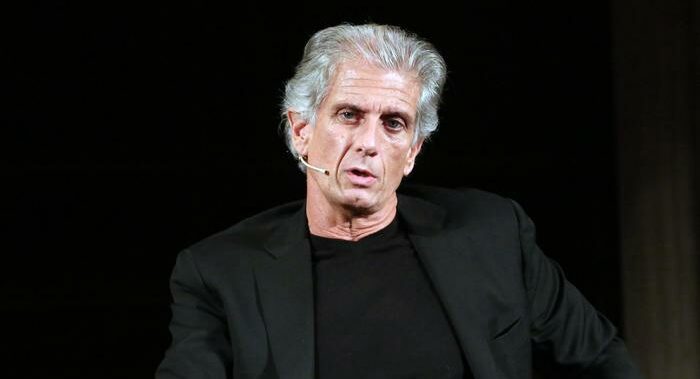
More than sixty years after the company of the batiscafo Trieste, the director Massimiliano Finazzer Flory traces its history in Operation Batiscafo Trieste, a docufilm halfway between historical reconstruction and cultural reflection. The film, commissioned by the Municipality of Trieste and produced by Rai Cinema, will be presented on March 30 in New York, at the Italian Institute of Culture, with an introduction of the Director of the Claudio Pagliara Institute and in a context that recalls the double link – Italian and American – of one of the most significant explorations of the twentieth century. We interviewed the director to understand how he built the story and what perspectives the project opens.
Trieste is an Italian history but with a strong American dimension: how did you work on this double level in the story?
I started with the children who evoke and guard the memory of the fathers. In the end, every story we trust has a family dimension. Piccard and Walsh, children of the protagonists of the company, refer to a European and Italian era from which the twentieth century moves. We are still, in many respects, children of that century
Why bring this film to New York and to the Italian Institute of Culture: what kind of audience do you expect and what do you think it can take of this story?
New York is landing, port, sea – although we often forget about it. But it is especially travel and life, which are also the routes of this film. I expect a curious audience, people attracted by exploration stories, able to recognize that we are made of water and from there we come
The history of Trieste is very technical: how does it make it understandable without simplifying it too?
I worked with the witnesses of the time: people with direct memories, who return a human face to the enterprise. Not only. I tried to bring out the role of visionaries and pioneers, the first to believe. The challenge is not only technical: it also concerns a more inner dimension, the way in which depth is explored, even of man
Is there a moment or a passage of the film in which, according to you, do you really understand what Trieste represented?
Yes. When it turns out that observation of life in the abyss helped to avoid the use of seabeds for the disposal of toxic waste. At that moment we understand that the company of Trieste is not only technological, but also concerns the protection of the planet
After this stage in New York, what are the next steps of the project: distribution, festivals, or other institutional presentations?
The film will continue in festivals, but it can also become a museum installation. It can be an opportunity for dialogue between environment and art, between history and science. The batfofo, in the end, is also a design object: it has a form that makes it, in itself, a work
L’articolo Massimiliano Finazzer Flory at IIC in New York to present <i> Operation Batiscafo Trieste</i> proviene da IlNewyorkese.
