
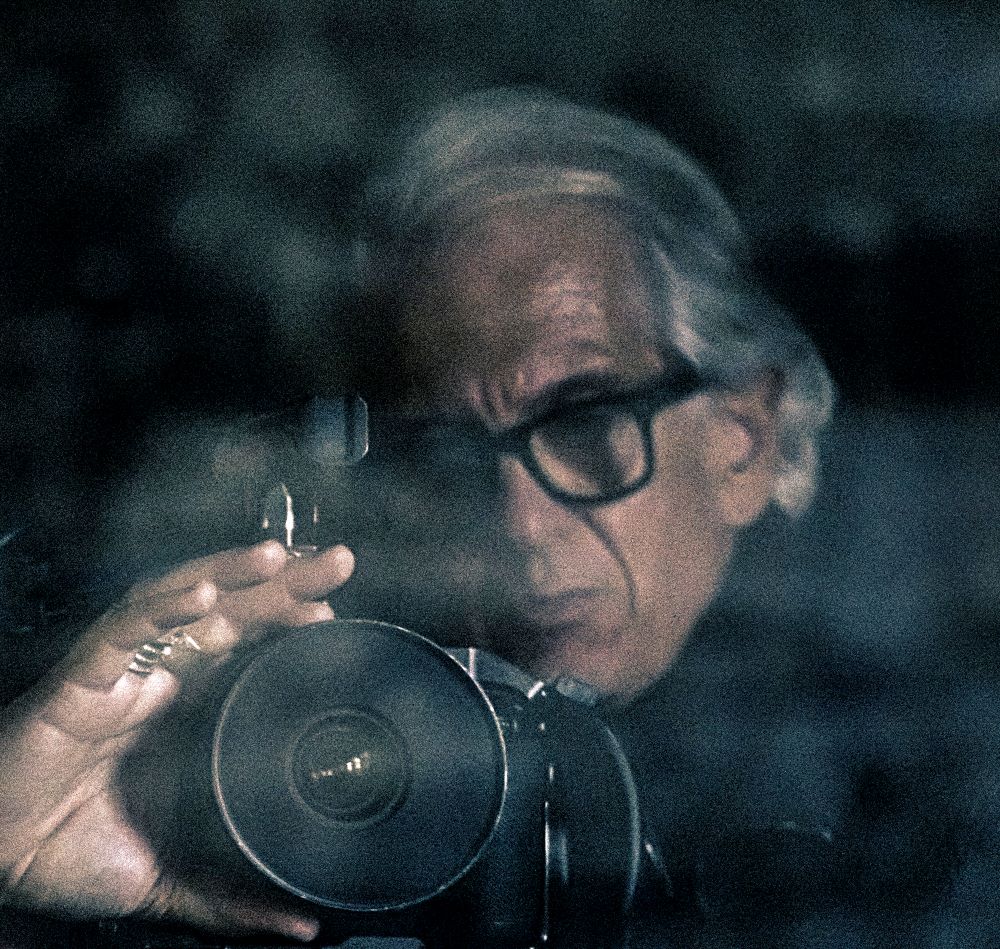
Massimiliano Finazzer Flory is an Italian author, director and performer who for years has been bringing Italian culture to the world through theater, cinema and acting. In New York – where he has been very active for years, offering films and performances – he presented his latest documentary film Il Mecenate – internationally titled The Patron, dedicated to the figure of Galeazzo Arconati – produced by the Augusto Rancilio Foundation, and will then stage a theatrical reading of the Divine Comedy at St. Patrick’s Old Cathedral Basilica. We interviewed him to talk about myths, patronage, memory and the future.
What inspired you to tell the figure of Galeazzo Arconati in this way?Myths. They were a source of inspiration for Arconati and for all those who believe that myth is also a physical experience of knowledge, because it starts from the body, from our body. And this is where Leonardo da Vinci comes in, loved by him and by me. Leonardo also became a myth of himself thanks to Arconati, who owned and donated the Codex Atlanticus, the “lay bible” of our culture.
In the film you explore the boundary between myth and history. What is the value of restoring voice to the myths of the past in the hypermedia age we live in?Artificial intelligence is the fruit of natural intelligence. Whether it is then unripe or the apple of paradise lost is up to us. After all, from the Greeks to today, nothing has changed: we always need idols, stories, cosmos, symbols, victories and misfortunes to tell. We always want to belong to a different era from our present.
You refer to “mental renaissance” as a project for the future. What do you mean by this expression and how is contemporary patronage implemented?Rebirth involves the dying of something or someone whose voice we owe and want to preserve. Renaissance, then, is a new life that does not forget the previous one, but transforms it, offers it hope, faith, charity. And it assigns to art the task of building a community, where beauty becomes a project: the only objectivity of our life. Today we worry too much about valuing the existing heritage, without knowing how to recognize and support what is to come.
You have included several voices in the film. How important is it to create a multidisciplinary dialogue in storytelling?I confess that I always see the world as a whole in relationship. Of course, to understand us we can look at the stars with theology and with astrophysics, at night on a sailboat or with a telescope. But always it is man, the “who we are,” the protagonist of the theater that interests me.
What does it mean for you to present your work in New York?Love and emotion, always. To return to what I consider the most extraordinary of human experiences, which is “being together.” New York is still that: movement of life, a modernity that is part of our heritage.
His Dante reading will be narrated in St. Patrick’s Old Cathedral Basilica, a symbolic place for the Italian-American community and the first event after the Pontiff’s death. What do you expect?Dante is a prophet and he sacrifices himself for us on a journey we always need. From forgiveness to giving. Dante does not comment on the existing: he enhances it. His time machine takes us back to memories and dreams. But everything that happens is true. I expect commotion.
His career has spanned film, theater and literature. Three languages that you have held together. Is this a choice to make the narrative complementary, or passions that come together?It is a family of genres, waiting for a head of the table to discuss with each other. A Living Supper where truth and betrayal stand together. This is how I imagine the necessary dialogue of an actually unique story.
Which of these languages do you feel closest?I remain a man of the theater, because the word is zenith and nadir, it is light among the many doubts of our being here. I like to be a body that becomes flesh on stage.
We are in the Big Apple. How important is it to spread Italian culture here?For the apple to be big, you need a tree and roots appropriate to the earth. Our culture has an organic vision: it looks not only at the bite, but also at the apple itself as a work of art. And in New York this approach can become a lifestyle.
Your next project?There are two. We are shooting with Friuli Venezia Giulia a docufilm on Carlo Michelstaedter, an amazing philosopher who anticipates the evil and the good of the 20th century with a question: what is Europe? And then the United States: there are secrets in New York and Miami that we are about to discover. In the fall, however, I would like to bring back Being Leonardo da Vinci – An Impossible Interview, a play that I consider a must-see and which debuted in New York City itself, at the prestigious Morgan Library, with a sold-out run.
The article Massimiliano Finazzer Flory recounts the myth of Arconati and Italian culture in New York comes from IlNewyorkese.
