
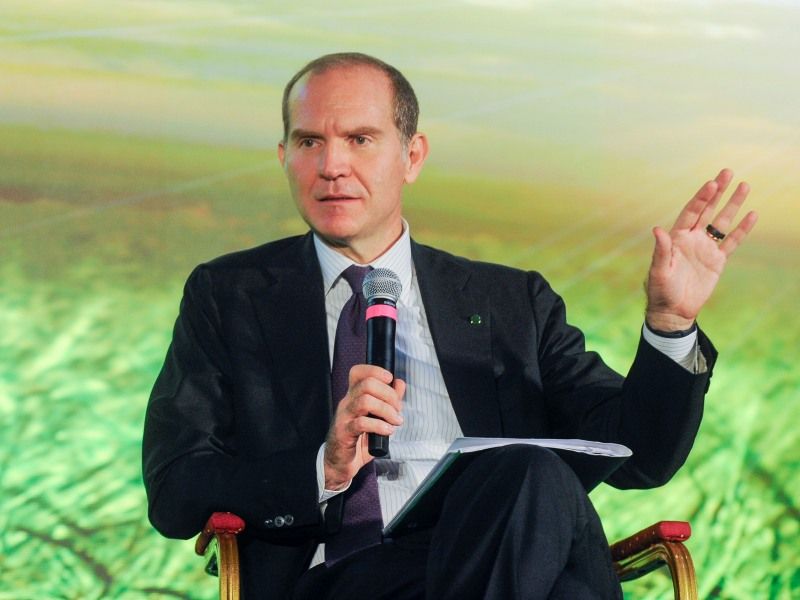
From the threat of U.S. tariffs to climate change and cuts to the new CAP, Massimiliano Giansanti, president of Confagricoltura, denounces the critical issues that threaten the future of Italian and European agriculture and relaunches with a vision based on innovation, sustainability and young people.
The U.S., for the agricultural sector, is the second largest market in terms of exports, with a growing trend that Trump’s tariffs could curb. What is the strategy that Italy and all of Europe must adopt to contain this risk?
The main merit of the agreement is that it finally makes the numbers clear. The 15 percent duties, combined with the devaluation of the dollar-which has lost 13 percent against the euro-equals an additional duty that makes European products even more expensive for American consumers. We are waiting to know the details of the agreement, but from what emerges it would seem to be a heavy damage for Italian and European agriculture. For many sectors, in fact, profitability is put at risk. Europe is a major economic and political power, with an important and often undervalued market. Yet it too often fails to exert its full weight in international negotiations. Here again, as was the case with the single fund for the CAP, President von der Leyen has failed in her commitments to European farmers. The choices made are putting the entire European agrifood sector in difficulty. We therefore expect structural interventions by the Union in the most affected sectors.
Climate change. Extreme weather phenomena are becoming more and more frequent in our country and, every year more and more, they hit the agricultural sector hard. What are the measures to cope with them?
Climate change is already a reality: droughts, frosts, floods, hailstorms are now recurring events. In 2024, in Italy, we recorded more than 350 extreme phenomena, for the third consecutive year above this threshold. The losses for agriculture amount to billions of euros: suffice it to say that, for drought alone, in 2023 the damage was estimated at 7 billion.We can no longer chase emergencies: we need structural measures. Irrigation infrastructure, water recovery, more resistant plant varieties, innovative cultivation techniques. And simpler and more affordable insurance policies, because today it costs too much to protect ourselves. This is the way to make our agricultural system more resilient.
The green transition may be the key to addressing global challenges such as climate change, wars or trade crises. Where do we stand?
We are on the way. The goals of the ecological transition are challenges we share: agriculture and the environment have always been linked. But the transition must also be economically sustainable. The Green Deal, as it was conceived, has shown obvious limitations: it has burdened farmers with constraints without providing adequate resources. We cannot imagine environmental and economic sustainability in opposite directions: they must travel together.
Investment is needed in research, digital and precision agriculture. Confagricoltura is already involved in European projects, such as QuantiFarm, that evaluate digital solutions to reduce environmental impact and increase productivity. This is the transition we want: concrete, innovative, accessible.
The next CAP is one of Confagricoltura’s central issues. What are the risks and critical issues in the financial proposal?
The European Commission’s proposal is unacceptable: cutting more than 80 billion euros from direct payments means weakening European production and undermining food security. We cannot accept it. This shows that the Commission does not pay attention to the agricultural world. Not investing in agriculture means endangering production and citizens, who will no longer be able to buy safe, quality food. We are facing a declaration of war. von der Leyen’s words about the strategic role of the primary sector, spoken during the election campaign, today clash with the facts. Agriculture has been the pillar of Europe for over 60 years: today it is being dismantled for a few more weapons. Thus we risk saying goodbye to a common vision: it is the beginning of the dismantling of the EU. The president assumes a huge responsibility.
What are the elements to focus on to build and cultivate tomorrow’s agriculture?
Three key words: innovation, sustainability, youth. Innovation means digital technologies, precision agriculture, genetic research, techniques that reduce environmental impact without losing productivity. Sustainability means safe and quality food, reducing waste and consumption of natural resources. And then young people: without new generations and without training, there is no future for Italian and European agriculture.
At the National Assembly on July 8, a collaboration protocol between Confagricoltura and Bocconi University was announced to strengthen the dialogue between the world of research and the primary sector. What is it all about?
It is a strategic agreement. Agriculture needs new ideas and economic skills to face global challenges. With Bocconi we will activate working tables, research projects and training paths to bring innovation, market analysis and management skills inside agricultural enterprises. We want to build an agriculture that does not undergo change, but drives it.
What are the most important goals for Confagriculture to achieve in the short and long term?
In the short term: defend an adequate CAP budget, simplify rules, strengthen risk management and ensure access to international markets. In the long term: a more competitive and sustainable agriculture, with more innovation, more technology and more young people. We want farmers to be protagonists of change, not victims of crises.
The article Massimiliano Giansanti: “Without agriculture there is no Europe” comes from TheNewyorker.
