
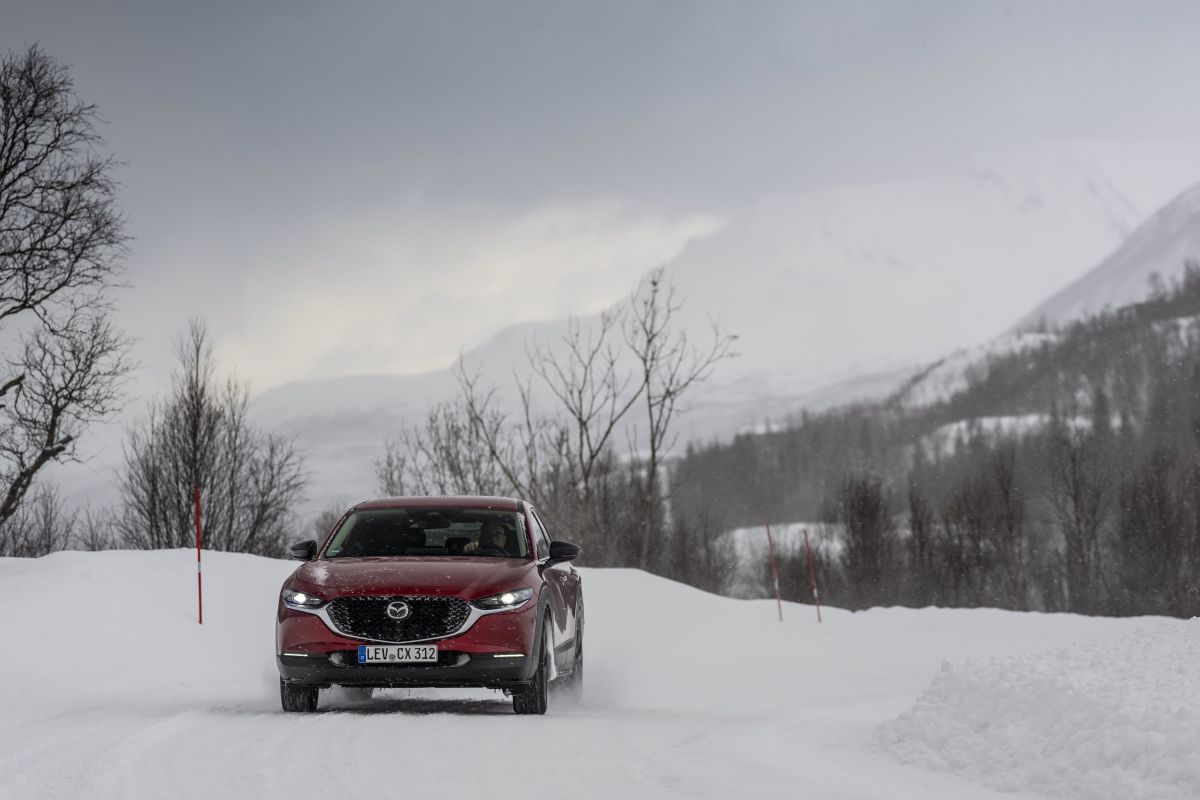
ROMA (ITALPRESS) – For some people, winter is synonymous with atmosphere, adventure and unforgettable moments: from the slopes on the skis, to the frozen landscapes, until the evenings spent in the heat in front of the fireplace and the evenings spent in front of a fireplace. For others, instead, it represents a stress source, especially when you are driving. Here, then, some tips to tackle snow and ice riding in a serene way, turning it into a more relaxing and enjoyable experience. The preparation is fundamental, in winter more than in any other season. And a good preparation starts from a car equipped with the right equipment, beginning with winter tires with a proper tread. The correct choice depends on where and how you drive: There is in fact a great difference between facing the winter myths citizens, the alpine passes or the frozen roads of the far north.
In Europe, three main types of tyres can be distinguished: The four season tyres are an increasingly popular choice. Contradicted by the symbol of the snowflake, they are approved for winter use and allowed by the legislation. In regions with mild winters and varying weather conditions, they are a practical and safe solution. The modern four season tyres offer good performance on cold and wet funds and are ideal for those who travel moderate distances throughout the year. Alpine winter tyres are the standard in most countries in central Europe. Their mix, designed to remain effective even at temperatures below zero, and deep grooves allow to drain water and mud efficiently. They guarantee so high levels of safety and a good road seal on dry asphalt, wet and snowy.
Nordic tyres are designed to deal with the most rigid climates in Scandinavia and some areas in Eastern Europe. The extremely soft mix and the numerous carvings ensure maximum grip on snow and ice, even at temperatures up to 20 degrees below zero. They offer excellent safety on icy roads, but tend to wear faster and can be less performing on dry or wet asphalt. When snow is abundant or the mountain passes become frozen, snow chains remain indispensable, because the tires alone are not enough. In countries such as Austria, Italy or Switzerland, having them on board is mandatory in some regions and in specific climatic conditions. Even visibility, often neglected, is a fundamental factor. Before leaving, it is important to clean all the windows and remove the snow from the roof, as well as carefully observe the road ahead. Being visible to other drivers is just as crucial: headlights, stop lights and indicators must be free from snow and ice, so every car signal remains clear and readable.
During the winter, it is essential to adopt a smoother guide, slow down and maintain larger spaces between vehicles. Steering and braking with calm and precision helps to avoid sudden imbalances that could make the car unstable on snow or ice. It is equally important to predict larger braking spaces in front of the vehicle. A careful, cautious and at a proper speed is essential to address even the most difficult conditions. Combined with modern security technologies, these measures make driving more controlled and safe, transforming the journey into a more serene experience.
Even the most experienced drivers appreciate extra support in unpredictable conditions. Snow, mud and ice can quickly change the road conditions, and in these situations technology becomes a real safety net. Integral traction, such as the Mazda i-Activ AWD system, ensures greater stability and grip. Constantly monitoring traction and weight distribution, it sends power to each wheel as needed, helping the car maintain the correct trajectory on slippery road faces. Additional support comes from security systems such as stability control device (DSC), electronic brake force distribution (EBD) and G-Vectoring Control (GVC), which improve curve stability, balance braking forces and make steering inputs more fluid. These technologies assist the driver without being invasive, offering the stability necessary to face the winter roads with greater safety and tranquility.
Even with the best technologies, concentration remains essential during winter driving. Cold or difficult to reach commands can distract the driver, increasing the risks. For this reason comfort is not a luxury, but an element that favors attention. In Mazda’s cabins, seats and steering wheel can be heated electrically, along with an easy and fast air conditioning to use, create a warm environment that allows the body to relax and focus on. The clear and ergonomic layout of the controls ensures that each function is always at hand. Design also plays an important role, distractions must be minimized. The Mazda interiors follow the Japanese Ma principle – harmony and use of open space. The surfaces are clean, smooth transitions and intuitively positioned controls, creating an environment where the driver feels comfortable. In summary, with the right preparation, careful guidance, comfort and reliable technologies, driving on snow and ice becomes a safe and serene experience.
photo: Mazda Motor Italia press office
(ITALPRESS).
