
by Giorgio La Bruzzo
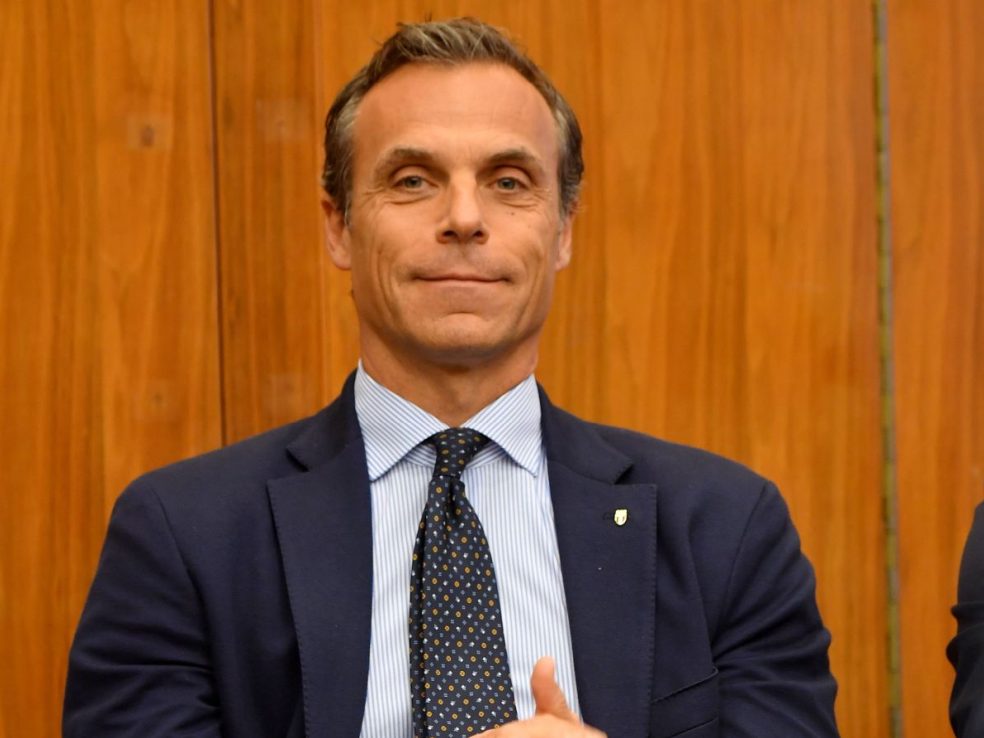
MILAN (ITALPRESS) – A record-breaking Olimpiade of a job that starts from afar, but to stay at the top in the future it also serves more. Milan-Cortina starts towards the conclusion and it is already time of first budgets and reflections. “We went to medal in 10 disciplines on 16, 94 finalists overall. Behind these numbers is the work of the Federations, of the Olympic Committee, of the athletes – emphasizes in the press conference from Casa Italia to Livigno the Secretary General of the Coni and Head of Mission to the Games, Carlo Mornati – After Paris I commissioned to the Censis a study on the true social value of these numbers and came out of the exceptional data: for 89% of the Italians between 15 and 85-90 years it is very important to win some prestigious because from prestige. We had already seen it with the Sinner effect or the Red Moon effect. For us it is a decisive factor.” When there are still cartridges to shoot, Italy has abundantly exceeded the record of the 20 medals that even went back to Lillehammer ’94. “I had said that we had the strongest team ever going to the Olympics and today we can say that it was like this: on 106 races, in 70 there was at least one finalist of Italy Team. A force that has been capitalized with the number of medals.” “We presented ourselves with 63 potential podium races, so there is no one of the 27 medals that was not expected. They are all medals within a well-defined perimeter, both numerical and performance.”.
So far the Coni has taken into account 1.120.000 euros of scholarships (destinated to those arriving between the top4) and 6,240.000 prizes for the medalists, in Milan-Cortina were brought 196 athletes but also “268 officials, 50 of the Olympic Committee and 218 of the Federations. Numbers on which the cone is undisputed Olympic champion. The incidence of excellence is superior to athletes and only happens to us: the average should be around 100, the technical support part is higher than our competitors. The organization is not trivial, there is a upstream planning, we have created parallel villages in each cluster.”.
There is also the contribution of the Institute of Sports Medicine and Science, with the Coni that directly followed 104 of the 196 athletes present, “which means that the Federations have great trust in us and in our instruments”. Behind these numbers there is a job and programming that start from afar. “The finalization at the Olympics, however, is extremely difficult, requires a spirit of greater adaptability than the average they are accustomed to.”.
And playing at home was helpful. Many results also come from the venue choices made seven years ago. Playing a medal on Stelvio, Tofane Olympia or Anterselva is like bringing a tennis player to Wimbledon. The results are also linked to the technical-agonistic structures they found. If you’re used to competing in Kitzbuehel, Wengen or Bormio and then you’re on a lost track in China is not said to win the best.” It was also an Olympiad with strong pink colors. “Women have done crazy results as in Paris but we actually have 19 women medals and 25 men. There is no higher or lesser level of technical attention, ours is an extremely valid system because often men and women train together and are followed in the same way. Then there are historical moments and at this moment women have a greater benefit. Then the results depend on the context you live, the opponents.”.
Good news. But looking at the next edition in France we have to deal with an average age of medalists over 29 years. “It is the mirror of our society – says Mornati – Italy is the second oldest country in the world behind Japan and the first victim is the world of sport.”.
“Today we make results much better with a lower human sample than the past: compared to 1996 we have 4.5 million young people less between 18 and 30 years. There is a technical approach higher than the average, ours is a handicraft of excellence – continues Mornati – Today we work in the very short term but it serves a change of mindset, sport must begin to do it at school, within the educational plans as in the Anglo-Saxon countries. The school must understand the great benefit it has to give to the sports system otherwise it becomes complicated and sooner or later these results will go down. In the last 12 years we have pushed a lot to invest in the youth sectors, the demographic decrease is felt but the results are on our side: having won the medal of the Gangwon Youth Games two years ago means that there is hay in cascina. It is clear that replacing sacred monsters is difficult but there are the premises to continue with a high competitive level in all disciplines.”.
And then there is the infrastructural question. “Plantism is a vulnus but the government has become aware of the real situation of what can be done. It is important that the Olympics raise the problem and it seems to me that it happened: you are thinking about how to do so in order to continue to have the ice slopes. Lato Coni there will always be this spur to invest on the farm”.
– Photo IPA Agency –
(ITALPRESS).
