
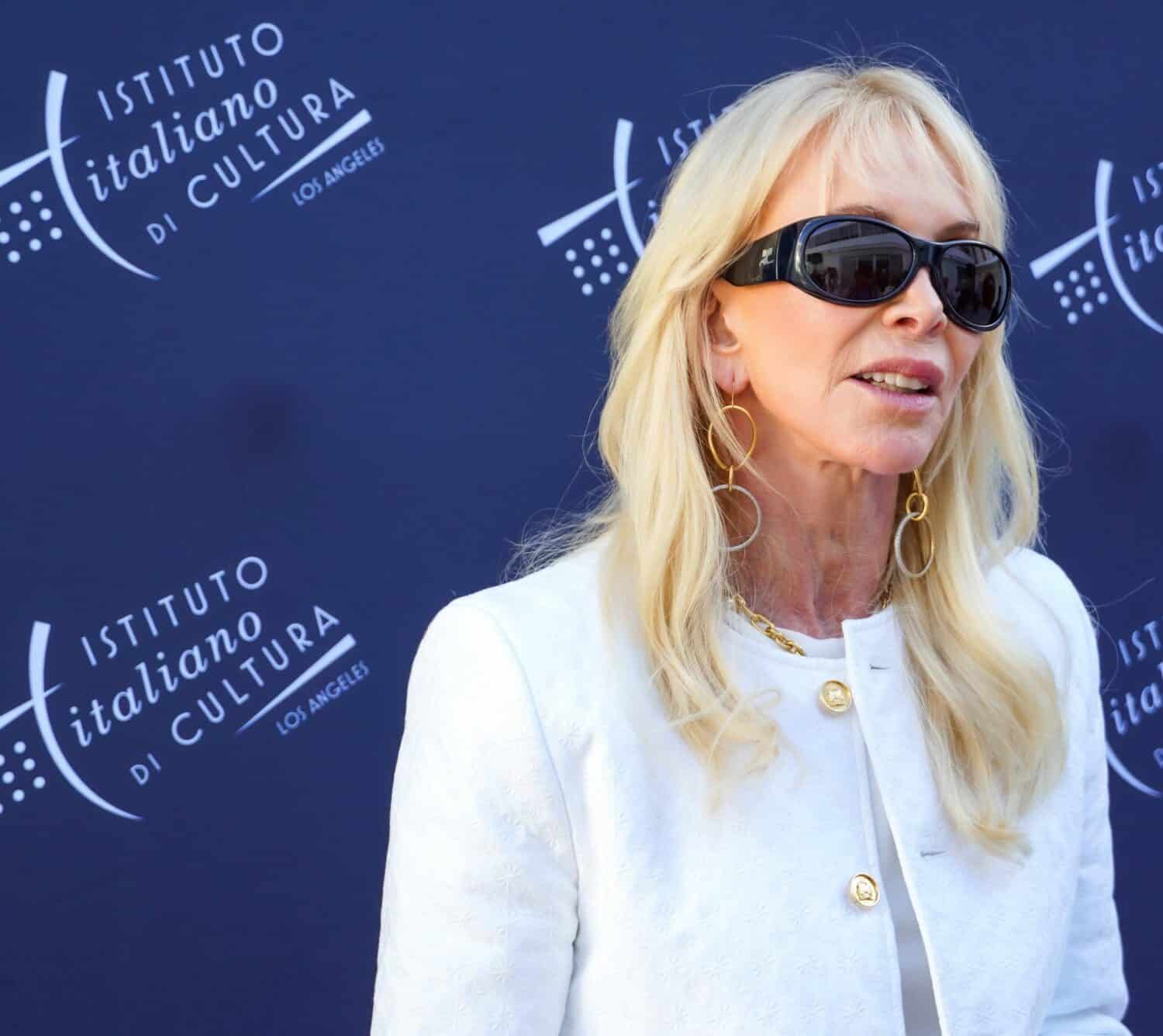
British actress and filmmaker Trudie Styler presented in Los Angeles the documentary I Can Enter, born of her first encounter with Naples. Invited by MAD Entertainment and supported by RAI, Styler traveled through the city with fresh eyes, literally knocking on the doors of its inhabitants to tell their stories. We interviewed Styler at an event at the Italian Cultural Institute, where she had a conversation with Dante Spinotti, the historic director of photography with whom she shared the project.
How did the “I Can Enter” project come about and what prompted you to tell the story of Naples from such an intimate perspective?
I was contacted by MAD Entertainment-from Luciano and Lorenzo Stella, and Carolina Terzi-who proposed the idea of a documentary on Naples, supported by RAI. When I said I had never been there, they replied, “Perfect! Rai is really looking for a fresh look, virgin eyes on the city.” Naples, in fact, is often told with prejudice: it is seen as dangerous, messy… So I accepted the challenge. I know Italy well: I worked in Rome and Tuscany, I gave birth to a son in Pisa, with Sting we have a house in Tuscany and also a pizzeria. But Naples, until that moment, I missed it. And here I am, four years later, with Posso Entrare, presented at the Italian Institute with Dante Spinotti.
What impression did Naples leave on you at the end of this trip?
It was a transformative experience. Naples is magical, mysterious, full of contrasts: light and shadow, joy and melancholy, music and silence. It is a deeply emotional city that has changed my way of thinking. Despite the economic difficulties, I found a lively, generous, welcoming community. Naples is poor in means, but very rich in humanity, in compassion, in laughter, in song. It is a city that celebrates life every day.
What was it like working with Dante Spinotti again?
I’ve known Dante since 1987, when we shot Mamba (later to become Fair Game) together. It was my first film, I had a role practically alone for 12 weeks, locked in an apartment with snakes! Greg Henry, the other actor, worked only three days. In that context, Dante was my point of reference: he spoke English, was present and sensitive. After so many years, getting together for this project was natural. We have a shared language, an instinctive exchange.
In the film, the main characters are often ordinary people. How did you choose the stories to tell?
Some I looked for, some came to me. Walking around Naples, I would see people behind the windows of the basses-the apartments on the street level-and out of politeness I would knock and ask, “May I come in, ma’am?” The answer was always the same: “Yes, come, of course!” I would find myself drinking coffee, playing with children, talking to those who lived there, asking what they thought about the city, about their neighborhood. Deeper connections grew out of these spontaneous encounters. They would tell me, “You have to meet Don Antonio!” – Don Antonio Loffredo, who does so much for the Sanità neighborhood. So, step by step, the narrative took shape.
If you had to choose one thing you love most about Naples?
I couldn’t. It would be impossible. Naples is its people. It is the love of life. As Roberto Saviano says, “Naples is always today.” Because you never know what will come next. Naples is here. Now.
The article Naples as told by Trudie Styler, door by door comes from TheNewyorker.
