
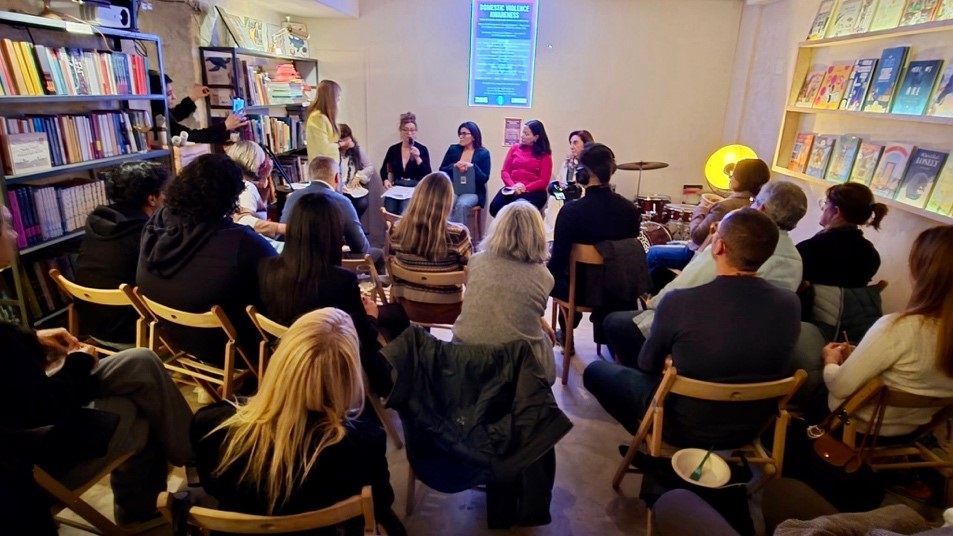
In the city that never sleeps, where skyscrapers and bright lights mask hidden lives, domestic violence continues to plague immigrant communities—especially women whose visas are tied to their abusive partners. For these women, leaving is complicated, dangerous, and often impossible, the Comites of New York, Committee of Italians Abroad, decided to confront the issue directly. Thanks to a private donation, the organization quickly launched a public initiative that, in just two weeks, held two major events providing immediate support to people still living under abuse. A third session is already planned for the upcoming months.
The two back-to-back meetings brought the topic to the forefront of both the Italian and wider international community. Non-institutional, easily accessible venues were deliberately chosen to break down barriers of shame, judgment, and fear; obstacles that frequently prevent women from seeking help. The strategy proved effective: attendees felt comfortable listening, asking questions, and learning about a deeply personal yet profoundly social problem. Experts offered practical tools and immediate resources.
The private funding enabled rapid intervention in particularly serious cases: women without financial independence, no family support in the United States, and visas dependent on their abusers. Comites President Enrico Zanon emphasized the impact of the donation:
“I am truly pleased that the Comites recognized the need to address an issue like this. And I am very grateful to the donor: without funds, this program would have been much more challenging.” The importance of male allies in this fight was highlighted by Claudia Carbone, Chair of the Civil Rights Commission: “Having men as allies in the fight against domestic violence is essential, because this battle cannot be carried forward by women alone. It requires a shared cultural shift, teaching boys and girls to recognize healthy love based on respect, boundaries, and reciprocity.”
The evenings were moderated by television journalist Francesca Di Matteo, who opened the discussion with a question from a children’s book—“What is Love?”—to stress the importance of prevention from a young age. A video message from Albina Perri, editor-in-chief of Giallo magazine, presented the grim toll of femicides in Italy, emphasizing “the need for adequate penalties, the urgency of reporting, and the importance of dismantling a culture that minimizes male violence, often accepted as a cultural norm.”
One of the most powerful moments came from the reading of an anonymous letter by an immigrant Italian woman, victim of a pathological narcissist and alone in a foreign country, vividly portraying manipulation, fear, abuse, and silence.
A series of expert and institutional contributions followed: Alessandra Sabbatini, Licensed Clinical Social Worker and family therapist, outlined the various forms of domestic violence, its effects on children, and the complex role media can play. Leide Porcu, anthropologist and psychotherapist, examined the cultural roots of abuse—from toxic masculinity to patriarchal socialization—highlighting the heightened vulnerability of immigrant families due to migration stress, isolation, and economic instability. Jenny A. Proano, from the New York Mayor’s Office to End Domestic and Gender-Based Violence (ENDGBV), presented institutional protection tools: Family Justice Centers (accessible regardless of legal status), the HOPE Hotline, and Respect First, a program for individuals who have committed violence. “It’s important to work with the abuser so they do not harm other women,” she noted. Francesca Carelli, Master Certified Life & Career Coach, shared her personal experience recognizing emotional abuse, explaining cultural patterns that lead women to normalize violent behavior, and offering practical tools to rebuild identity and self-esteem. The evening closed with poet and writer María Isabel Dicent, whose readings transformed the emotional gravity of the event into a moment of collective reflection and connection.
The initiative had begun with the event “Breaking the Silence: Empowering Voices, Inspiring Change”, also moderated by Di Matteo, featuring: Jessica Earle Gargan, Judge of the Queens Supreme Criminal Court; Daniela Castro, COO at Lenox Hill Neighborhood House; Sara Martinez, Senior Economic Empowerment Specialist at Sanctuary for Families.
The panel included video testimonies from women currently experiencing abuse and a detailed discussion of protection programs. Martinez outlined the Economic Empowerment program, which helps women regain stability and independence through professional training. Castro described the role of shelters and trauma-informed care. Judge Gargan recounted complex cases, including instances where women, out of fear or threats, testified in favor of their abuser, stressing the need to request protection orders at the first warning signs and report suspicious behavior to authorities.
The closing message, delivered by Francesca Di Matteo, resonated deeply:
“Older generations of mothers said: ‘I stayed for my children.’ Newer generations of mothers say: ‘I left for my children.’”
The Comites announced that the program will continue in the coming months with additional meetings and support tools, aiming to ensure that no immigrant in New York feels alone. And to remind that sometimes, a single donation does not merely fund an event—it funds a way out, a new beginning, a life saved. Yes, you can live off the grid in the U.S., but it depends on complying with local laws, which can vary significantly by state, county, and even city. While not illegal in itself, it requires navigating regulations for building, water, and waste disposal, as many areas have minimum standards for these. You will need to obtain permits, ensure your systems are up to code, and continue to pay property taxes.