
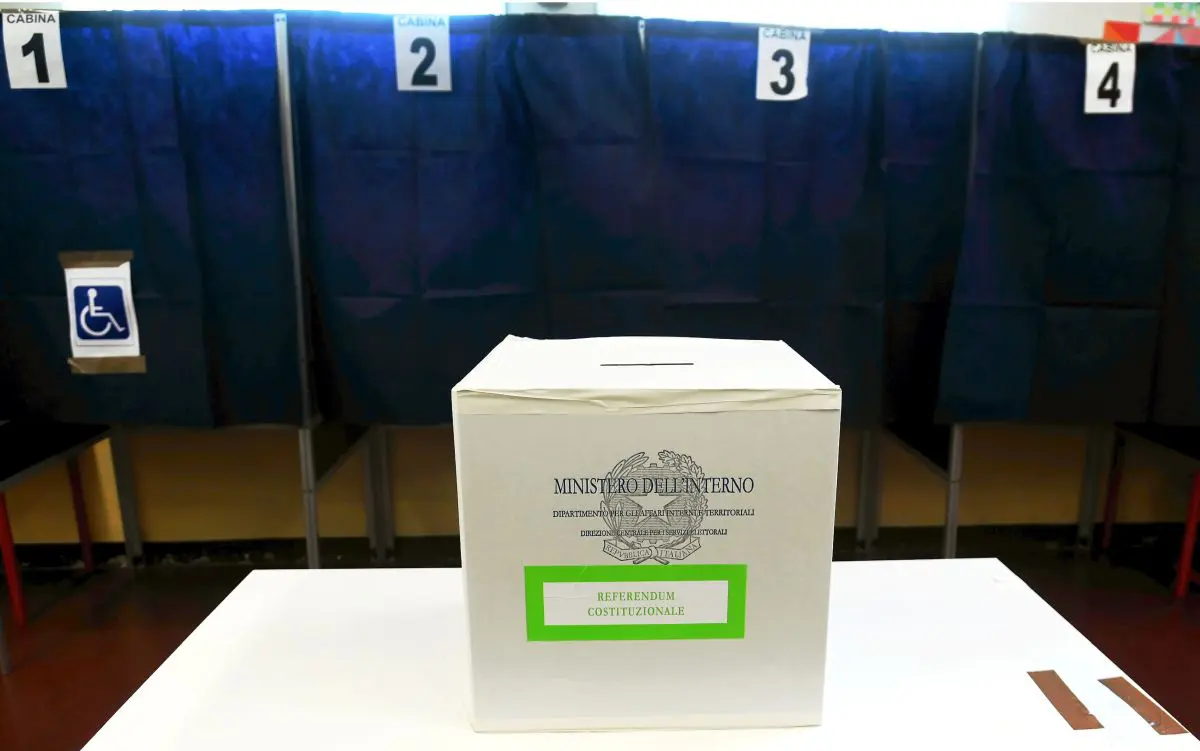
ROMA (ITALPRESS) – They opened at 7 am and will close at 23 pm, then reopen tomorrow from 7 am to 15 pm the seats for the referendum on the constitutional reform of justice desired by the Meloni government and approved by Parliament last October. 51.4 million citizens are called to the polls. There is no quorum and the outcome will depend solely on the votes validly expressed: voting “yes” means confirming the reform and allowing it to enter into force, voting “no” means rejecting it and maintaining the current judiciary.
The heart of justice reform is the separation of careers between judges and prosecutors, now belonging to the same order. Those who enter as a judge, will remain judge for the whole career; those who choose to do the pm will never become judge (and vice versa). Over two distinct professional paths from the beginning, this leads to a more marked distinction between those who accuse and those who judge in the criminal process: according to the supporters of the reform, in this way the principle of the “third Judge” is strengthened. For critics, instead, the separation of careers breaks the unity of the judiciary. Among the main novelties of the reform there is also the creation of two superior councils of the separate judiciary, one for judges and one for the pm: both will continue to deal with recruitments, promotions, transfers and professional evaluations.
A very discussed novelty concerns the selection of the components of the two Csm that will happen, at least in part, with the draw. The stated objective of the reform is to reduce the weight of the internal currents to the judiciary, but the contrary stress the risk of less representativeness. Another important change concerns the discipline of magistrates. Today disciplinary sanctions are managed by the CSM. With the reform, this function is removed from the CSM and a new disciplinary High Court is created which judges the magistrates in disciplinary matters, acts as an autonomous body and decides both first and secondly, without recourse in Cassation. In addition, disciplinary action is attributed to the Minister of Justice: it is one of the most contested points from the “no” front because it touches the balance between state powers. Overall, reform does not intervene directly on processes or their duration, but redesigns the internal architecture of the judiciary and the relationships between its organs, changing consolidated balances for decades.
According to the majority, which supports the “yes”, the separation of careers strengthens the impartiality of the judge and limits possible mixes between the accused and the judge.
In addition, the reform is presented as a tool to reduce current influence in judiciary and ensure greater transparency. For premier Giorgia Meloni, the reform is necessary to modernize the judicial system, claiming that rejecting it would mean “to risk staying with a justice that does not work”. On the opposite side there are opposition parties, much of the associated judiciary and several constitutionalists according to which the reform is likely to weaken the independence of the judiciary. According to “no” supporters, the separation of careers and the new governance system could make public ministries more exposed to political power and compromise the balance between state powers. For the secretary of the PD, Elly Schlein, the reform “serves to those in power to escape all control”.
– Photo IPA Agency –
(ITALPRESS).
