
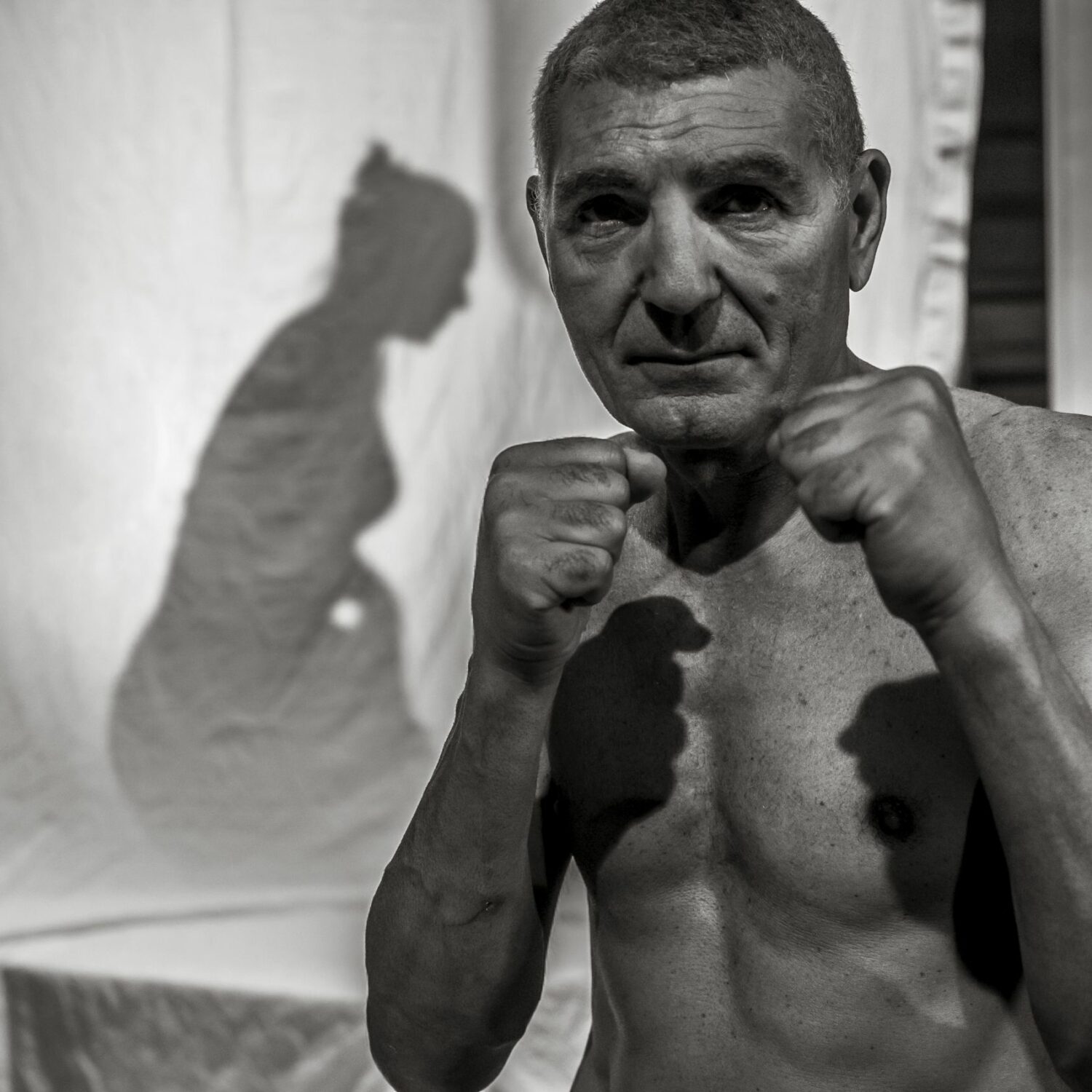
They call him ‘O Sparrowhawk since he has never stopped in the face of anything or anyone, and enthusiasm is his strength that helps him fight life’s adversities in a purposeful and above all constructive manner.Born in Naples in 1959, Patrizio Oliva is a former Italian boxer who was Olympic boxing champion in Moscow in 1980, as well as EBU European champion in super lightweight and welterweight, and still WBA world champion in super lightweight.Awarded a medal and parchment in the hometown of the legendary De Filippo, Sofia Loren – “I am not Italian, I am Neapolitan!” – Totò and others illustrious still, we interviewed him for the meeting “Metti una sera al Santuario” directly in the Sanctuary of the Immaculate in Chiaia in Via F.lli Magnoni. Definitely a beautiful artistic moment accompanied by the melodies with accompaniment-guitar of soprano Tania Di Giorgio, in the company still of high poetic and theatricality, by the many guests who were also honored in a hall packed very much.Affable and extremely kind, Patrizio Oliva in the radiance of his beautiful sculpted face, puts at ease the people in front telling about the values of sport of which he is its ambassador.
But have you, in the course of your profession, taken more or given more? “Well … the results say I have given more. Out of 155 fights I won 150 from amateur to professional, so … more dates!”
He laughs wryly, then sticking his hands in his pockets. Or fists, if you prefer! In the meantime we continue by asking him about better satisfactions.
Logically, he will have fought in every part of the world!”I have worked extensively in America, Canada, Russia and elsewhere, but it was in Italy that I did most of my career since I was in demand by Italian municipalities and very much in demand by television stations.”
Any American memories can you tell us? “Why not, of course! I definitely had a good time with them in the 1980s, times of ‘Little Italy’ with sequels of their traditions brought along well. Did you know that the Neapolitans born there spoke only Neapolitan? Today, unfortunately, the children of Italian immigrants do not know a single comma of this, having forgotten our customs, our folklore, no longer celebrating the beautiful festivals of before in honor of San Gennaro, St. Anthony and more. Then again … you know, the new young people have other things on their minds.”
It seems that this America has remained in her heart. “Why not? I go there regularly twice a year; just now I returned from New York to visit my daughter Alessandra who is vice-consul right in New York. It was an immense joy to embrace the beloved granddaughter and Alessandra who is doing so well there. A great girl, tough as nails, who is at the Farnesina as a Foreign Ministry mission official. She was previously operating in Ghana.”
When you move, how are you doing with your tongue? “I get by!”
Favorite places? “I really like their Italian restaurants, their meat is so good…and then off on a boat admiring the Statue of Liberty – always a great thrill – as well as the Brooklin Bridge, Manhattan, Times Square…and more. There is always so much to see and see again with extreme pleasure.”
Well, let’s come to something else. Do you remember your first opponent on American soil? “My goodness, so much time has passed! However… the first professional match with that guy… Burton, yes…, but it was not a title, but a match to make myself known to the Americans. New York in those days was a fascinating, beautiful land, today it has changed so much. Better, worse, buth, then again, everything changes!”
What are you currently involved in? “In many things, Carlettì. In the world of sports I am a coach of the National “Under 15″ team, I then have a gym together with the other Olympian Diego Occhiuzzi where we welcome the disadvantaged for free, charging a much lower fee in comparison with other gyms. What more can I say? That we are proud of it, that it is beautiful and that all, but really all sports, including fitness, are practiced. I will never forget to observe that sports is everyone’s right!”
In this cheerful and colorful alleyway, characterized by cloths hanging in the air, religious images placed in the various corners of the city with the end of an amazing pastry shop down at the bottom looking out to the sea, the curiosity to see Patrizio Oliva up close is very strong, remembering that the former boxer, in Napule, is known and loved as Maradona.Immanent, as a result, young and more mature people approach benevolently as we continue to interview him. “”Uhèèè, Madonna mia… guadda ci stà, Patrizzziiiio!”And everyone runs, including children, for the various selfies. “Later, later, ‘ragà’!” – he replies – and then everyone in line waiting to be immortalized next to their idol.
We resume by pointing out his great serenity combined with great fortitude. We thus assume a truly stellar career with no regrets. “Regrets? When ever! I’ve won everything there was to win, and so I gladly devoted myself to other things by being a theater actor as well, writing books, being called to the movies and, soon, my life will be released on Rai 1.”
So good satisfactions and lots of them!
But has life really been so generous to you? “No, no, I’ve had my fair share of difficulties, too. Big but not insurmountable ones, that’s why I never stopped fighting, thinking that life should be lived as best as possible. One of the motivations that pushed me in running toward the right path was the loss of my brother — yeah, he 15 and I 12. Immense grief. On his deathbed I told him that everything I would do in my career I would dedicate to him. I fought the honor of his death without stopping at all. I could have done other things, but I became a world champion and so it’s okay!”
Inevitable is the tear of the listener as it falls on the floor of the Sanctuary opposite.A memory that shook even our champion, despite the fact that the next moment, he advances with a strong and proud gaze looking us fixed in the eyes.
His impressions of today’s world. “Ehh, a world unfortunately where a good part of the youth is in disarray…values are lacking, consequently the youth are attracted by false myths leading them to get lost. The institutions are there, however, more should be done by being more on their side. Being positive helps, so I sincerely thank this Sanctuary in Chiaia, which hosted me and rewarded me, and which does so much for the recovery of all forms of discomfort, activating further in the various cultural sectors as well.”
Definitely a good talker. If you were offered to run for office politically would you accept? “No, with all due respect I would not accept at all. I don’t like politics-it’s not for me since too many people compromise, promise and don’t deliver. That’s not good.”
His Naples? More joys or more sorrows? And again his thoughts on the fiction “Mare Fuori” with so many new episodes always ready for later seasons. “So… fictions like “Gomorrah” it’s not that they make kids become criminals, although the risks of being simulacra of exaltation for those who live in such an environment is obvious. We are talking about stories that really happened, with stories fictionalized further to further grab the interest of the audience. However, “Sea Out” is different. Different because it seeks to recover juvenile prison youths through the various governesses who do their best through positive virtue-a life mission-since there is the bad as well as the good! And so it is good to accept those who save you, understanding that change is vital for a new life! Going back to “Gomorrah,” although it was a good film and TV product, it showed questionable themes given that similar situations do not only exist in the Neapolitan and Campania region, but everywhere! Because they happen in Milan, Rome and other regions still, including the whole world. So please, let us also show our good and beautiful virtues full of stories and traditions.”
Maybe even accompanied by our memories by evoking local customs and traditions. Well…local not really, otherwise what globalization is it?
The article Patrizio Oliva tells what he found (and lost) in America comes from TheNewyorker.
