
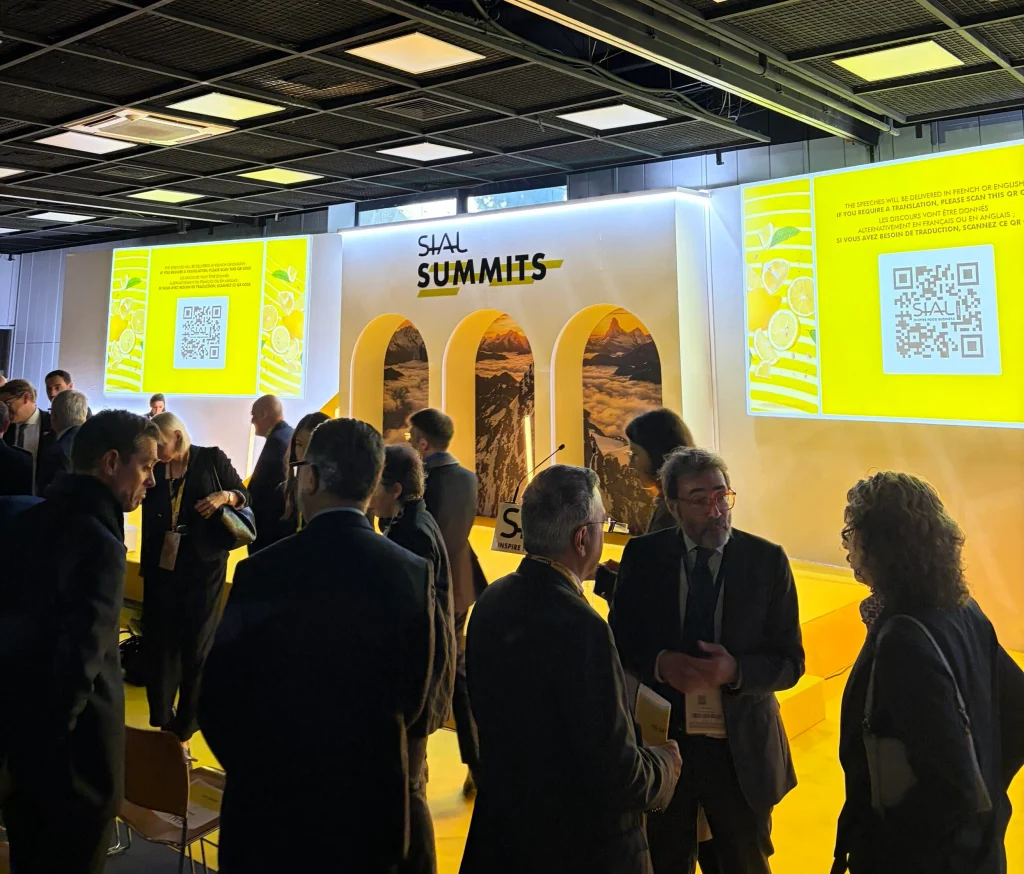
Italian exhibitors at SIAL Paris 2026 brought products closely associated with their places of origin: Sardinian cheeses, Calabrian ’nduja, Molise truffles and the ingredients used in Neapolitan pizza. They presented them at a trade show where buyers were also examining new foods, consumption formats and production methods.
That combination made Paris a useful meeting point for a food industry seeking to expand internationally while retaining the characteristics that distinguish its products. Around 700 Italian companies attended the five-day exhibition, which closed on Wednesday, October 21, at Paris Nord Villepinte. According to the Italian Embassy in Paris, Italy had the largest national exhibition footprint.
The show’s innovation program marked its 30th anniversary with more than 2,750 submissions and 775 selected innovations. For Italian producers, changes in packaging and distribution are part of the same commercial discussion as product quality and origin: entering another market requires understanding how goods will be sold and consumed there.
The scale of SIAL gives businesses access to many of those markets in one place. Its official exhibitor directory listed nearly 7,800 exhibitors. Organizers had forecast approximately 8,000 exhibitors across 280,000 square meters and 295,000 trade visitors.
Italy’s participation included a collective pavilion organized by ICE, the Italian Trade Agency, with 218 companies across approximately 3,000 square meters. Universal Marketing, led by Donato Cinelli and the Italian representative for the SIAL network, coordinated more than 200 companies, consortia and producer organizations across over 3,000 square meters. Sicily, Calabria, Campania, Molise, Lazio, Sardinia and Puglia were involved.
Regional backing and shared exhibition arrangements help smaller businesses manage participation costs and logistics. They also place less widely distributed products in front of international buyers.
Molise focused on micro and small companies and certifications, with wine, olive oil, cheeses and truffles among its offerings. Calabria’s 39 food and beverage businesses presented baked goods, ’nduja and citrus drinks. Sardinia highlighted Pecorino Romano, Pecorino Sardo and Fiore Sardo, three PDO cheeses that account for an important part of its dairy sector, while contending with the additional costs associated with island production. Sicily, Lazio and Puglia brought companies and consortia representing their regional industries.
Campania introduced TuttoPizza International in partnership with Comexposium and Universal Marketing. Demonstrations and tastings presented the supply chain behind Neapolitan pizza, including flour, tomatoes, mozzarella, fiordilatte and olive oil. Comexposium Group CFO Arnaud Boussemart told ilNewyorkese that the collaboration places a globally familiar product within SIAL’s international business network.
Through the Approdo di Ulisse local action group, Campania also presented food as part of a tourism offering. “Nuove rotte per i nuovi mercati” brought together products from the Sorrento Peninsula, Amalfi Coast and Capri with local restaurants and cultural attractions, addressing both importers and potential visitors.
The commercial stakes are substantial. Italy exported more than €72 billion in food and agricultural products in 2025. As Italian Embassy figures indicate, France was the second-largest destination after Germany, importing €6.84 billion, up 4.78 percent. Imports reached €3.35 billion in the first half of 2026, an increase of 2.3 percent.
In Paris, ICE President Matteo Zoppas reiterated Italy’s overall export target of €700 billion and discussed tariffs, conflicts and instability. He also raised the issue of “Italian sounding” products made elsewhere. For the businesses exhibiting at SIAL, identifying authentic origins and adapting to foreign markets remain closely connected parts of selling abroad.