
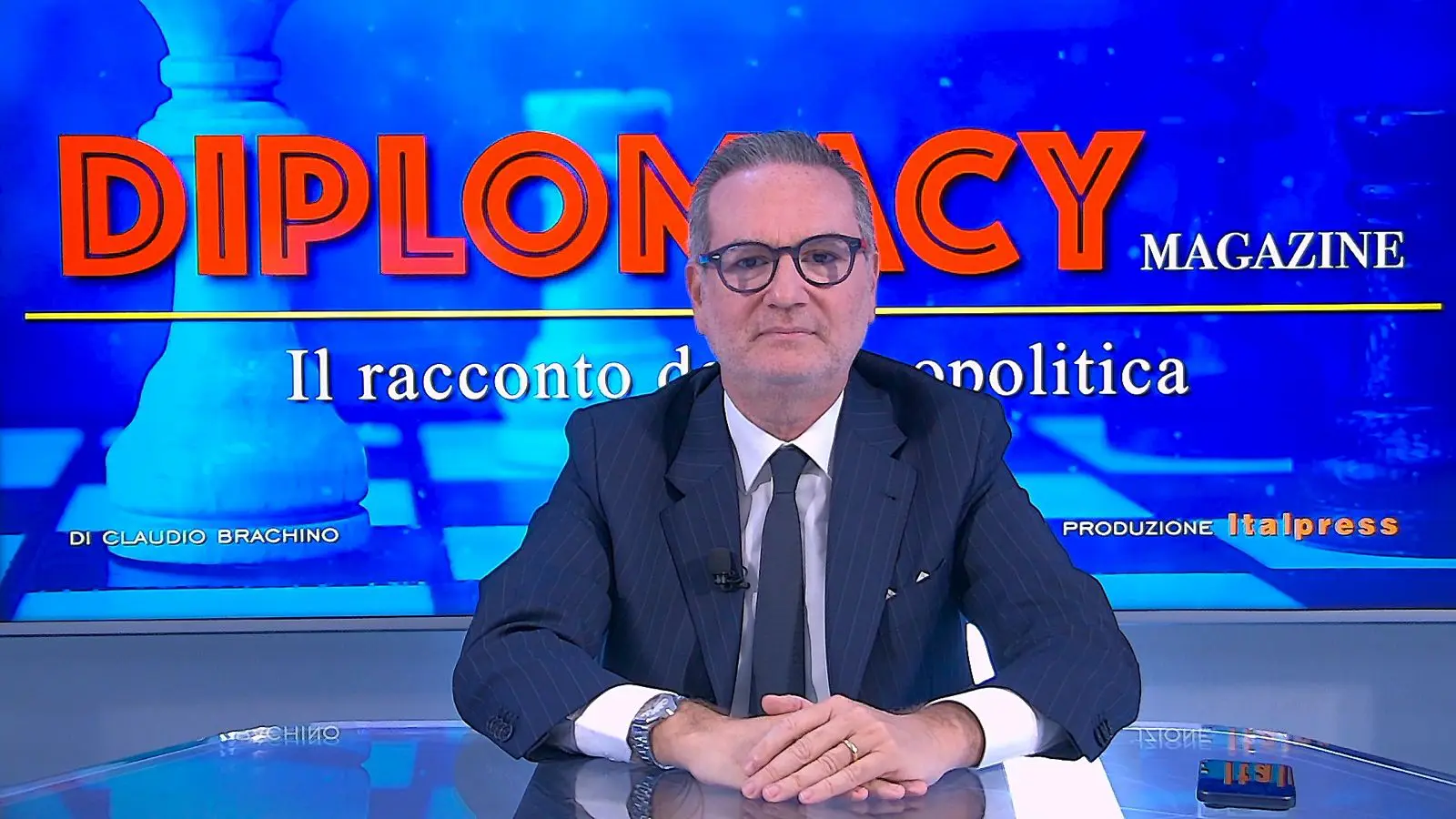
ROMA (TALPRESS) – The attempt of a change regime in Iran “failed” and for now there was “no change within the same power with a more moderate figure”. It is the opinion of Daniele Ruvinetti, senior advisor of the MedOr Foundation, interviewed by Claudio Brachino for the column of geopolitics Diplomacy Magazine of the Italpress agency. “It has failed, we have seen it, because in the field there was not technically an armed formation of opposition that could somehow take power”, explained the expert doing as opposing examples Syria or Libya, “or Afghanistan when the Americans supported the famous North Alliance against the Taliban.” In this case, Ruvinetti pointed out, there is no internal element to be supported. “There are manifestations, but they are peaceful manifestations, especially young ‘with bare hands’. So there was no change, but there was no change within the same power with a more moderate figure,” he observed.
Iran is also a country that “for so many years” is strengthening its own war arsenal, has still explained the senior advisor of MedOr. “The famous Shahed drones, small drones at low cost, are putting in great difficulty the Gulf countries,” said Ruvinetti, recalling that even from the missile point of view Tehran has developed over the years a significant capacity, with even up to 4,000 kilometers. “We remember that Iran sells drones to the Russians, which in turn use them on the Ukrainian scenario. This makes us understand that (the Iranians) have developed a huge capacity. They probably also had much larger supplies than we thought, and in fact we are seeing a long resistance. It is true that capacity is decreasing, because heavy Israeli and American bombings hit the launch ramps. However, it continues to see a capacity for ballistic missiles, even in clusters. When these are about to arrive, they are uncompromising, and this makes it difficult for the Iron Dome, the famous Israeli protection dome, intercept all the fragments,” explained the senior advisor. A remarkable capacity of Tehran, finally, is that of the so-called human capital, “first of all because they are 90 million, of which probably 150-180 thousand pasdaran and 3 million armed people, including police and other facilities.”.
Finally, the Hormuz Strait is about 33 kilometres long. “Only 3-4 are navigable to oil tankers, because of the seabeds,” Ruvinetti said. “Even a military escort, understood as Marina, would be very risky,” he added. “In these hours we talk about an option evaluated by the United States, that is to take the island of Qarg. There are in fact small islands along this strait that are strategic for the passage of the ships. So taking control would mean having some control of the strait, but it’s land operations. In order to control the strait, there is not only a Navy operation,” Ruvinetti noted. If negotiations between Iran and the United States do not have to produce a tangible result, a ground operation would represent “an option that the United States could then put in place, because somehow they have to bring home a victory”, according to MedOr’s senior advisor. “As we said, (the United States) failed to achieve a change regime, they failed to obtain a supreme guide or, in any case, an asset that controls the most moderate country, closer to instances or more dialogue. It is clear that the only option that remains today is a targeted operation for example on the island of Qarg or on some other piece of the coast to try to make the ships pass better. And it is clear that this is a very risky operation; therefore, I understand that the United States takes time,” Ruvinetti noted. “They are high-risk operations of human losses and therefore losses of American military. We talk about 5,000 marines, but we know that even the Iranians, of course, are preparing for an option of land on that part of Iran,” he added. For this reason, Americans will have to prepare for eventualities such as “mine soil, mine in water” and kamikaze barks. “In summary, it will be a complex operation, but Americans could put in the field to bring home at least the result of unlocking the Hormuz Strait,” Ruvinetti concluded.
– photo Italpress –
(ITALPRESS).
