
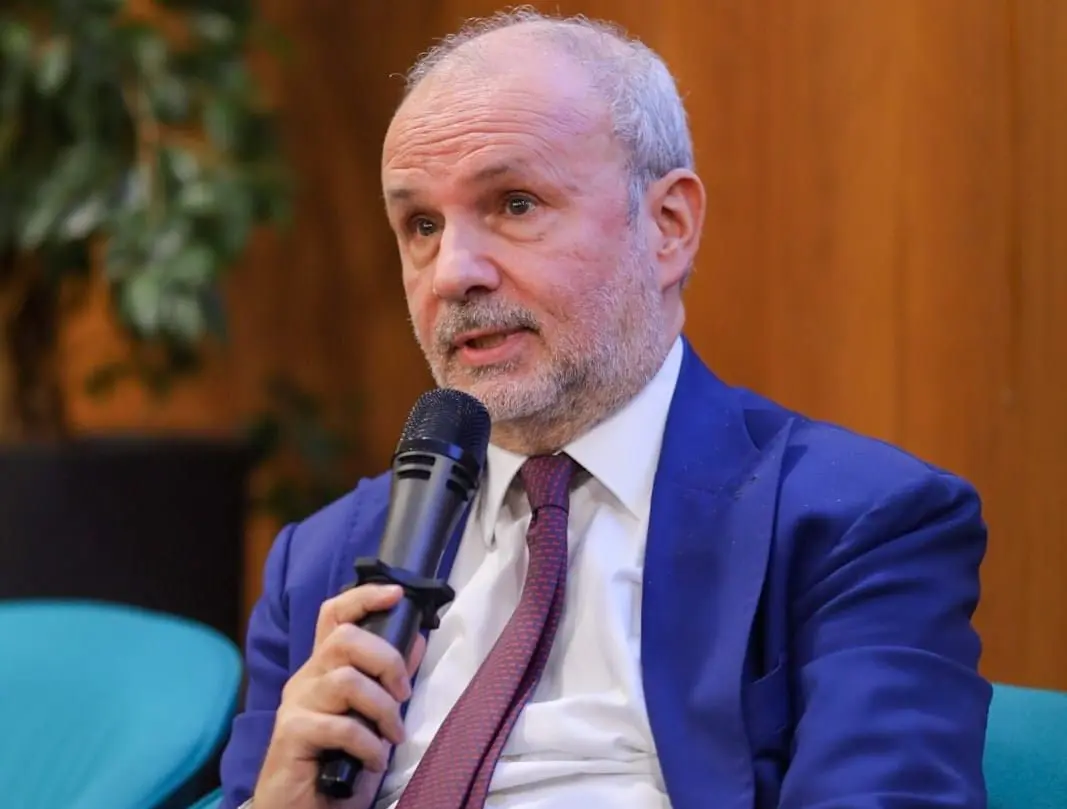
CAGLIARI (ITALPRESS) – “Even today there are too many disparities between region and region, between North and South, and this is unacceptable because life expectancy or the possibility of having a performance can certainly not depend on the place of residence of a single citizen. Technological innovation in health is an important chapter of PNRR, along with that of territorial medicine. Insularity cannot be a disadvantage in terms of healthcare provided, all must have the same level of care. We want to modernize the system and, through a constant dialogue with the regions, improve the service. The new Councillor? I hope it will be Sardinian.” This was said by the Minister of Health, Orazio Schillaci, during the central appointment of the School of Political Formation promoted by the Sardi Reformers in Cagliari, who at the end of the year will host the General States of Digital Health, as announced by the President of the Committee on Social Affairs of the House, Ugo Cappellacci.
Still, ongoing transformations and future challenges: “The national health service is not only important but is also seen as a reference point around the world. Above all – the Minister continued in a dialogue with Pierpaolo Vargiu – he placed first those foundations that after 47 years are still current: the gratuitousness of care and attention to the poor. In the meantime many things have changed, we live in an era of great transformations. Today we cure diseases that until recently were incurable and Italy is the second longest nation in the world: Sardinia and its centennials studied by all health systems, are an example. To ensure that the Italians do not get sick and offer the best chances of treatment remain firm points. We must focus on the sustainability of the system, making prevention the pillar of health”. On the waiting lists: “We have done a law: will be available within a month on the Agenas website the results region by region, this finally allows to have in real time a performance update for performance and find together with the regions of the solutions. Government and regions must cooperate.”.
To open the work, of the School of Political Training, after the institutional greetings of the Responsible of the School, Umberto Ticca, was Franco Meloni, one of the most authoritative managers of Sardinian health, in a dialogue with the President of the Sardinian Region, and Councillor of the interim Health, Alessandra Todde during which the criticalities of the Sardinian health system and the solutions put in place by the Regional Junta. The data on health needs to be coordinated from the informational point of view; record health expenditure and the need to improve it; the role of Ares which must not only be a coordinating role but also of service and support to health companies; Community hospitals and the challenges related to the NRR; the strategic importance of prevention that goes in the direction of cost safeguarding and improvement of the quality of life of people are only some of the themes touched by the President in the public debate. At the centre of the round table coordinated by Meloni there was the Health Manifesto, which, starting from Sassari during the first day of the School of Political Training, is coming in all the cities that host the days on the health inserted in the frame of the School. Instrument based on strategic choices, strong territory, hospital networks and innovation for a sustainable system, the theme was at the center of the interventions of Giuseppe Pintor, regional coordinator of the Fairy and General Manager of the Asl of the Middle Campidano, Antonio Lorenzo Spano, General Manager of Ares, Paolo Cannas, Vice President of Federsanity and General Director of Aslale Sulcis, Ugo Cappellacci, President of the Social Affairs Committee of the House that highlighted the digital “The climate of collaboration in the Commission – said the President of the Commission – has allowed to approve measures such as the screening law for diabetes in pediatric age, the norms for obesity treatment and the extension of age groups for breast cancer screening. We also look at challenges such as digital health that especially in territories like ours can help to overcome the geographical gap,” said Cappellacci.
– photo IPA Agency –
(ITALPRESS).
