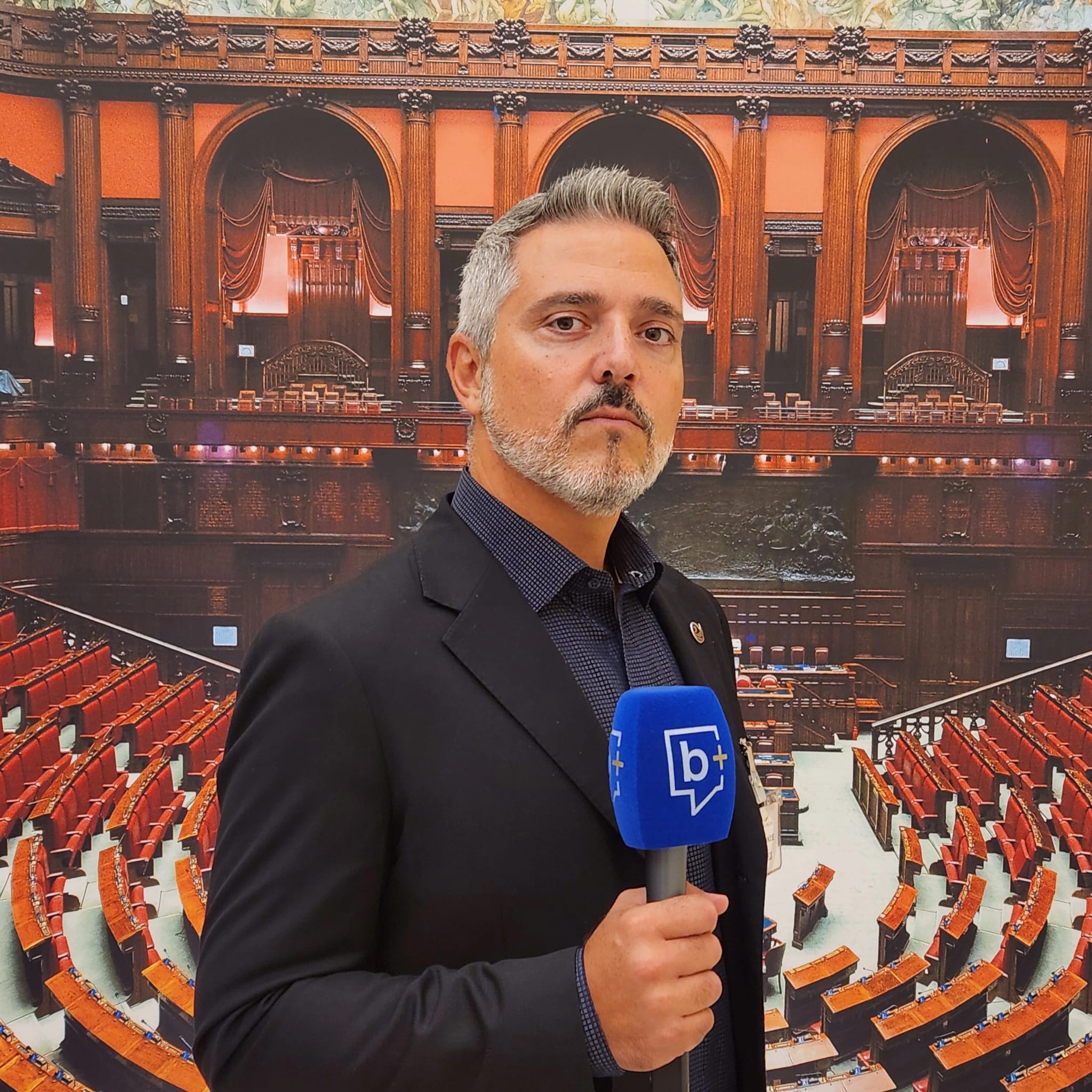
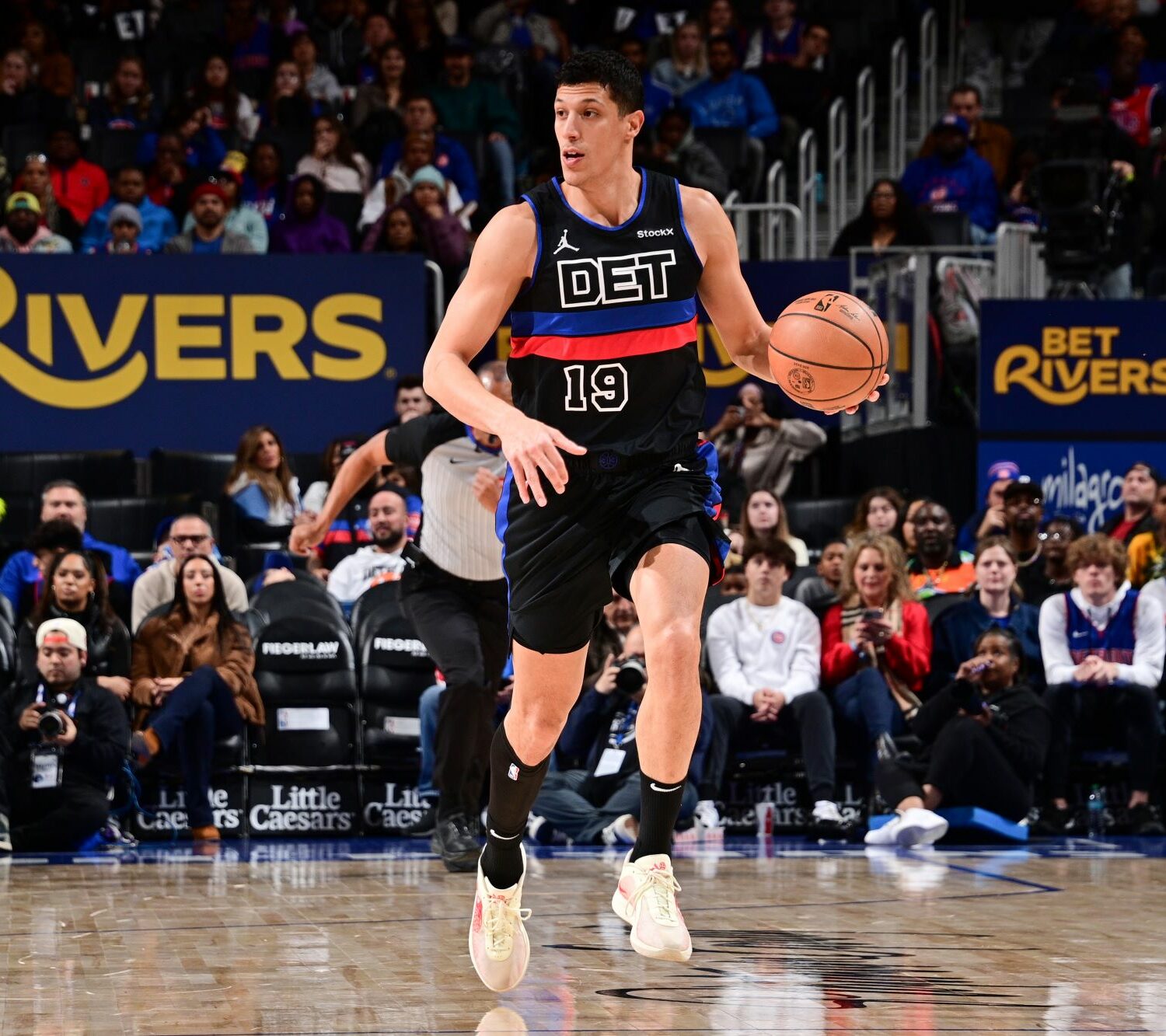
Representing an entire basketball movement in the NBA isn’t an easy task, but Simone Fontecchio embraces it with the maturity of someone who understands the significance of his role — especially for young fans who see him as a role model.
The former Detroit Pistons forward, who joined the Miami Heat this summer, is the only Italian currently playing in the world’s most prestigious basketball league. Both on and off the court, he has become a point of reference for Italian basketball.
In this conversation, Fontecchio speaks openly about his journey — from the pride and responsibility of being an ambassador for Italian basketball to his growth through international experiences, from dealing with stereotypes about European players in the NBA to his love for Italy and the national team.
It’s a journey through past, present, and future, from impossible dreams that became reality to the challenges that lie ahead.
Detroit’s Consul General, Allegra Baistrocchi, called you an inspiration for young people. As the only Italian currently in the NBA, do you see that more as a source of pride or as a responsibility?
I’ve thought a lot about it this past year, and honestly, it’s a bit of both. I’m incredibly proud to represent Italy on such an important stage like the NBA.
I think it’s a truly unique league, not just in sports but globally, in terms of importance and visibility.
But above all, it’s a huge responsibility because I know so many young people, especially in Italy, are watching me — looking at my example, how I behave, what I do. So I always try to give my absolute best every time I step on the court.
It’s definitely a beautiful responsibility to have.
When you were a kid, was the NBA a dream for you, or did reality end up surpassing your imagination?
No, it was impossible to even dream about it. To be honest, I’ve always had a deep passion for basketball, ever since I was very young.
I’d watch games, play endlessly in my backyard hoop — but the NBA always seemed completely out of reach, so much so that I didn’t even dare hope for it.
I grew up fueled simply by love for the game and the desire to play as much as possible.
My dream back then was maybe to one day play in Serie A, the Italian league, which I watched a lot as a kid.
But the NBA? That wasn’t even in my wildest dreams.
Did you have a childhood idol, someone you looked up to?
Unfortunately, I didn’t experience the Michael Jordan era. I was born in ’95, so by the time I was old enough, he had already retired and then briefly come back in ’98, but I was still too young.
The first real NBA games I remember watching were Kobe Bryant’s.
Kobe was a reference point for my generation, and then, after him, LeBron.
Those were definitely the heroes, the idols we looked up to from this side of the ocean.
Kobe was also the American superstar with the closest ties to Italy, having grown up there.
Yes, and when I was around 19 or 20, I actually had the chance to meet him and chat a bit. That was an incredible experience for me.
You’ve traveled a lot — first Germany, then Spain, and now the NBA. You seem like someone who constantly pushes himself outside his comfort zone.
Absolutely.
I think that was the key turning point in my career — my determination to leave Italy at all costs. Going to Berlin, to Germany, was a huge opportunity.
It was a EuroLeague team that offered me real playing time, trust, and minutes — something no one had really given me at 24 years old.
My wife and I decided to take that leap together, with our oldest daughter, who was just eight months old at the time.
Looking back, it felt insane — leaving Italy during the height of the pandemic in 2020, with a baby, to go to another country.
But we went further and further, each move more challenging than the last.
Stepping outside my comfort zone was the best decision I could have made.
Looking at the NBA today, do you think the gap between the NBA and European basketball is still as big as it used to be? Back in the ’90s and 2000s, people used to say they were practically two different sports.
I think that gap is slowly narrowing, but to me, the biggest difference remains the sheer level of talent here.
The players in the NBA are by far the best in the world — there’s no question about it.
On top of that, the whole NBA environment is completely different from the EuroLeague.
The way the league markets and advertises itself is truly unmatched.
When you’re in it, you realize just how lucky you are to be part of it.
Detroit’s Consul General told me about a special celebration the Pistons started doing whenever you scored this past season. You often came off the bench and hit big shots, being a key factor in some games. How did this spoon-hand celebration come about?
There’s always that classic Italian stereotype — “pizza, mandolin, mozzarella.”
Some of my teammates started joking early in the season, telling me to do this hand gesture whenever I scored.
At first, I resisted, but by December I gave in and said, “Okay, fine, next time I’ll do it just to make you happy.”
Then there was a game where I scored a lot, and I did it multiple times — and from there, it just became a thing.
It’s fun, but honestly, as someone who’s been living abroad for five years now, stereotypes about Italians can really get under your skin.
Italian hand gestures are known worldwide, and people often ask you to “do the Italian thing” — it can be funny, but it’s still a cliché.
That said, in my case, it’s tied to my baskets and to something that united our team, so I see it as a positive gesture in the end.
Did you encounter any prejudices when you first arrived in the NBA?
Oh, absolutely.
Especially when you come from Europe — and even more so when you arrive at an older age compared to players coming in through the draft.
I got here at 26, and there’s a wall of stereotypes you have to overcome.
The classic image of the white European player: can’t jump, can’t defend, too soft.
Those prejudices definitely exist.
I acknowledged them and set out to break them down as quickly as possible.
How did you and your family adjust to life in Detroit?
Pretty well, overall.
The weather isn’t the best — in winter it’s constantly around minus 10 (14°F).
But we managed.
During the season, it’s really hard for me to be fully present with my family or to go out and explore.
There’s just not much time or energy for that.
We also have a baby — our second daughter, Luna, who’s under a year old — so we’ve mostly been staying home this past year.
I imagine your family had more interaction with Detroit’s Italian community than you did, given your busy schedule. Is that right?
Yes and no.
As I said, at this stage of our lives, we don’t interact much with the outside world — not intentionally, just because of where we’re at right now.
I’m always traveling, and my wife is constantly with the kids, so it’s tough.
But when we were in Utah for two years, we had the chance to meet so many wonderful people, both inside and outside the Italian community.
The love and support we received there was incredible.
Is there a particular opposing player who impressed you or gave you more trouble than others?
There are so many who are challenging to play against, but one of my favorites to face has to be Kevin Durant.
He’s just always impressive.
What’s your relationship with New York like?
New York is one of my favorite cities to play in. It’s such a fascinating place.
I always like to walk around a lot the day before a game whenever we’re there.
It’s a city I really enjoy.
And especially when it comes to food — I always take advantage of being in New York to have proper Italian meals.
It’s really hard to find truly good Italian food in the U.S., but in New York, there are a couple of places I go to regularly.
Going back to what we discussed at the start: as someone many young players look up to, what message would you like to send to kids in Italy who love basketball?
The way I grew up and approached basketball was always healthy and genuine.
So my message is simply to encourage young players to do the same — to play with passion and joy.
When you’re young, it’s all about enjoying the moment:
enjoying time with your teammates, the friendships you build, and the pure fun of the game.
I grew up like that — never thinking about playing in Serie A, or the NBA, or making money.
Those things came later, luckily.
The message is simple: have fun and enjoy the journey.