
Italy last played in a World Cup in 2014—twelve years ago. A lot has changed since then, in soccer and beyond.
Back in the summer of 2014, when Italy took the field in Brazil, Instagram didn’t have Stories, Netflix hadn’t yet launched in the country, and names like Spotify, TikTok—as well as acronyms like ChatGPT, VAR, and DAZN—meant very little to most people.
That was Cesare Prandelli’s Italy: Gianluigi Buffon still in goal, the Juventus defensive core—famously known as the “BBC”—anchoring the back line, and Mario Balotelli as the headline figure up front.
On June 24, 2014, Italy played its most recent World Cup match, losing 1–0 to Uruguay.
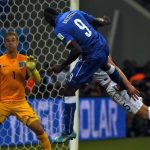
Ten days earlier, on June 14, Italy scored its last World Cup goal, in the opening match against England—a 2–1 victory. The decisive goal was scored by Mario Balotelli.
Balotelli’s header against England remains Italy’s most recent goal in a World Cup.
What was happening in Italy and around the world in 2014?
Matteo Renzi became Prime Minister, the youngest in the history of the Italian Republic.
Fratelli d’Italia received 3.67% of the vote in the European elections, failing to surpass the 4% threshold needed to gain seats in the European Parliament.
In the United States, Barack Obama was serving his second term as President.
José Manuel Barroso was President of the European Commission until November 1, 2014, when he was succeeded by Jean-Claude Juncker.
What was happening in the soccer world in the summer of 2014?
Real Madrid, coached by Carlo Ancelotti, had just won “La Décima”—their tenth European Cup—in a dramatic final against Atlético Madrid.
Sevilla had claimed their third Europa League title, defeating Benfica on penalties in the final.
Manchester City, managed by Manuel Pellegrini, had just won the Premier League, while Atlético Madrid captured their tenth La Liga title.
Bayern Munich, Bundesliga champions, were coached by Pep Guardiola, while Paris Saint-Germain, winners in France, were led by Laurent Blanc.
Benfica had won the Portuguese league, Fenerbahçe the Turkish league, and Ajax the Dutch Eredivisie.
And what was happening in Serie A in 2014? Who were the main figures in Italian soccer?
Juventus had just secured their third consecutive Serie A title under Antonio Conte, who would leave the club at the end of the season.
Catania, Bologna, and Livorno had just been relegated to Serie B.
Inter had recently been taken over by Erick Thohir, Roma was owned by James Pallotta, AC Milan was still under Silvio Berlusconi with Adriano Galliani as CEO, Juventus was led by Andrea Agnelli, and Fiorentina by the Della Valle family. Claudio Lotito and Aurelio De Laurentiis were already in charge of Lazio and Napoli.
Juventus, under Conte, had signed Carlos Tevez and Fernando Llorente in the summer of 2013.
Rudi Garcia’s Roma brought in Mehdi Benatia, Maicon, Kevin Strootman, and Gervinho in the summer, and added Radja Nainggolan in the winter transfer window.
Napoli, coached by Rafa Benítez, had sold Edinson Cavani to PSG in the summer and signed Pepe Reina, Raúl Albiol, Dries Mertens, and José Callejón.
Chievo was still in Serie A.
Walter Mazzarri’s Inter finished ninth.
Massimiliano Allegri was fired by Milan after 18 matchdays and replaced by Clarence Seedorf.
Antonio Cassano was playing for Parma.
Lazio dismissed Vladimir Petković after 17 matchdays, replacing him with Edy Reja.
Francesco Guidolin was coaching Udinese.
Vincenzo Montella was in charge of Fiorentina.
Twelve years have passed, but it feels like a geological era ago…
Yet, from a geopolitical standpoint—especially when it comes to conflicts—some things, unfortunately, have remained largely the same.
In 2014, the conflict in the Donbas between Russia and Ukraine began.
During the World Cup, in July 2014, Israel launched Operation “Protective Edge,” initiating a series of intense airstrikes in Gaza that would result in more than 2,000 deaths.
L’articolo Since the Last World Cup proviene da Soccer Made In Italy.
