
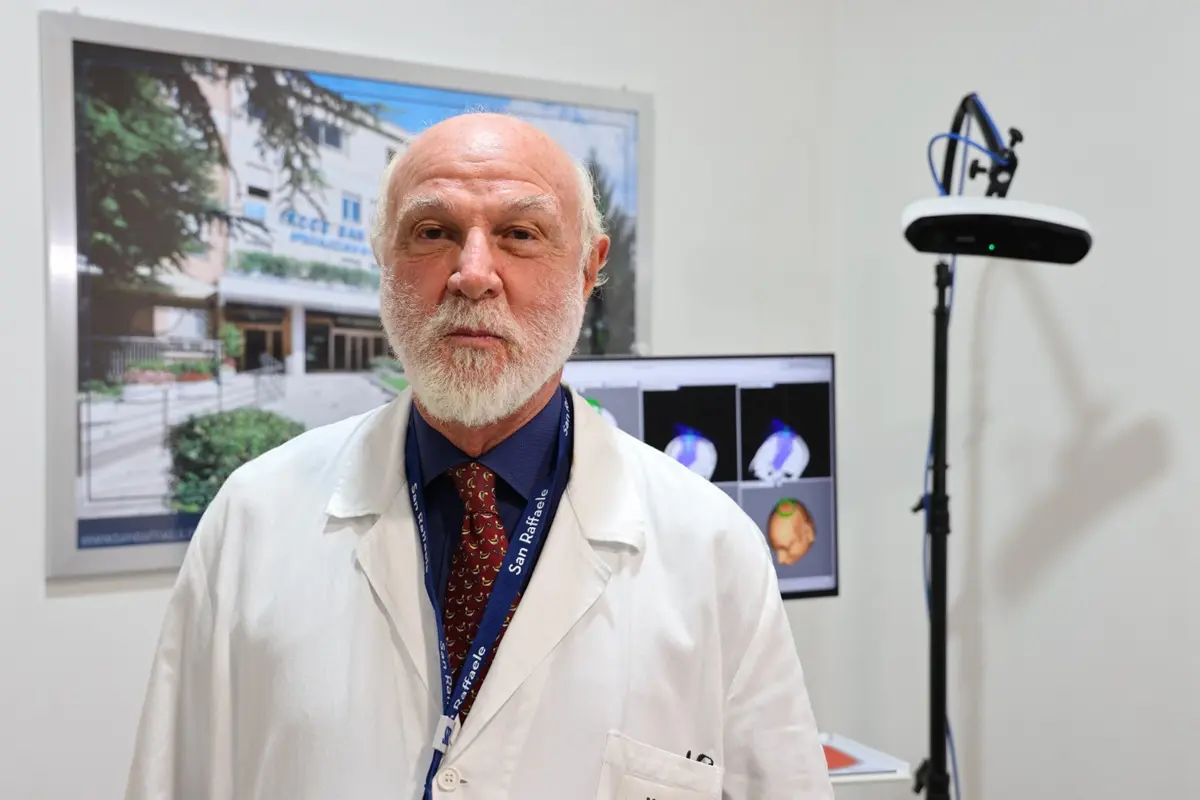
ROMA (ITALPRESS) – About 10% of subjects with mild cognitive disorder (Mild Cognitive Impairment, MCI) enrolled in the European study AI-MIND has progressed towards a form of dementia within 24 months, while about 20% showed a cognitive decline consistent with time 0, while still remaining in a condition of MCI. This is the first results from the analysis of a cohort of 1,022 subjects followed in four European clinical centres (Madrid, Oslo, Helsinki and Rome), presented today in Rome on the occasion of the 11th and final General Assembly of the European project Artificial Intelligence MIND (AI-MIND) organized by IRCCS San Raffaele Roma, Università Cattolica del Sacro Cuore (Prof.ssa Rossella Di Bidino), IRCCS Fondazione Policlinico A.
“The mild cognitive disorder represents an intermediate stage between a normal and physiological aging of the brain and a pathological degeneration such as the one observed in the dementia,” explains Prof. Paolo Maria Rossini, Director of the Department of Neuroscience and Neuroriabilitation of the IRCS San Raffaele of Rome, “this condition constitutes a markedly increased risk of developing dementia, but only in a part of the subjects, which in subsequent studies fluctuates.
The AI-MIND project, launched in 2021 and funded by the European Commission with around 14 million euros in the Horizon 2020 programme, involves 15 partners from 8 European countries and over 100 researchers, including neurologists, geriaters, bioengineers, statistical, IT and Health Technology Assessment experts, with Alzheimer Europe’s participation. In our country the condition of MCI covers over 950.000 people, while in Europe there are estimated about 10 million people. “Since the picture of MCI itself does not imply a loss of clinically relevant autonomy or deficit, it would be extremely important to be able to identify as soon as possible who, within this population, has a high risk of developing dementia and who not,” says Rossini. In time 0, between 2021 and 2023, the subjects enlisted, more than 275 of which in Italy, the largest contingent of the study, were subjected to neuropsychological, genetic and instrumental evaluations, including plasma biomarkers of amyloid and a high density electroencephalogram, then repeated every 8 months during the follow-up.
“A particular interest is represented by the obvious differences observed between the populations of Northern Europe and those of the Mediterranean area,” notes the neurologist “differences concerning genetically determined risk profiles, the presence of amiloid in plasma, but also the definition and clinical stadiation of MCI and the organization of health systems, with important consequences on the ability to early diagnosis”. In particular, in Northern Europe there is more frequent presence of a genetic variant, called APOE e4, known to increase the risk of developing Alzheimer’s disease. In these same populations there are also higher levels in the blood of some biomarkers associated with neurodegenerative processes (p-tau181 and p-tau217), regardless of age, gender and level of education. Both genetic predisposition and these biological markers are today considered indicators of a higher risk of evolution towards Alzheimer. These geographical differences persist even after the control of the main demographic factors and suggest that, in addition to the genetic background, variables linked to the educational level, diagnostic strategies and clinical practice paths of the different health systems come into play.
Observations that “remark strongly the importance of harmonizing the procedures and paths of European citizens – adds Rossini – to arrive at an early and accurate diagnosis of one of the main diseases of the third millennium”. The vast amount of socio-demographic, clinical, genetic, biological, neuropsychological and neurophysiological data collected within the project will now be analyzed through advanced artificial intelligence algorithms. “We expect”, the scientist concludes, “the identification of features that can accurately identify high-risk individuals to develop dementia in general and Alzheimer’s disease in particular.” possibility of intervention and better management of the disease.
– photo press office IRCCS San Raffaele –
(ITALPRESS).
