
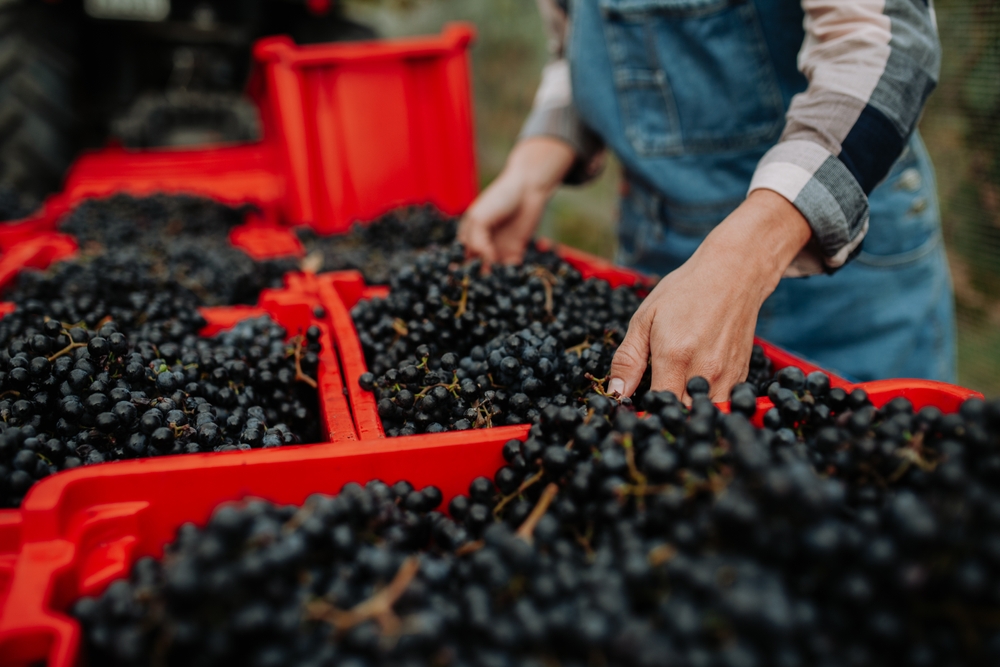
For centuries, the grape harvest in Italy was more than just an agricultural harvest. It was a collective ritual, a time of celebration marking the end of summer and the beginning of autumn. Families, neighbors and entire communities would gather in the vineyards amidst folk songs, outdoor meals and an authentic sharing of labor. September was the “month of grapes”: a time when the countryside came alive with choral participation, capable of fusing culture, economy and spirituality.
Today, that traditional calendar has been turned upside down. Climate change has brought forward the timing of the harvest: in many areas, the harvest begins as early as mid-August, especially for early white grape varieties. But this is not just a change of date. Italian viticulture now faces new structural challenges: accelerated ripening, periods of drought, more aggressive fungal diseases and yields that are difficult to predict. The grape harvest has also become a test case for the environmental and production resilience of the sector.
In recent years, data show how much the situation has changed from one season to the next. 2022 was a relatively stable year: 50.27 million hectoliters, in line with historical averages, despite the hot summer. In contrast, 2023 marked a dramatic collapse: 38.3 million hectoliters, the worst result since the postwar period. The blame? Incessant rains and downy mildew, which put vast areas of vineyards in crisis.
There was a partial recovery in 2024: 43.9 million hectoliters. It was a year of transition, which brought back some confidence, although without guaranteeing full stability. Early estimates for 2025, however, bode well: production is expected to be around 47.4 million hectoliters, an 8 percent increase over the previous year. Healthy grapes, regular ripening and a more uniform harvest indicate a season that is finally close to balance.
Different but significant trends emerge from the regional analysis. Taking a few regions as an example: Tuscany, the heart of Italy’s winemaking tradition, recorded an estimated drop of around 15 percent. Spring rains and plant diseases have affected an area that has always linked grape harvesting to landscape and cultural identity. Today, that connection is under pressure.
In Veneto, however, the situation is more stable. Thanks to highly organized agriculture and the success of the Prosecco system, there is moderate but positive growth of between 3 percent and 5 percent. The Veneto model manages to maintain productivity and international vocation while retaining some traits of local ritual. Sicily is experiencing a decidedly positive season. In some areas it touches +20% production, thanks to a long and regular harvest. The island, historically a crossroads of cultures and agricultural traditions, regains momentum and confirms the strength of its winemaking heritage.
Abruzzo is also showing encouraging signs. With a recovery of around 10 percent, the region is benefiting from a balanced climate that has favored healthy, good-quality grapes. Here, the grape harvest still remains a community moment, with cooperatives and families taking center stage. Finally, Campania has an estimated 5% to 7% increase. Despite some critical issues related to plant health, yields are up and quality is good. The grape harvest continues to be experienced as an identity event: small vineyards, heroic hillside cultivation and the echo of the ancient folk festivals that accompanied the harvest.
The grape harvest has never been just a harvest. It is celebration, memory, identity. Today, however, it is also a snapshot of a changing agricultural Italy. Amid climatic crises, instability in international markets and difficulties in enhancing the value of production, the wine sector is called upon to undergo a profound transformation.
The positive signal of 2025 is important, but it is not enough. Inventories remain high, foreign competition is strong, and the real crux remains to combine quantity and value, innovation and cultural roots.
After a smooth 2022, a disastrous 2023 and an interlocutory 2024, 2025 could mark a return to normal production. But the harvest, the real one, made up of sharing and collective rituals, is more fragile today. It is no longer a foregone conclusion, but that is precisely why it is even more precious.
Have you guys ever had a grape harvest experience? It might be an activity to try, suitable for young and old alike.
The article Harvest: from collective ritual to climate test comes from TheNewyorker.
