
ROMA (ITALPRESS) – The Central European Initiative (InCE) was born in 1989 from an intuition of the then Foreign Minister Gianni De Michelis, who together with other countries such as Austria, Hungary and Yugoslavia, after the collapse of the Berlin Wall the problem was to support the unification of a Europe for too long divided. Some years later, in 1996, it was the time of the founding of the executive secretariat of that Initiative, to better structure the work of an organism that today includes 17 countries, from Ukraine to the whole of Europe Centre passing through the Balkans.
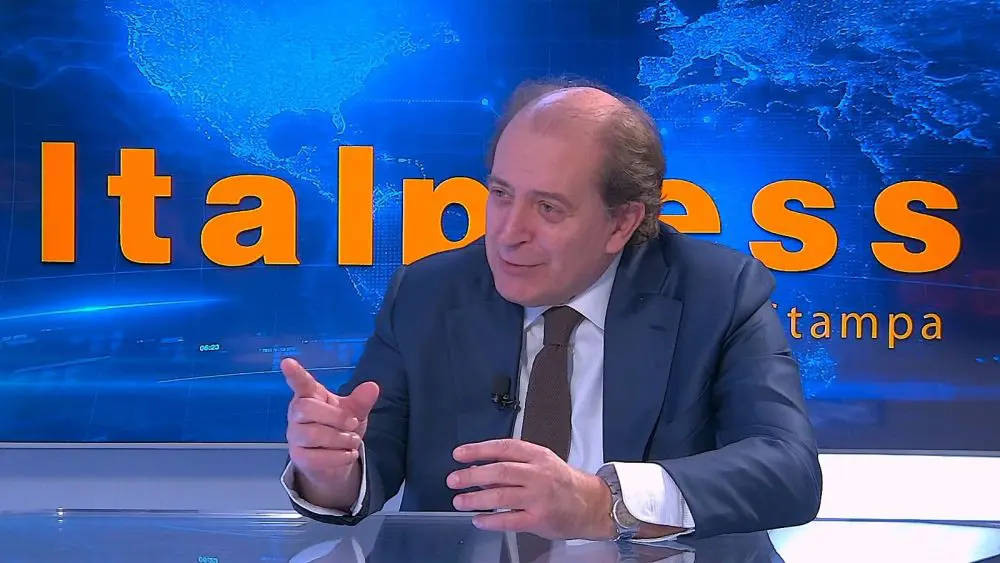
The Secretary-General of the EC, Franco Dal Mas, explains in an interview to the Italpress Agency that the thirty-year executive secretariat will be celebrated next March 17 in Trieste, or in the city where the official headquarters is located. “Born as a documentation and cataloguing centre, the Executive Secretariat of the ENP over the years has structured and today provides support to the 17 countries that are members of this intergovernmental body,” explains Mas.
“The work which the Secretariat carries out goes from regional cooperation to European projects, to relations between States. In other words, we are a constant multilateral activity of dialogue between Eastern Europe, so Ukraine, Central Europe and of course the Balkans,” continues the Secretary-General. The intuition “almost visionary of Gianni De Michelis”, says Dal Mas, wanted to accompany “a world of the East that came out of the Cold War period and began to face the so-called Western world”.
It is born by bringing together 4 countries and extends to include 17, always keeping in mind the objectives of an activity “which wants security, peace and above all European integration”, says Dal Mas. “Today the ECB brings together three different parts of Europe, so Eastern Europe, Ukraine – which we know is going through the difficulties of a war and a brutal attack on the part of Russia, and which has our full support, of course, as the InCE, from the beginning of the conflict – then Central Europe, then Hungary, the eastern part of the Balkans, that is Bulgaria and Romania, that is.
“Some countries are part of the European Union, others are not part of it and we work to facilitate this process of integration,” adds the Secretary-General.
Today, therefore, an organization such as the EC “serves to hold that Europe together, rather than to ‘reunify, give me the term. To reunite a Europe divided in the course of the twentieth century, perhaps even always, to redefine a European space that keeps these people together. We firmly believe in it, because in the concrete example of each day the ENEC works by having within it countries ‘not EU that are entering, together with others who have already entered as Slovenia and Croatia’.
A stable Europe is at the heart of the objectives, a Europe based on cohesion and cooperation and that goes beyond the dimensions of the present European Union. “ Montenegro now says it wants to become the 28th Member State in 2028. We hope that this will happen, as we support that even a country like Serbia and others must be an important bloc for the European Union,” says Dal Mas.
The ENEC plays an important role “through regional cooperation, which means connectivity of networks”, according to the Secretary-General, but also “a concrete help, and in this it plays an important role in Italy through its endowments, for example through the fund at Bers”.
Returning to the Western Balkans and their full integration into the EU, Dal Mas recalls that “it is a matter that is particularly at heart to the minister (foreign) Antonio Tajani and on which he is very busy forever”. It is a region, adds Dal Mas, which “constitutes a little cornerstone of this process of European integration”.
On 17 March in Trieste, the thirty-year anniversary of the InCE will also be celebrated with “proposed” moments, says the Secretary-General, “also with panels on connectivity”. “We were born in 1989, as we said, with forward-looking intuition. Today, that intuition relies on the desire to rebuild that European space, which also represents an important anchorage for the whole world,” concludes Dal Mas.
(ITALPRESS).
-Foto Italpress-
