
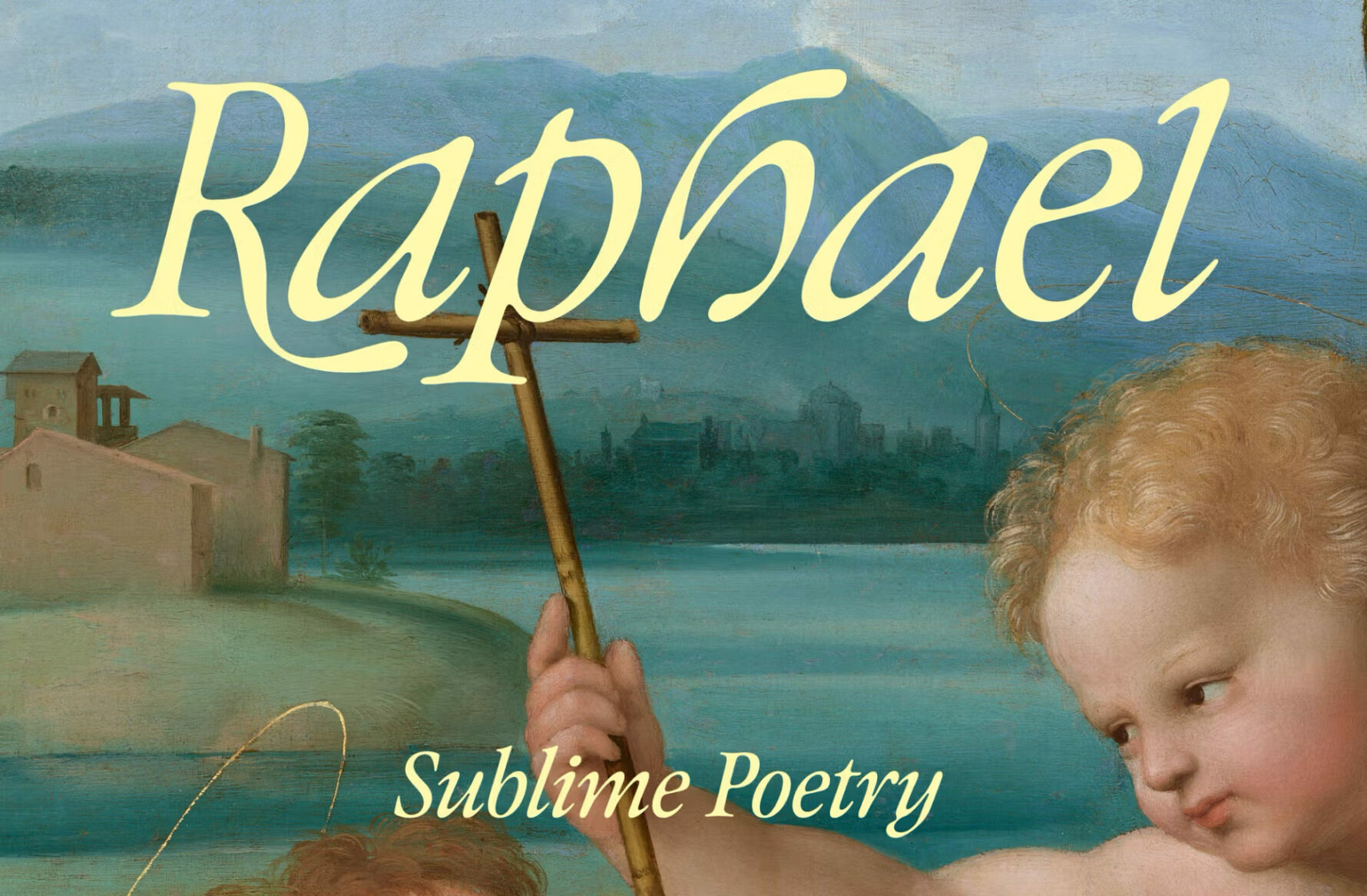
Raphael: Sublime Poetry, the largest international loan exhibition on Raphael ever held in the United States, was inaugurated on March 23. The show will run from March 29 to June 28, 2026, at the Metropolitan Museum of Art. Raphael (Raffaello Sanzio; 1483–1520) is widely regarded as one of the greatest artists of all time, and this landmark exhibition will explore the full arc of his life and career: from his early years in Urbino, to his prolific period in Florence—where he began to establish himself alongside Leonardo da Vinci and Michelangelo—through to his final decade at the papal court in Rome. Bringing together more than 200 of Raphael’s most significant drawings, paintings, tapestries, and decorative works from public and private collections worldwide, the exhibition offers a renewed perspective on a central figure of the Italian Renaissance, pairing celebrated masterpieces with rarely seen works to reveal an extraordinary creative mind.
The exhibition’s presenting sponsor is Morgan Stanley. Major funding is provided by Kenneth C. Griffin and Griffin Catalyst, and by Jessie and Charles Price. Significant support comes from the Richard Riney Family Foundation, the Ing Foundation, and Anthony W. and Lulu C. Wang. Additional support is provided by Julie and David Tobey, Barbara A. Wolfe, Gilbert and Ildiko Butler, and Ann M. Spruill and Daniel H. Cantwell.
Max Hollein, Director and CEO of the Met, stated: “Italy has long been one of The Met’s most valued partners, and our collaboration with Italian museums and cultural institutions continues to flourish. Partnerships through exhibitions, scholarships, and reciprocal loans make it possible to bring extraordinary works into dialogue across collections, deepening our understanding of our world across millennia. Together, we can continue to share the richness of Italy’s artistic heritage with audiences in New York, Italy, and around the globe.”
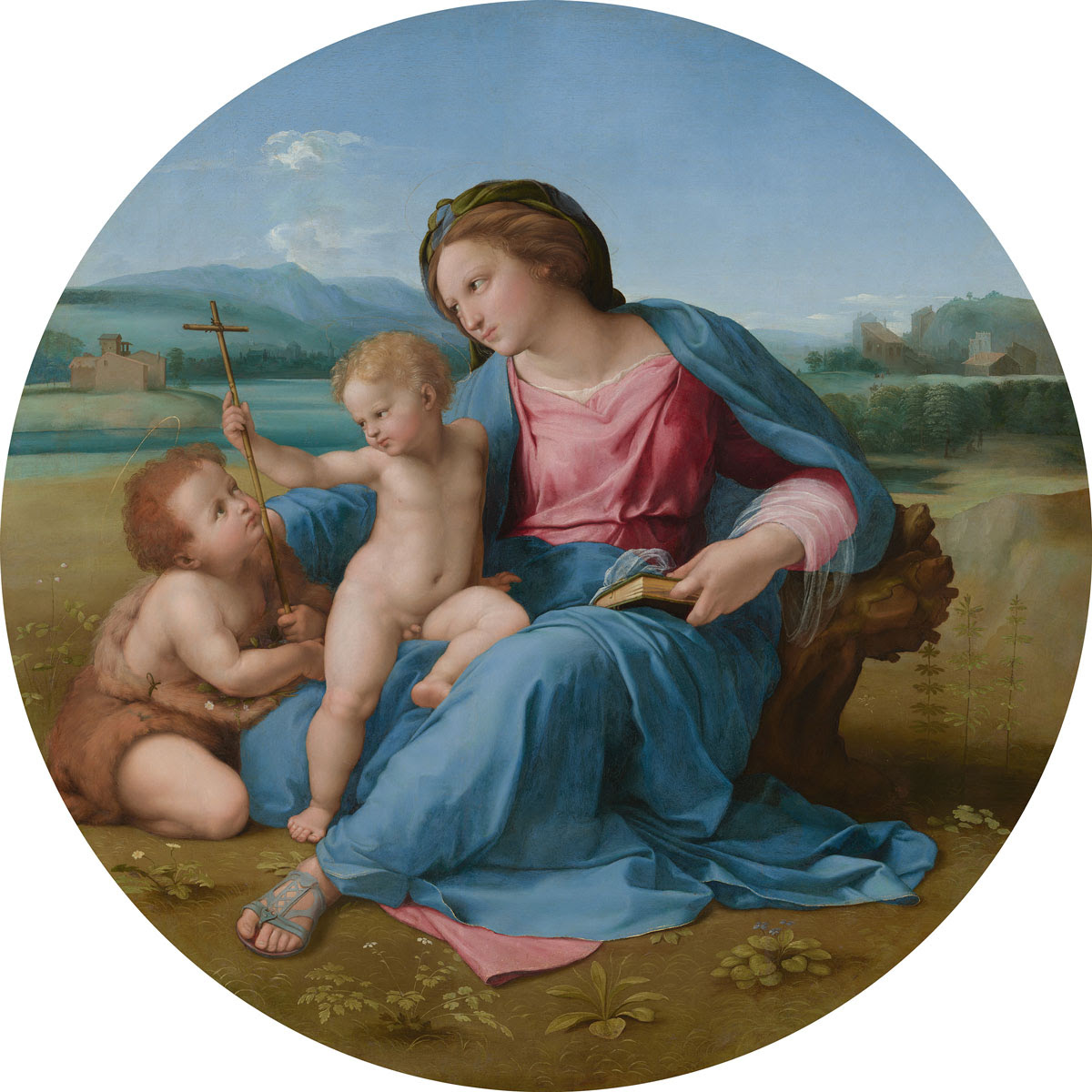
Among the key masterpieces on display are Madonna Alba (Madonna and Child with the Infant Saint John the Baptist in a Landscape) from the National Gallery of Art—one of the clearest examples of Raphael’s mastery of harmony and classical beauty in the High Renaissance—presented alongside preparatory drawings from the Palais des Beaux-Arts in Lille, and the Portrait of Baldassare Castiglione from the Louvre, widely considered one of the greatest portraits of the High Renaissance.
Lending institutions include, among others: Accademia Carrara (Bergamo), the Albertina (Vienna), the Ashmolean Museum (Oxford), the British Museum (London), Galleria Borghese (Rome), Gallerie Nazionali Barberini Corsini (Rome), the Duke of Devonshire and the Trustees of the Chatsworth Settlement (Chatsworth), Galleria Nazionale delle Marche (Urbino), Galleria Nazionale dell’Umbria (Perugia), the Kupferstichkabinett (Berlin), the Louvre (Paris), Fondazione Brescia Musei (Brescia), the National Gallery (London), the National Gallery of Art (Washington, D.C.), Museo Nazionale di Capodimonte, the Palais des Beaux-Arts (Lille), Patrimonio Nacional de España (Madrid), the Pinacoteca Comunale di Città di Castello, the Pinacoteca Nazionale (Bologna), the Prado (Madrid), the Städel Museum (Frankfurt), the Szépművészeti Múzeum (Budapest), the Uffizi Galleries (Florence), and the Vatican Museums.
“The seven-year journey that led to this exhibition has been an extraordinary opportunity to refocus my understanding of this monumental artist,” said Carmen Bambach, Marica F. and Jan T. Vilcek Curator in the Department of Drawings and Prints at the Met. “It is an exciting opportunity to engage with his unique artistic personality through the visual power, intellectual depth, and tenderness of his images.”
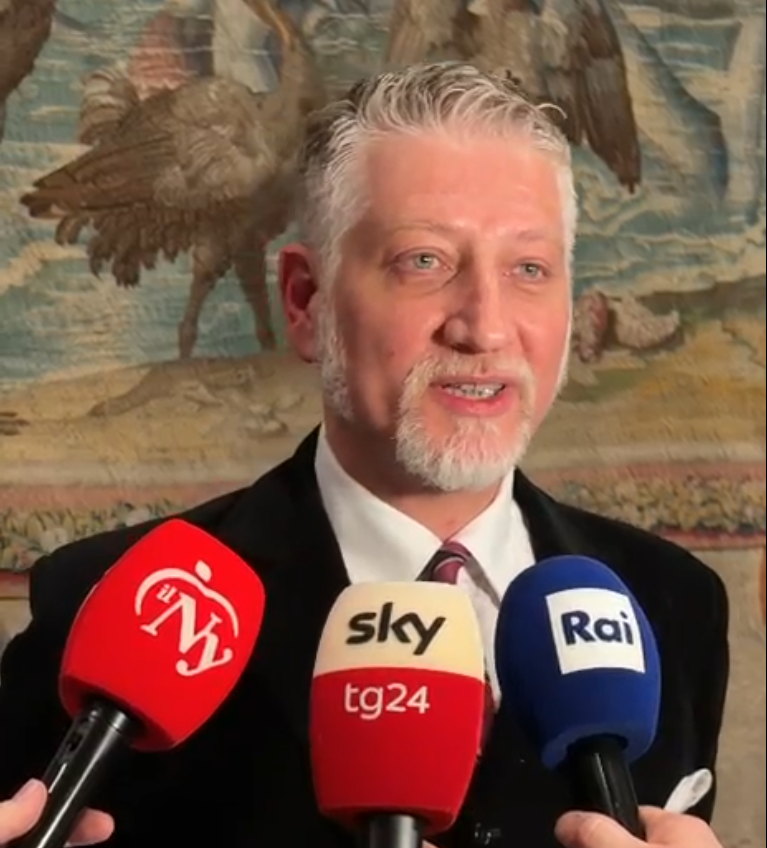
Among those present at the opening was also Italy’s Minister of Culture, Alessandro Giuli, who told reporters that the exhibition represents “a major research effort and contribution from the most important Italian museums for a show that, in the year marking the 250th anniversary of the United States’ independence, features Raphael as its central figure. Italy is making an exceptional historical and artistic contribution, in an exhibition that includes works from private collections and loans from the world’s leading museums. This makes it all the more significant that Raphael represents this moment of Italian culture and the special relationship between Italy and the United States.”
Despite living only 37 years, Raphael achieved such profound success as a painter, designer, and architect that he was regarded for centuries after his death as the pinnacle of artistic perfection. The son of a painter and poet, he came into contact with leading writers and thinkers of his time in Rome, demonstrating a poetic sensibility that captivated both his contemporaries and later generations. Combining ambition and lyricism, he created works of remarkable intellectual depth and emotional resonance—qualities that proved essential in the complex political landscape of Renaissance courts.
The exhibition follows a broadly chronological structure, tracing Raphael’s life and career through thematic sections dedicated to the evolution of his ideas and iconography. It also incorporates recent scientific discoveries. By placing drawings in dialogue with paintings and works in other media, the exhibition highlights Raphael’s extraordinary versatility and creative process. The figurative compositions in his paintings, drawings, tapestry cartoons, and prints reveal a peerless storyteller, with particular attention given to his depiction of women—from his pioneering use of nude models to his sensitive interpretations of the Madonna and Child.