
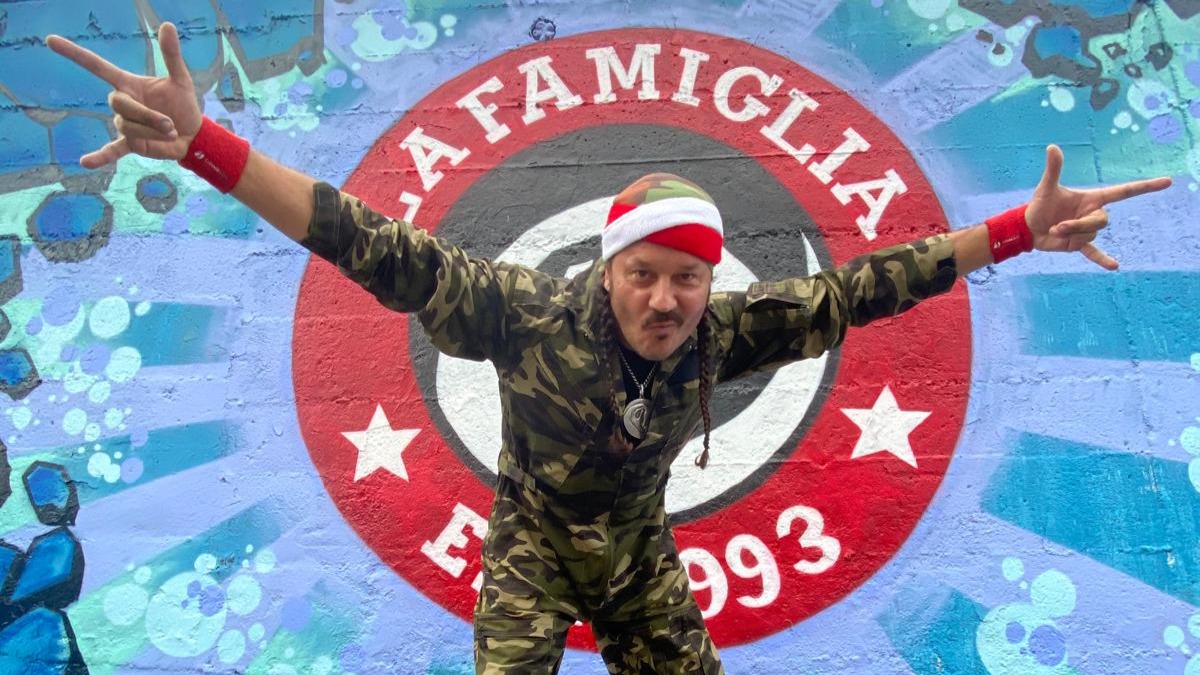
Who is Alberto “Polo” Cretara. Few figures in Italian music history embody the idea of pioneer quite like him. As frontman of La Famiglia — the Naples-based collective that first brought hip-hop in the Neapolitan dialect to the national market in the 1990s — Polo was far more than a rapper. He was an organizer, a graphic artist, a north star for an entire generation that would go on to include names like Clementino and, more recently, Geolier, whose Neapolitan-language performance at the Sanremo festival sent shockwaves through Italian pop culture. La Famiglia released a fully dialect-language album in 1998, a cultural and political provocation at a time when Southern Italy was routinely dismissed and denigrated in the national conversation. The record opened a door that countless artists would later walk through. Polo eventually emigrated to New York, where he ran Farinella Bakery, a cult pizzeria beloved by the city, all while rapping at night without ever stopping. Now, at 54, he’s back in the studio with La Famiglia — to point the way out of the chaos, one more time.
How did your relationship with hip-hop begin?
It all started with a teacher who stopped me cold at the blackboard. I don’t remember if I was in middle school or high school, but from that moment I never stopped thinking about it. Then, because my father worked for Enel — the Italian national electric company — I had access to a youth travel program called the Arca. From age thirteen on, I was going to England and France every summer, breathing this culture from the inside. At eighteen, I saved up money doing graffiti on shop shutters — there was nobody else doing it then, the money was real — and I bought a ticket to New York. It cost one and a half million lire. A fortune. But there was no discussion. Hip-hop works like Archimedes’ principle: the harder something pushes you down, the more the culture lifts you back up.
Were you aware, while you were doing it, that you were blazing a trail?
Everything I have ever done in my life came from a personal need to say something. Hip-hop had struck us like lightning because of what it carried: the gesture, the narrative of the challenge — the New York gangs that instead of fighting with knives fought with how they danced. The final message, though, was always peace. Unity. It’s a culture that cannot go out of style because the message of love is universal. The harder something pushes you down, the more it lifts you back up. Archimedes’ principle applied to music.
What do you still carry of Naples with you?
The anger. Same as always. There were maybe ten, twenty years of lull — I had Farinella, my workers were well paid, it felt like society was actually heading somewhere good. But they were lying to us, as they often do. And now here we are in this abyss, everyone navigating without a compass, because the machines they’ve built interfere with even that. La Famiglia found the light at the end of the tunnel back in the nineties and pointed to it. Today, with everything I’ve lived through, at fifty-four years old, I see even further. In the nineties we looked straight ahead, at ninety degrees. Not thirty. And at ninety degrees you get the horizon — you see forever.
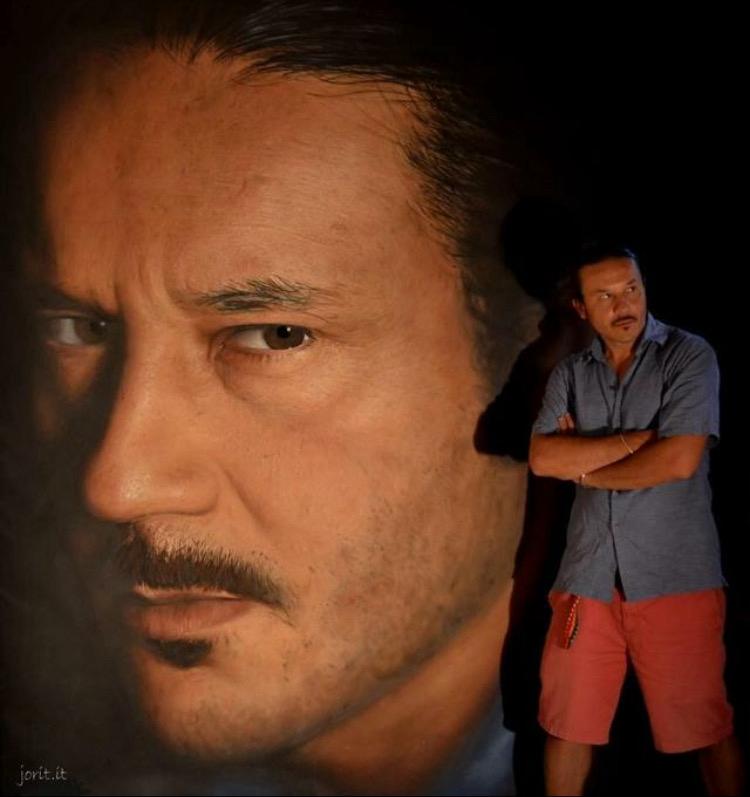
The 41st parallel connects Naples and New York. What do these two cities actually share?
The sea. The port. A mother with open arms — everybody’s welcome. I can guarantee you that in Naples, everybody is welcome. And New York has always been the home and refuge of everyone who needed to find something different somewhere else. A mother who raised children capable of defending that right for everyone. What you see with Mamdani today is not the expression of some corrupt electoral machine — it’s the people of New York saying: we want democracy, we want something inclusive, we want to feel part of something bigger.
Geolier at Sanremo, singing in neapolitan dialect. Continuity or rupture?
I’d say grandchild. He had the courage to do what we did in 1998, when we released an album entirely in Neapolitan for an Italian market where Naples was being systematically dragged through the mud — Umberto Bossi was calling us names at full volume, and we were taking it in the face, hit after hit. We answered with music. Geolier made that same courageous choice on a much bigger stage. We are huge supporters of his work.
Looking at today’s music scene — has something been lost? The truth, the belonging, the message?
The truth still exists. The protest still exists. But you have to dig for it, because it’s not always on the mainstream, and the algorithm is not going to help you find it. Today the real fight is between your hunger for truth and the algorithm. That is the actual battle we need to have. There is no currency on this planet — in any nation — that compares to the feeling of stepping off a stage after the crowd has received exactly what you wanted to give them
The stage, the respect of the crowd, leaving a cultural mark — what still moves you?
The stage. There is no currency on this planet, in any country, that holds up when you step off a stage and the crowd has received what you came to give them. I don’t need money. I do this to give what I have inside — something I have to give, have to say. When I see it register in the faces out there, that’s when I’m paid. Which is why we still go out and play. Sometimes for free.
New York in one bar — go.
New York is beautiful and beloved — but all you do is spend money (Original in Neapolitan: “New York è bella e cara, ma se ne vann sul renar.”)