
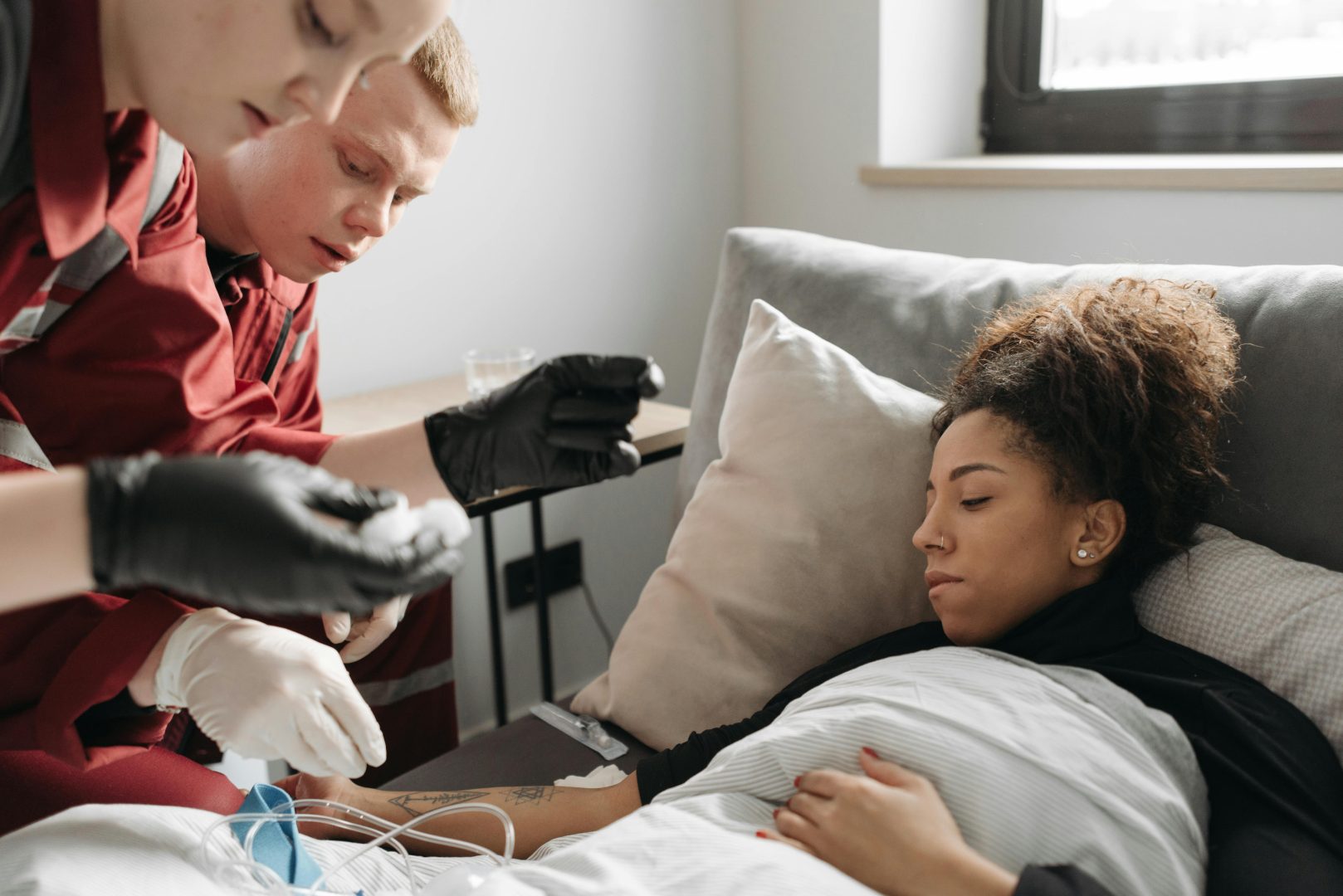
NAPOLI (ITALPRESS) – The clinic Ruesch, a reference point for Neapolitan health since 1919, today announces a strategic partnership with Qwince, an Italian company specializing in digital health technologies and services. Thanks to this agreement, the Ruesch Clinic adopts ConCura technology and services to enhance its historic nursing service, integrating a remote proactive monitoring model that defines a new patient care standard. This initiative is born to respond to one of the challenges of our time, i.e. to ensure continuity, security and effectiveness to assistance outside the walls of the hospital.
In a national context of ageing population and increasing incidence of chronic pathologies – a theme also highlighted in the recent relationship of foundations such as GIMBE – the sustainability of the health system depends on its ability to move the centre of care to the territory. The partnership between the Ruesch and Qwince Clinic is a concrete application of this vision. The tradition and trust of many patients in over a century of activity from the Ruesch Clinic combine with the innovation of ConCura technology and services to create a physical and digital service capable of putting the patient in the centre.
Nursery Ruesch, when discharged or visiting the patient’s home, will activate a personalized care plan on the ConCura platform, a certified medical device. From that moment on, the system allows: to monitor vital parameters continuously and remotely, even through the integration of advanced medical sensors. Manage therapeutic adhesion and diary of symptoms. Ensure a direct and secure communication channel between the patient, his family and the clinical team Ruesch.
The fundamental innovation lies, in addition to the devices supplied to the patient, in the engine that feeds ConCura, that is an intelligent operating system that orchestrates the collected data, proactively identifies the signals of risk thanks to IA algorithms and generates intelligent alerts that allow the clinical team to intervene with promptness, before a criticality manifests itself.
A concrete response to the health needs of the future “Our history is built on trust and excellence,” said Francesco Merlin, CEO of the Ruesch Clinic. “For over a century, the Neapolitan families have been relying on us. Today, to continue to honor this trust, we have a duty to embrace innovation. The partnership with Qwince and the adoption of ConCura is not a simple technological addition; is an evolution of our way of taking care of people. It allows us to be present next to our patients not only during the visit of control, but every day, at all times, ensuring that continuity and security that are the heart of our mission. ”
This initiative aligns perfectly with national strategic guidelines. As pointed out by the recent monitoring reports of AGENAS on the implementation of the PNRR, telemedicine and remote monitoring are the pillars on which the new territorial health is being built. The Ruesch-Qwince model is intended as an implementation of this vision, a case of study on how collaboration between a historical health institution and a deep-tech company can generate a sustainable and effective care model.
“We are immensely proud to have been chosen by an institution like the Ruesch Clinic,” said Gianmarco Troia, CEO of Qwince. “This partnership is proof that our vision of ‘care orchestration’ is the right answer to the challenges of the present. Our technology does not replace the medical or nursing act, but enhances it, freeing professionals from repetitive tasks and providing them with the tools to make better and more timely decisions. Together with Ruesch, we are demonstrating that the future of health is not a choice between tradition and innovation, but a smart synthesis of them.”.
Dr. Giovanni Vizzini, medical consultant at ConCura, with a prestigious thirty-year clinical career and numerous experiences of implementation of telemonitoring systems at public and private facilities, adds: “ConCura is a bold bet for the future of health. We are exploring new ways to assist patients and their families, in the many difficult times that we live when faced with a health problem: to those who turn to have clear answers on the disease; what is the best choice among the many possible options of care and what is the health structure (or the individual professional) that can be entirely dependent on the problem. Moreover, our goal is to be able to represent a reliable and always present point of reference for those who are at home, for example after a shelter, but still feels the strong need to be assisted in the continuation of care. We intend to fully integrate and recover the “traditional” form of medical-sanitary assistance, based on the commitment of people, with the best support that new technologies can offer. Just so we think we can actually help improve the quality of care to the patient.”.
-Photo www.pexels.com-
(ITALPRESS).
