
by Vincenzo Petrone (*)
ROMA (ITALPRESS) – In this first year of the Trump era, American and European intellectuals have tried to catalog in so many ways, to sort, the fundamental principles of the geopolitical and geoeconomic international projection strategies of the American President. The “Monroe Doctrine” to regain control of Latin America and Western Hemisphere. The principle of the spheres of influence of Metternich and the Congress of Vienna in the 1800s, to explain the welcoming relationship with Putin and understanding, if not sympathy, for the myriad in Europe of a dictator left us inherit by the tragic Security Services of the Soviet Union. Some polythologists have even called Machiavelli in question and his theory of the unpredictable and unpredictable exercise of power by Prince Metternich. And so much more. Patricia Cohen, on the New York Times today, presents a very plausible and fascinating interpretation theory, based on academic publications from Georgetown University and Johns Hopkins. The President “royal”, a Tudor-style monarch who manages the “his” negotiations in Geneva, presides over the “his” Board of Peace, with the “his” business associates the global geoeconomic strategy of the United States. And next Sunday our President of the Council hopes to meet him even briefly after he will be disembarked in Milan to celebrate the “his” successes of the “his” athletes at the “sue” Olympics. And this is waiting to open in June, the “his” Football World Championship whose final will be played at the MetLife Stadium in New York, not far from his Trump Tower.
But in the meantime the merit of having put an end to 8 wars in the middle of the world and could be about to end peace n. 9 in Ukraine. And that’ although the President of the latter, Zelensky and Old Europe hinder the realization of the sincerely expressed peace analyte by Putin in their telephone conversations in which the interpreters are forbidden to take notes. These Europeans are in the pretext that an attacker should not be compensated. In the relationship with the other obstacle, i.e. China of Xi Jijn Ping, President Trump quickly found a solution from man to man, for the security problem placed by Tik Tok because of the accessibility by the Chinese Security Services to the personal data that this platform keeps.
And this solution is also permeated by the monarchical concept of identification of the interest of the State with the personal interest of the Sovereign, his family and gentlemen whom he admits to Court. But what was the formula used? The American version of TikTok was segregated and distinguished on the corporate level, compared to its Chinese mother house. The new Americanized TikTok was purchased by three investors. The first is Oracle, whose reference shareholder was one of Trump’s leading financial supporters in 2016 and 2024.
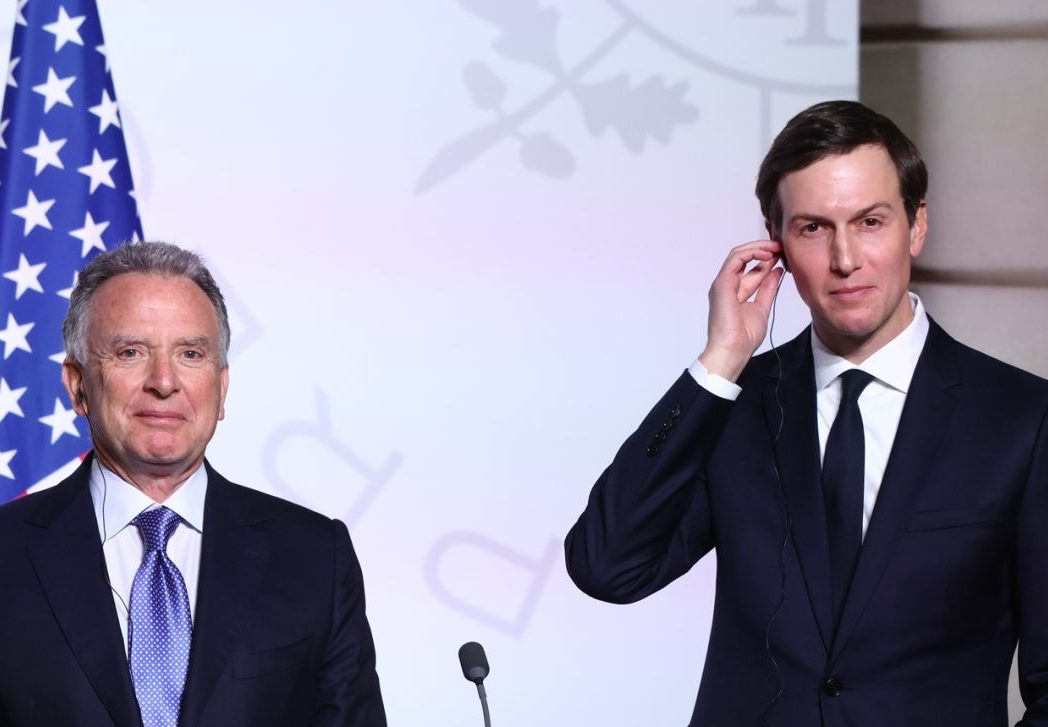
The second investor in TikTok is an Emirates Company, which is a partner of the company of the Trump family investing in crypto migration. Finally, the third buyer of TikTok is a private equity fund founded and managed by Trump’s son-in-law, Jared Kushner who has no government office, even though Witkoff is today the negotiator in chief of America in all three major international crises, namely in Gaza, Iran and Ukraine. The strict logic of “Etat c’est moi” also helps to interpret Trump’s franchise in the most important international negotiations in place, and in particular those in progress in Geneva on two very hot dossiers, Iran and Ukraine, i.e. a possible war if not likely and already in progress. Rather than relying on the Infido Deep State impersonated by State Department officials and CIA operatives, Trump countered the “Studio Witkoff and Kushner”, whose Senior Partners are a friend and business partner in the first case, close relative and partner in very close business in the second. In January last, for the truce in Gaza the two professionals acted effectively, we do not know in what sequence, as the President’s personal diplomatic plenipotentiaries and at the same time, as architects of the futuristic new Riviera that will rise on the banks of that piece of the Mediterranean Sea. And both will be in the hard core of the Board of Peace chaired by Trump usque ad mortem.
This week instead the two are on Lake Lemano to prevent a new American attack on Iran and to negotiate with the Russian and Ukrainian diplomats and military, a ceasefire and perhaps a framework for a peace agreement between Russia and Ukraine.
Even the most skeptical towards these formulas of private diplomacy, they hope that Witkoff and Kushner succeed in the diplomatic enterprise. For Gaza in January they brought home a very important truce, obtained in spite of traditional diplomacy, after tens of thousands of deaths recorded in the Israeli military operation to eradicate Hamas terrorists from Gaza. Now you will have to move to the second stage of the understanding, especially to the disarmament of the area and of Hamas. And one can only hope that even this time diplomacy, even if it is a monarchical inspiration, succeeds. This phase would follow the development activity under the impetus of the Board of Peace, created by UN Resolution 2803. Piaccia or do not like his composition. On Iran, the real outcomes of yesterday’s conversations in Geneva are uncertain. And this is because the subsequent Iranian and American communication about the results are in open contradiction. The Iranians, by the mouth of the Foreign Minister, argue that they have already reached a first understanding of the “guide principles” of the process of limiting the enrichment of uranium.
Vice President J.D. Vance argued instead that Iran did not want to take note of some “American Red Lines”, presumably about the limitation of the production of ballistic missiles produced in Iran and the end of the financing and rearmament of Hezbollah in Lebanon, the Houthi in Yemen and the militians of Hamas in Gaza. Not even an American word about the violent repression of dissent by the Ayatollahs. However, the very fact that the dialogue has been initiated is an extremely positive fact. However, if, as is desirable, the objective of the enormous American naval deployment was to defuse the Iranian threat to Israel and to the Sunni Monarchies of the Gulf, it would certainly not be enough a drastic limitation to the processes of enrichment of the Uranium in exchange for the attenuation of the harsh sanctions in place.
These enrichment processes will remain paralyzed for a piece, agreement or non-agreement, and that is thanks to the Israeli and American bombings of last summer.
If Trump had to settle for a very partial success on nuclear power, the agreement with Iran would, in worse, resemble the July 2015 agreement stipulated by the hated predecessor Barak Obama, JCPOA. And Trump retired from that agreement in 2018, calling it “one of the worst agreements ever signed by the United States”. Ultimately, in the case of the crisis with Iran as in the negotiation with the Russians, however authoritative and capable they can be Witkoff and Kushner, the method of the transaction, of the half-way interconnection on the price, although effective in the business world, could not be in Iran, Moscow and Ukraine. And this is because in both cases it collides with the existential nature of the positions of the Ayatollah and Putin and with the struggle of people of the Ukrainians for their independence and national identity. For the Ayatollahs, renounce or even limit the ability to hit Israel with the ballistic missiles would mean to put a tombstone on its deterrence towards new Israeli bombings. In the 12-day war in June, those missiles managed to do important damage in Israel.
At the same time, letting Hezbollah, the Houthi and Hamas extinguish would involve Iran renouncing the status of regional power and the strategic position of ultimate exponent of Islamic opposition to the existence of Israel. These two renunciations would open within the power system that supports Iranian theocracy, deep cracks that would lead to the overthrow of the regime by the military instruments that the Ayatollah themselves created as a guarantee of survival. This is mainly referred to the Revolutionary Guard Corps. At least as existential and therefore not negotiable is for Putin, the conquest of the entire Donbas, including the part that Russia has never managed to occupy after 4 years of war and over a million dead or seriously injured men. To the Russians Putin told that the Donbas is now an integral part of the Russian Federation and has changed the Constitution so that it could be established. On February 22, 2022, the Russian Army did not cross the border to “liberate” Ukraine all from the “ fascist nations”? Now settle for a piece of Donbass and live with a Ukraine member of the European Union, democratic and proud of the extraordinary war of resistance to invasion? It would probably be incompatible with the survival of Putin’s dictatorship. All this does not exclude at all that Witkoff and Kushner can achieve a good result also in Iran and Ukraine, in the wake of the first objective success, however fragile, reported on the Gaza dossier.
The two have a privilege, a credibility that any diplomat on all latitudes would envy him: the unconditional trust of the political summit of his country, the President.
Moreover, they negotiate as diplomats but have a gun on the table with a barrel shot. In the case of Iran thanks to the two aircraft carriers deployed off the Strait of Hormuz. And in the case of Russia with direct oil sanctions warns the oil companies of Moscow, and indirect on india. the second largest importer of Russian oil. All this will also be irrelevant, but the “Studio Witkoff and Kushner” can come to concrete and positive results that perhaps traditional diplomacy, the republican diplomacy, in this four-year trumpiano could not obtain.
Yet an important risk exists and is not the resentment of the “Deep State” nor the skepticism of Europeans. No. The real risk is President Trump’s willingness, his fixation for the “quick fix” to immediately perform on social media, as personal success, always defined unique success in the world and unique in the history of the United States. The trumpian temptation of the cosmetic ‘quick fix’. That fear in Tel Aviv, Paris, Berlin and London, perhaps a little less in Chigi Palace in Italy. That Trump declares victory after a façade solution that allows to move to another and serves above all to make him overcome the trouble of economic support that millions of American families are suffering and that could make him miss the mid term elections in November. In this case, within a few months, with a democratic majority Congress or at least paralyzed, neither the “Studio Witkoff and Kushner” could save it from the fate of many other presidents turned into half-term ducks. Moreover, with the risk that impeachment procedures are opened in congresses mounted by the Democrats without any hope of actual success but with effects however debilitating for the President on the internal and international level.
(*) ambassador a.r.
– photo IPA Agency –
(ITALPRESS).
