
In the previous meeting with the World Tour in New York we explored El Barrio, in the heart of East Harlem, following the traces of the Puerto Rican community between murals, music and bodegas. El Museo del Barrio, an institution born to give visibility to the art and culture of Latin in New York, was also a symbol of that story. The history of the communities that built New York, in fact, is not only read in the streets of the neighborhoods, but also passes through spaces created to preserve the memory, tell its origins and give representation to identity long remained on the margins of the official narrative of the city.
This new chapter of the World Tour in New York starts from some museums that allow you to cross different cultures, always remaining within the boundaries of the same metropolis.
The Museum of the City of New York: a portrait of the metropolis
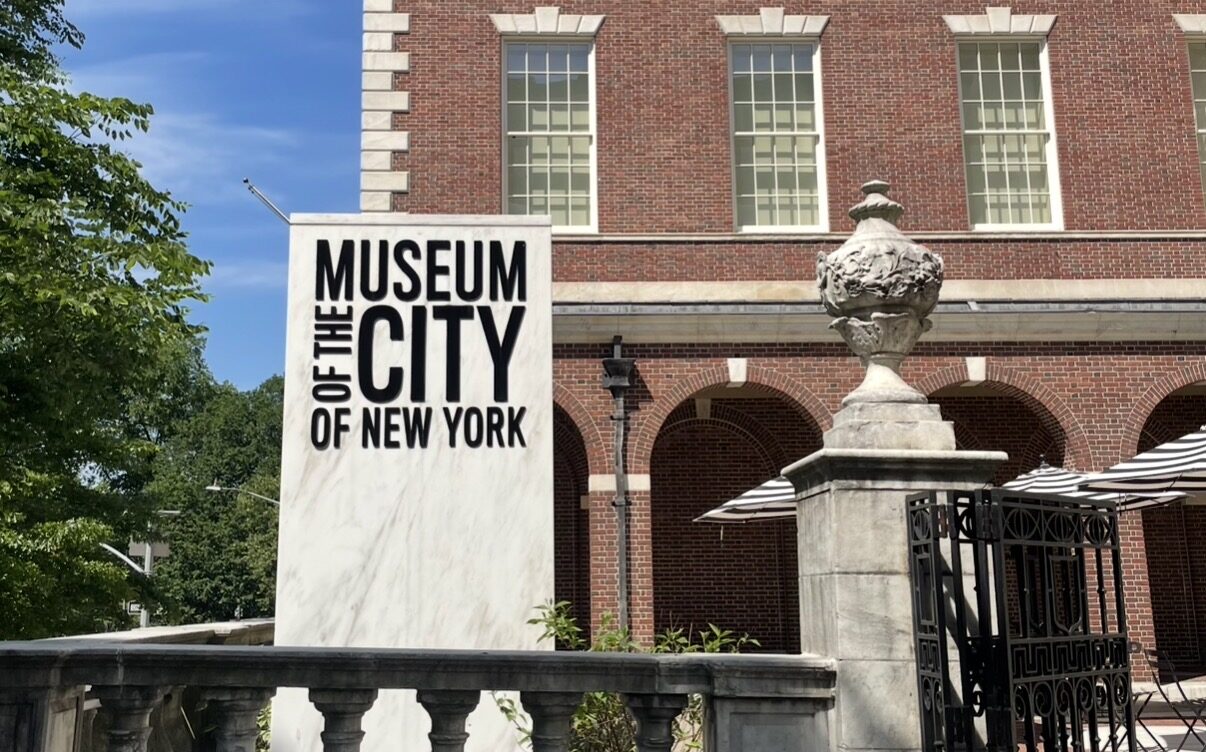
The Museum of the City of New York opens our path with a wide view of the city, telling the story through urban transformations, social changes, migrations and visual culture. Located along Museum Mile, on Fifth Avenue, the museum is dedicated entirely to New York and the way the city evolved over time, becoming what we know today. It is a very interesting stage to understand the city and the dynamics that have helped make it unique in the world.
Its collections span centuries of history and include photographs, posters, objects, documents and works of art that restore the dynamic identity of the city. The exhibition path dialogues neighborhoods and key moments of urban growth, offering a comprehensive reading that helps to understand how New York is the result of continuous stratifications. At the time of writing this article, the museum also houses a very visited exhibition dedicated to a great plastic of the city, a detailed representation of New York that allows you to observe the metropolis from an unusual perspective.
Screenshot
From this overview you can start our closest journey in the stories of individual communities, starting from the Lower East Side and the Tenement Museum.
The Tenement Museum: the memory of immigration in New York
Among the museums that allow you to better understand how today’s multicultural New York has been formed, the Tenement Museum occupies a special place. It is located on the Lower East Side, the district that since the mid-19th century has represented the first landing for entire generations of immigrants from Europe and, later, from the Caribbean and Latin America. Italians, Irish, Germans and Jews from Eastern Europe arrived here in large numbers and found house in the so-called tenements, the typical multi-storey residential buildings built to accommodate a growing population. The living conditions in tenements were often difficult with tiny apartments, limited services and shared spaces among many people. Yet in these buildings there were forms of solidarity and community networks that allowed many families to build the foundations for a new life. The streets of the Lower East Side were animated by markets, workshops of artisans, schools, places of worship, creating an environment where different languages, traditions and cultures lived side by side.
Screenshot
The Tenement Museum was born to tell this story. Founded in 1988 by historian and activist Ruth Abram, the museum took shape from the recovery of a historic building of Orchard Street which was likely to be demolished. Today the museum offers the possibility to visit reconstructed apartments based on historical documents and archive research. Through these spaces and the stories of the families who inhabited them, visitors can approach the most concrete dimension of the migration experience: daily life, work, difficulties of arrival in an unknown city but also the hopes and ambitions that accompanied generations of new New Yorkers. It is a visit that I strongly recommend not only to understand the past but also to understand the present of the city.
Among the families who inhabited these spaces, many were Jewish, arrived from Eastern Europe between the late nineteenth and early twentieth century. Their stories are an integral part of the Lower East Side fabric and are one of the most significant chapters of the city’s cultural transformation. It is precisely from this legacy that our path can now continue towards an institution dedicated specifically to Jewish culture and art: the Jewish Museum.
Screenshot
The Jewish Museum: art, memory and identity
The Jewish Museum, located on the Museum Mile in Manhattan, is one of the most important institutions in the United States dedicated to art and Jewish culture. Housed in an elegant historic building along the Quinta Avenue, the museum houses a collection that crosses centuries of history, from works related to religious tradition to contemporary artistic production, creating a constant dialogue between past and present in connection with the city of New York.
Through paintings, sculptures, ritual objects and temporary exhibitions, the museum tells not only a religious history, but also a cultural heritage that has evolved over time, contributing to the international artistic panorama and the cultural life of New York. It is a space that invites you to explore the theme of memory through the language of art, offering a broad and contemporary perspective on one of the communities that have deeply marked the city.
From this reflection on identity and cultural memory, our journey can continue towards another institution born to preserve and tell the story of a specific New York community: the Museum of Chinese in America, in the heart of Chinatown.
The Museum of Chinese in America: the history of the Chinese community
The Museum of Chinese in America, located on the northern border of the current Chinatown of Manhattan, offers an immersive path that allows you to directly understand the experience of Chinese immigration in the United States. The first migration waves, which arrived in the second half of the nineteenth century, faced strong cultural and linguistic barriers, as well as a climate of distrust that made integration particularly complex. The museum tells this period marked by discrimination and legal exclusion, a difficult chapter in American history that had profound consequences on the lives of thousands of people.
Screenshot
Through archive photographs, personal objects, original documents and rebuilt installations, the exhibition path returns the concrete dimension of that experience: not only the difficulties, but also the ability to organize, create support networks, open commercial activities and found cultural associations that have contributed to defining the identity of Chinatown over time. The museum also highlights how the international political context has influenced the perception of the Chinese community in the United States, showing how local history is often interwoven with global dynamics.
The visit to the Museum of Chinese in America, while requiring little time, helps to understand in depth a complex historical process. It is a way to read Chinatown not only as an iconic neighborhood, but as the result of generations that have contributed decisively to the construction of the city.
After this stage, our journey can take a further step, extending perspective and including a fundamental dimension often less known: the history of native cultures of the American continent. New York is not only a metropolis of arrivals, but rises on a land that has a history preceding its urban transformation. To really understand the cultural stratification of the city and the country, it is then interesting to know also the narratives of indigenous peoples, their traditions and their identity.
Screenshot
The National Museum of the American Indian: Native cultures in the United States
The National Museum of the American Indian further expands the look of our journey. Located in the heart of Lower Manhattan, within the majestic United States Custom House building, the museum is part of the Smithsonian Institution and is one of the main landmarks in the United States for the preservation and enhancement of the heritage of the indigenous peoples of the Americas.
The collections, which can be visited free of charge, range between different geographical areas from North to South America and highlight the extraordinary variety of traditions, languages, artistic practices and systems of knowledge of native communities. The exhibition combines historical objects, contemporary works, photographs, videos and immersive installations, creating a continuous dialogue between past and present capable of recounting still living cultures, which continue to evolve and express itself through contemporary art and cultural production.
Screenshot
Through these museums, New York is revealed as a mosaic of interwoven stories: a city built by migrations, but also a place that continues to question its roots, memory and identity. Each institution tells a different piece of this great collective story, offering a look that goes beyond art or simple exposure, to become experience.
Our World Tour in New York continues, stops after stage, exploring new communities, new neighborhoods and new perspectives that make this city unique. The appointment is then next month with a new story that just waits to be told!
L’articolo The world tour in New York: five museums to travel between the cultures of the city proviene da IlNewyorkese.
