
by Stefano Vaccara
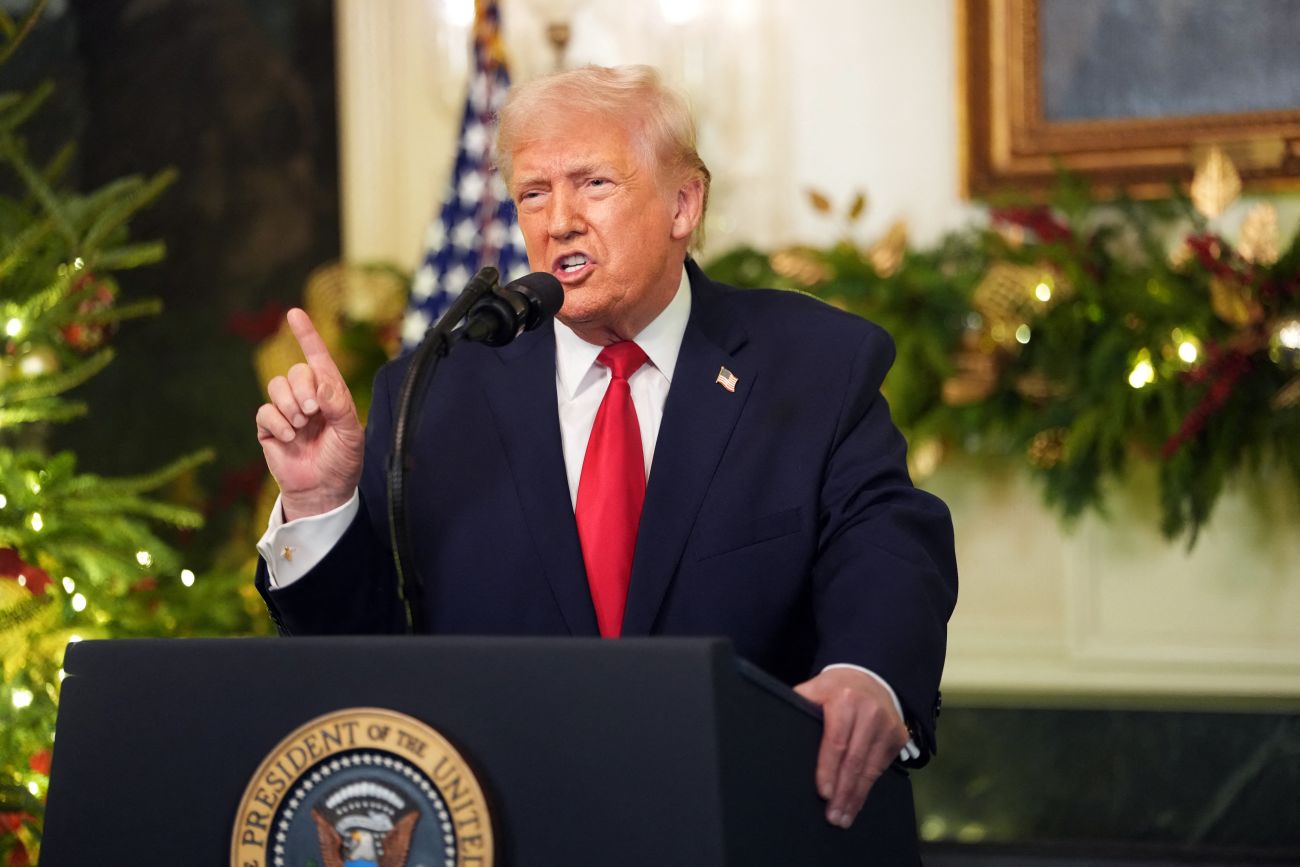
NEW YORK (USA) (ITALPRESS) – With a press conference to mark a watershed in American foreign policy, President Donald Trump has openly admitted that the United States “will govern Venezuela” after the capture of President Nicolas Maduro, explicitly connecting the duration of American control to the reconstruction of the oil infrastructure of the country. “We will move the country in the right way,” Trump said, explaining that the goal is to put the Venezuelan energy industry into operation and that the US presence will last “for the time needed” to complete that process.
The operation, called “Absolute Resolve”, was presented as a rapid and decisive action: over 150 aircraft employed, neutralized Venezuelan air defenses, special forces helicopters entered in Caracas and the capture of Maduro and his wife Cilia Flores, then transferred to the United States to face federal charges. Trump spoke of “the overwhelming military power” employed by air, land and sea, claiming that no other nation would be able to conduct such an operation.” But the politically more disruptive passage came when the President clarified that it is not a temporary security mission or a simple drug operation. When asked how long Washington intends to stay, Trump responded that the stay will be linked to the reconstruction of oil infrastructures, adding that energy companies will pay jobs and that Venezuelan oil will then be sold “to China and other countries”. A statement that sets out the official narrative on the fight against drug trafficking and reveals a strategy of economic and political control.
On the institutional level, the press conference confirmed that Congress was not informed in advance. The Secretary of State Marco Rubio argued that it was “most of a judicial operation”, and that therefore it was not possible to warn Congress in advance. Trump intervened immediately afterwards to clarify the political choice: “The Congress has a tendency to leak information,” he said, explaining that secrecy was necessary to avoid leaking news. A justification that opens up a constitutional confrontation, because the conference itself described a large-scale military action, with victims and destruction of infrastructure.
The president also outlined the political arrangement of the “after Maduro”. According to Trump, Venezuelan vice president Delcy Rodríguez – who would have already been established as interim president – would have spoken to Rubio and would be ready to cooperate fully with the US, “doing everything the United States needs.” At the same time, Trump has excluded that opposition leader María Corina Machado can lead the country at this stage, because, in his opinion, he would not “sustain enough nor the necessary respect”. On the international level, a first official reaction came from the UN. Secretary-General António Guterres expressed “preoccupation for the fact that international law was not respected” in the capture of Venezuelan President Nicolßs Maduro from the United States.
In a note from his spokesman, Guterres warned that the American operation risks creating a “dangerous precedent” and invited “all actors in Venezuela to engage in an inclusive dialogue, in full respect of human rights and the rule of law”. A stance that reinforces criticism of the lack of multilateral legitimacy and reports the Venezuelan case at the heart of the confrontation between American unilateralism and international legal order. In this context there is also the harsh stance of the New York Times, which in an editorial has defined the “illegal and unwise” attack, underlining how the Constitution requires the approval of the Congress for an act of war and recalling the historical precedents – from Iraq to Libya – where the forced overthrow of a regime has produced lasting instability.
With his words, Trump has already moved the debate beyond procedural issues. Admitting that the U.S. will rule Venezuela to put its oil back in place, the president unveiled the real stake in the operation. Now decisive questions remain open: How long will this factual occupation last, what political cost will it have on the internal and international front, and Congress will accept to remain a spectator?
– photo IPA Agency –
(ITALPRESS).
