
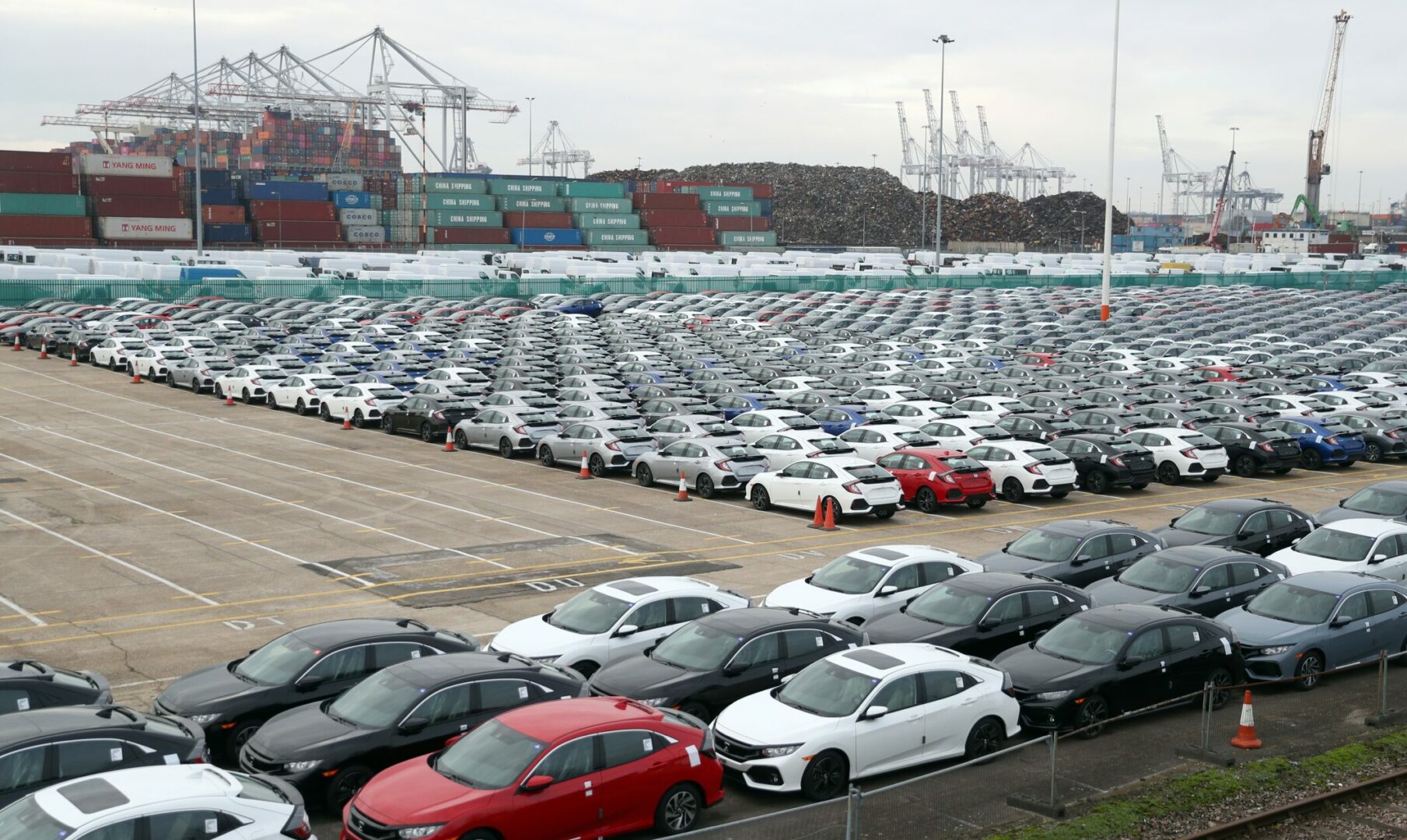
ROMA (ITALPRESS) – The month of February confirms the consolidation of growth in the motor vehicle market: the registrations are attested to 157,334 units, marking an increase of 14% regarding the 137.965 registered in February of the previous year. This month, however, a decisive contribution came from short-term rental: by purifying the data from this component, the positive change would be 9%.
The first two-month budget is equally encouraging: 299.373 registrations in the first two months of 2026, with a progress of 10.2% on 271.686 of January-February 2025 (but only +3.5% regarding 2024 and again -12.9% regarding 2019). On the electrification side, full electric cars (BEV) are 7.9% of monthly sales, for a total of 12,572 units, in progress compared to 5.0% of February 2025 and 6.6% of the previous month, impacted significantly by MASE incentives, with distortive effects of competition.
Great dynamism for hybrid plug-ins (PHEV): their penetration reaches 8.5% in February – compared to 8.7% in January and 4.5% in February 2025 – supported by the constantly expanding range and regulatory changes in fringe benefits for corporate cars.
On the front of European regulation, on 4 March the EU Commission will present the Industrial Accelerator Act – slipped from the original end of February – with which Brussels intends to strengthen the competitiveness of the industrial system of the Old Continent and imprint new speed to transition and technological innovation.
The principle of the “Made in Europe”, conceived by the EU Commission, would be translated into the introduction of a minimum share of European components as a condition for access to public incentives and contracts on electric vehicles. In particular, according to indiscretions, the new electric, hybrid and hydrogen models that will benefit from state facilities must be assembled within the Union and incorporate, excluding batteries, at least 70% of European components calculated on the value.
On this measure – and more generally on the European Automotive Package – UNRAE expresses an articulated evaluation, recognizing its progress but highlighting its failure to meet market challenges.
“That’s not enough. The Automotive Package marks a step forward, but is not yet up to the challenge. Europe and Italy have not recovered the levels of 2019 and our country is lagging behind in the energy transition. Decarbonization is a shared goal, but it serves economic sustainability, regulatory stability and structural tools to support demand, starting from a tax reform of the corporate fleets. Without these conditions, the competitiveness and confidence of consumers are not recovered. And on the ‘Made in Europe’ we want to be clear: competitiveness is built with investments and innovation, not with protectionist measures that risk penalizing enterprises and consumers”, says Roberto Pietrantonio, President of UNRAE.
For Unrae “so that the path to sustainable mobility is effective, it is urgent to fill the Italian lag in the electrician. Despite signs of growth, Italy remains a tail light among the Major Markets: the BEV share in February is 7.9%, against an EU average of January (last available) of 19.7%, 22% of Germany, 28.3% of France and 20.6% of the UK. Countries with lower per capita GDP also do better than our country, so the average CO2 emissions of the new registered member remain above the European average. To recover competitiveness and align with EU standards, UNRAE indicates three priorities. First: infrastructure. Italy is 16th in Europe for capillary charging points (14.2 points each 100 km against 20.9 EU, EAFO data) and requires acceleration on electricity and hydrogen. Second: charging rates more consistent with the wholesale energy prices – continues Unrae -. Third – decisive – the fiscality of the corporate fleets, a true multiplier of the transition: deducibility of costs, detractability of VAT and less competitive depreciation penalize a channel that has a gap between 8,5 and 21 points compared to the Major Markets. A structural reform would favour renewal of the park and spread of vehicles at zero and low emissions. Alongside the enabling factors, we need clarity: decarbonization remains the goal, what is lacking is regulatory stability and a multiannual strategy, as in the main European countries, to offer families and businesses a credible horizon.”.
“It is not a destiny, but a choice among the last in Europe. Electricity grows, but we are still far from the average of big markets. Without a structural and stable strategy Italy will lose competitiveness and appeal. Those who talk about the failure of the electric power disinformation: the real challenge is to govern the transition with industrial vision and reformer courage”, the president concludes.
-Photo IPA Agency-
(ITALPRESS).
