
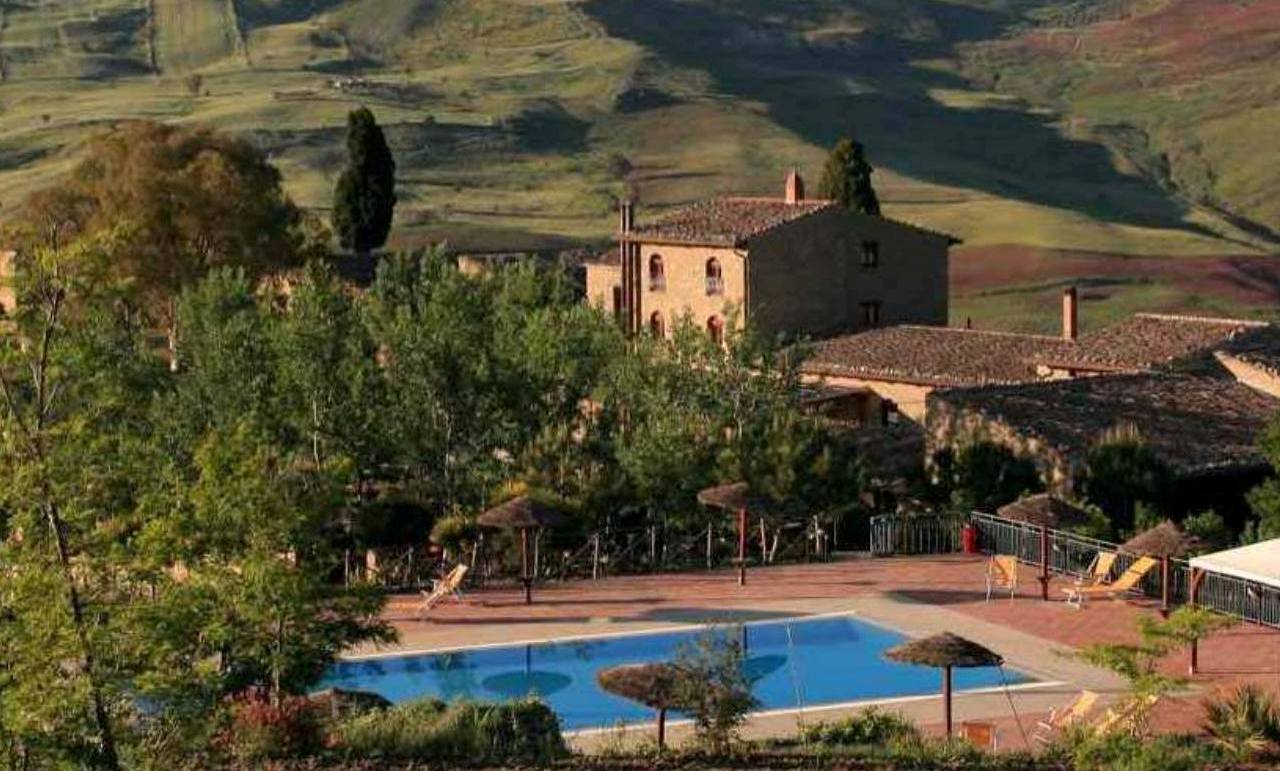
VENICE (ITALPRESS) – The farm is no longer just an alternative way of stay, but an increasingly structural component of the Venetian offer. This is what emerges from the September issue of “Flash Statistics” elaborated by the Office of Statistics of the Veneto Region, dedicated to application and offer of farms.
The data for the 2025 register in Veneto 1,738 active farms, up 3.3% compared to the previous year. Almost a third of the structures are concentrated in Veronese, with 525 companies (30.2%), followed by Treviso with 384, Vicenza with 245, Padua with 205, Belluno with 162, Venice with 159 and Rovigo with 58.
But it is above all the question to tell the growth of the sector. The arrivals in the farmhouses that offer accommodation have passed from 339 thousand of 2019 to 486 thousand of 2025, with an increment of 43.4%. Attendances reached 1.4 million, up 28.8% compared to the pre-pandemic period. The Veneto is placed in third place in Italy by number of presences in farmhouse, after Tuscany and Trentino-Alto Adige.
And the trend continues in 2026: in the first seven months of the year, the provisional data mark an additional +2.4% of the arrivals and +1.1% of the attendance compared to the same period of 2025.
“The farm is now part of the Venetian tourist model – stresses the vice-president and Councillor for Tourism Lucas Pavanetto –. The visitor is looking for more and more places to experience a ‘slow’ experience, find local products, stay in nature, discover landscapes. The farm answers exactly this question, however, distributing flows even outside the most known tourist destinations. The growth of 43% of arrivals compared to 2019 shows that we are not in front of a passing fashion, but a stable component of our offer.”.
The photography of the offer confirms the increasing joint of the structures. 69.4% of farms offer accommodation, 54.9% catering, while 25.9% directly sells products of their own company. 15.7% offer courses or educational farm activities, 5.1% nature activities and 4.3% sports activities such as horse riding and mountain biking.
“The agriturismo, among other things, recounts the change in perspective of Venetian agriculture – highlights the Regional Councillor for Agriculture Dario Bond –. The farm remains the heart of activity, but around that production builds hospitality, catering, direct sales, education and knowledge of the territory. It is an important transformation because it means creating more value from what already exists, from the land, from the work of farmers, from quality products, from the landscape and rural traditions”.
In Veneto, in fact, the “secondary” activities of agricultural enterprises are worth altogether 419 million euros, pairs to 4.9% of the total value of the regional agricultural production. At the national level, the value of agrituristic activity has been attested in recent years close to 2 billion euros, with an average economic value per company greater than 73,300 euros.
“There is a fact that I consider particularly significant – Bond continues – and is that 25.9% of companies that sell their products directly. It means that the visitor does not buy a room or a meal but comes into contact with a local economy and can take home a piece of that territory. This is the value of the farm: shorten the distance between those who produce and those who consume, between countryside and tourism, between agriculture and community. And this is even more true in rural and mountain areas, where every economic activity that remains on the territory contributes to keeping it alive.”.
The ability of farms to intercept different segments of demand also emerges from the territorial distribution of flows. In the seaside resorts the presences have doubled in recent years, with average stays of five nights; on Garda the average stay is four nights for foreigners and two for Italians. In the mountains proximity tourism continues to have an important weight, while in the cities of art – category that also includes the hills and the plains not included in the other areas – there is the largest number of overnight guests in the farm.
“The interesting fact is the variety of territories and turismi that the farm manages to put on the net – concludes Pavanetto –. For Veneto it also means working on the distribution of flows, seasonal adjustment and the ability to make known less concentrated territories from a tourist point of view. Behind these 486 thousand arrivals there are companies that have been able to innovate without losing their identity: it is one of the directions on which tourism will continue to invest”.
The report “The farms: demand and offer in Veneto”, realized by the Office of Statistics of the Veneto Region on provisional data Istat-Region Veneto, is available on the website of the Office of Regional Statistics at the following link: https://statistica.regione.veneto.it/.
-Photo IPA Agency-
(ITALPRESS).
