
by Stefano Vaccara
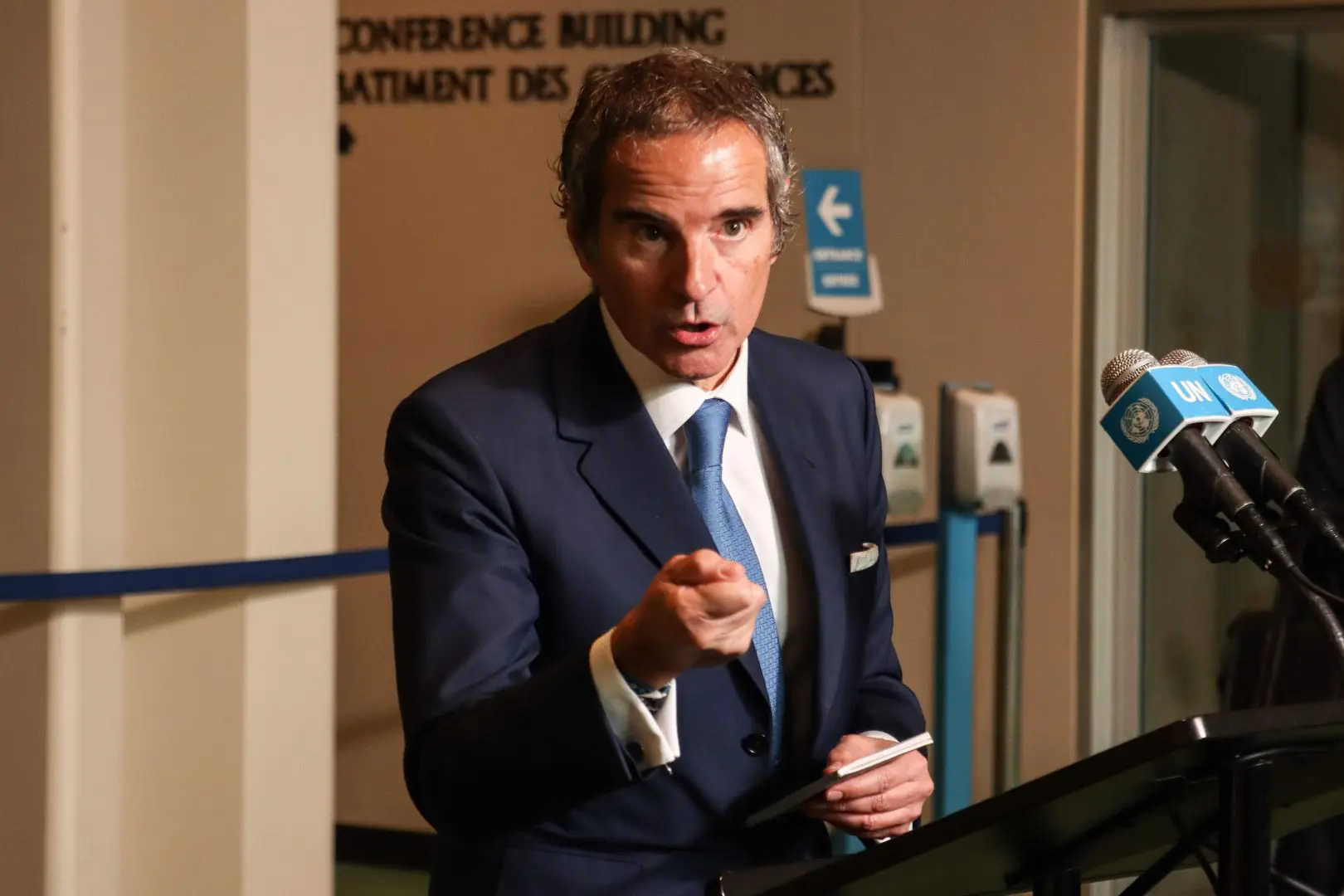
NEW YORK (USA) (ITALPRESS) – Rafael Mariano Grossi is the candidate who comes out strengthened from the first day of the Interactive Dialogues to the General Assembly of the United Nations, a key step in the selection process of the next Secretary General. After three hours of tight confrontation, moderated by UNGA President Annalena Baerbock with Member States and a long exchange with the press, the Director-General of the International Atomic Energy Agency showed what, in this race, appears as the most decisive quality: the ability to balance. Since the beginning of his speech, Grossi has emphasized the value of dialogue with the entire membership, defining it as “a unique opportunity” to listen to the concerns of the states and present their vision. Then in the stakeout with journalists, clearly emerged its political and diplomatic approach.
To the question of Italpress on how to reconcile the demands of the small countries, asking for a more assertive Secretary-General, with the expectations of the great powers, traditionally distrustful to too autonomous figures, Grossi responded with a formula intended to remain: “The essence of diplomatic work is to maintain balances.”.
A passage that perfectly summarizes its strategy: to be credible for smaller countries without being threatening for permanent members of the Security Council. The same approach emerges on all the most sensitive dossiers. On the financial crisis of the UN, Grossi avoids attributing direct responsibility, remembering that the solution depends on the Member States but showing a “bad optimism” on the possibility of opening a new phase of dialogue with the main contributors. On international conflicts, such as the Iran dossier, he insists on the need to “give a chance to peace” and the continuity of negotiating processes, avoiding any divisive stance.
Even when he addresses the most delicate issue, that of the credibility of the international system and the loss of trust in some areas of the world, Grossi maintains a prudent but empathic line: he recognizes frustration, but insists on the value of presence and commitment as the first step to rebuild trust. Significant also the passage on impartiality. Asked about how to reconcile neutrality and respect for international law, Grossi clarified that the role of the Secretary General is not “give lessons to political leaders”, but create conditions for shared solutions, maintaining the trust of all parties.
The most direct and even provocative questions have not been missing. Who asked him if he wanted to be more “Secretary or General”, Grossi simply replied: “General Secretary”. And to another question on which figure of Secretary General of the past inspires him, he avoided indicating a single model, citing instead more predecessors and stressing the need, today, to combine different qualities. Also on the theme of the genre, when it was pointed out that it could be “ easier” to be elected as a woman, he reiterated that what counts is “find the right person”.
An approach that avoids any polarization. And it is precisely this posture to make it, at least in this initial phase, the candidate perceived as “without vetoes”. Unlike the situation for Michelle Bachelet, whose candidacy immediately highlights a central political node: the relationship with the United States and the risk of veto.
To the question about the letter sent by some senators and members of Congress to Secretary of State Marco Rubio to block his appointment, criticizing his positions on abortion, the former president of Chile reiterated without hesitation that the rights of women cannot be fragmented. A coherent position for the former UN Human Rights Commissioner, but politically uncomfortable.
On the possible American veto, he tried to reply that during his presidency of Chile, in Donald Trump’s first term, the relations between the two countries remained positive. A reassurance attempt, however, does not dissolve doubts about its ability to avoid decisive resistance between the great powers.
The race remains open, but the first signal is clear: in the UN system, more than the force of vision, weighs the ability not to create oppositions. Tomorrow will be the turn of the other two candidates, the economist of Costa Rica Rebeca Grynspan and the former president of Senegal Macky Sall, called to measure with the same test.
-Photo IPA Agency-
(ITALPRESS).
