
by Stefano Vaccara
NEW YORK (UNITED STATES) (ITALPRESS) – Peacemaking as an absolute priority, reform as an urgent need, trust to rebuild before it is too late. This is the line drawn by Rebeca Grynspan during his hearing at the United Nations General Assembly, on the second day of the Interactive Dialogues for the choice of the next Secretary General.
The former vice-president of Costa Rica, today under UNCTAD, set his candidacy on a clear message: “To make peace is the purpose of this organization.” A direct, almost operational approach, which translates into the promise of being present on crisis theatres, “the first to take the phone”, ready to speak with all parties and to mediate among the mediators. In a three-hour confrontation with the Member States, Grynspan insisted on the central role of dialogue and the need to strengthen multilateralism at a time when confidence in the UN is falling and “the time to recover it is ending”. Alongside preventive diplomacy, he indicated reform as a second priority, claiming that defending the United Nations today means having “the courage to change them”.
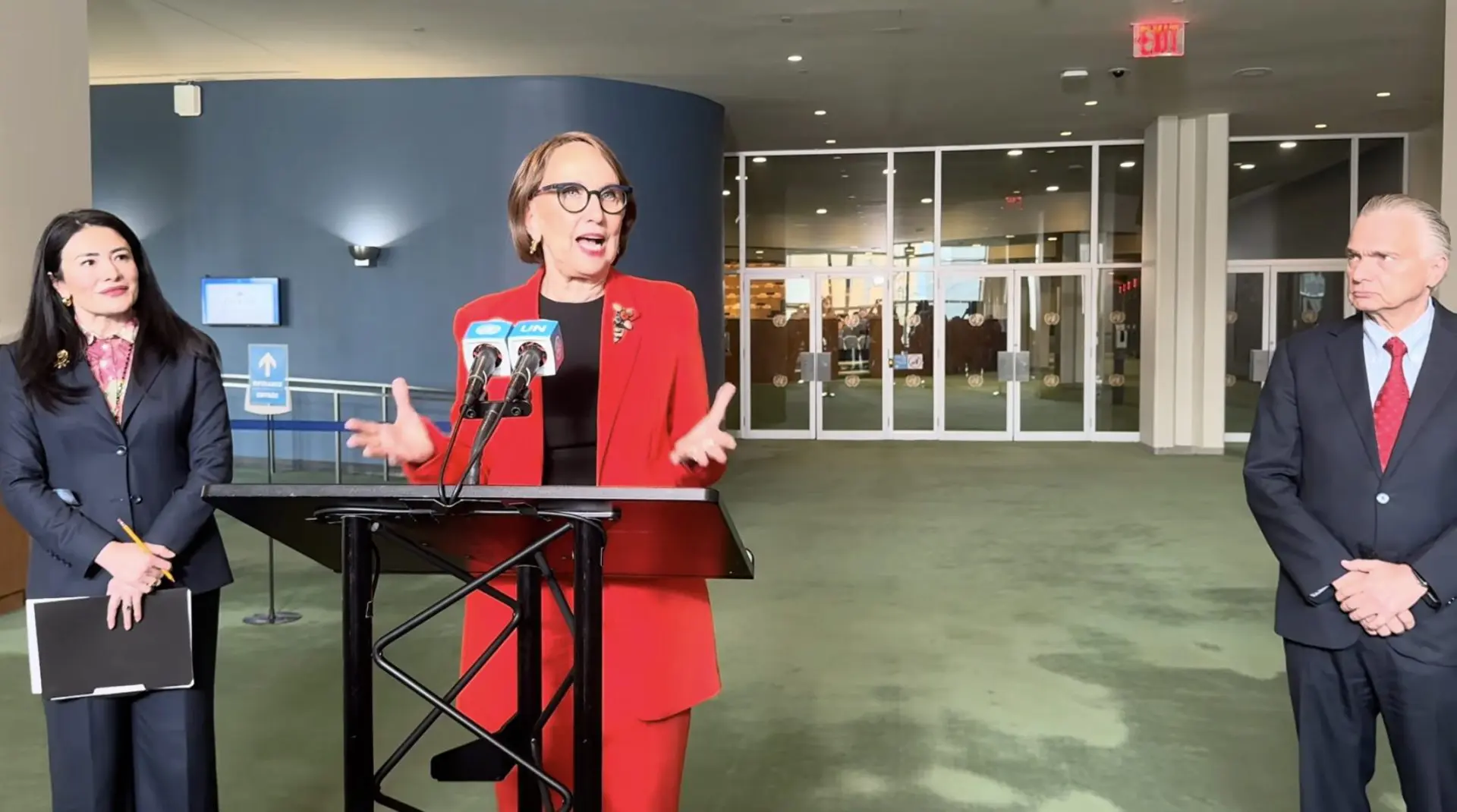
The same plant emerges in the stakeout with journalists, where Grynspan claimed a pragmatic approach, talking about “calculated risks”: the risk of being rejected, of not being accepted initially, but of continuing to insist on bringing new ideas on the table. He stressed his cross-experience, between politics, international organizations and civil society, and the ability to maintain relations with all even in moments of strong polarization.
Particularly significant the passage on relations with the great powers. Grynspan has clarified that it intends to build direct relations with the permanent members of the Security Council, also accepting the risk of an initial refusal: “I will try, and I will try again”, he said, indicating in the construction of trust an inevitably gradual process. On regional conflicts and their global effects, as in the case of the Strait of Hormuz, recalled the need for an early and agile action by the United Nations, warning of the risks to the world economy and international stability.
In a race where the decisive factor remains the absence of vetoes, its candidacy could however present a dynamic opposite to that of Michelle Bachelet. If the former president of Chile appears exposed to the risk of an American veto, Grynspan may have to manage a different perception, that of excessive closeness to some P5, the permanent members of the Security Council. An element that, in a process based on delicate balances, can turn itself into a potential limit. The competition remains open, but in the choice of the next Secretary General, more than the declarations of principle, will weigh the ability to move without creating decisive resistances among the great powers.
– Photo xo9/Italpress –
(ITALPRESS).
